
.jpeg)
Serpretinib/serpatinib demonstrates durable response in RET fusion-positive non-small cell lung cancer
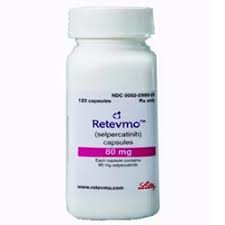
Selpercatinib induced durable responses and positive intracranial activity in patients with RET fusion-positive non-small cell lung cancer (NSCLC), according to published data from the Phase 1/2 LIBRETTO-001 trial (NCT03157128).
In patients who received platinum-based chemotherapy or who did not receive treatment, the overall response rate (ORR) was 61.5% (95% CI, 55.2%-67.6%) and 82.6% (95% CI, 71.6%- 90.7%); respectively, 8.1% and 7.2% achieved complete response (CR), 53.4% and 75.4% achieved partial response (PR), 32.4% and 10.1% of patients had stable disease, and 2.8% and 4.3% of patients had disease progression.
The median time to response was 1.9 months (range, 0.7-44.2) in the pretreated group and 1.8 months (range, 0.7-10.8) in the untreated group. The median duration of response (DOR) was 31.6 months (95% CI, 20.4-42.3) and 20.3 months (95% CI, 15.4-29.5); the 1-year DOR rates were 73.0% (95% CI, 65.0%-79.5%) and 66.7% (95% CI, 52.4%-77.6%) respectively. , the 2-year DOR rates were 55.1% (95%CI, 46.4%-62.9%) and 38.1% (95%CI, 24.5%-51.6%) respectively, and the 3-year DOR rates were 44.7% (95%CI, 35.7%-53.4%) and 35.4% (95%CI, 22.0%-49.0%) respectively.
The median progression-free survival (PFS) in the conditioning group was 26.2 months (95% CI, 19.3-35.7) and 22.0 months (95% CI, 16.5-24.9). The 1-year PFS rates were 70.6% (95%CI, 64.2%-76.1%) and 70.8% (95%CI, 58.0%-80.3%) respectively, and the 2-year PFS rates were 52.3% (95%CI, 45.4%-58 .7%) and 44.9% (95%CI, 31.8%-57.3%), and the 3-year PFS rates were 41.1% (95%CI, 34.2%-47.9%) and 34.6% (95%CI, 22.3%-47.3%) respectively.
The median overall survival time of the pretreatment group (OS) was 47.6 months (95% CI, 35.9-not evaluable [NE]) versus NE (95% CI, 37.8-NE) in the untreated group. The 1-year OS rates were 87.9% (95% CI, 83.1%-91.5%) and 94.1% (95% CI, 85.1%-97.8%) respectively, and the 2-year OS rates were 67.9% (95% CI, 61.5%-73. 5%) and 74.3% (95%CI, 61.9%-83.1%), and the 3-year OS rates were 56.6% (95%CI, 49.8%-62.8%) and 65.6% (95%CI, 52.4%-75.9%) respectively.
Sepretinib demonstrated significant and durable antitumor activity in patients who received it as first-line therapy, in those who had received platinum-based chemotherapy, and in those with central nervous system (CNS) metastases. These results reinforce the importance of testing RET fusions in non-small cell lung cancer to identify patients who may benefit from first-line treatment with seputinib.
The trial enrolled a total of 837 patients, of whom 356 were included in the efficacy population; 247 patients had previously received platinum-based chemotherapy, and 69 patients had not received treatment. All patients received seputinib in Phase 1 for 28 consecutive days at doses ranging from 20 mg once daily to 240 mg twice daily. The recommended dose for Phase 2 is 160 mg twice daily.
Eligible patients had RET fusion-positive, locally advanced or metastatic NSCLC. Other eligibility criteria include intolerance to or progression on standard treatments; measurable or non-measurable disease according to RECIST v1.1 guidelines; ECOG performance status from 0 to 2; life expectancy of at least 3 months; and adequate hematologic, liver and renal function. Exclusion criteria included symptomatic primary central nervous system tumors, metastases, untreated spinal cord compression, and leptomeningeal carcinomatosis.
The primary trial endpoint was ORR as assessed by an independent review committee. Secondary endpoints were DOR, PFS, and OS in all patients and ORR, PFS, and DOR in patients with central nervous system metastases. Among patients with measurable CNS metastases at baseline (n=26), the ORR was 85% (95% CI, 65%-96%), and 27% achieved CR. The median PFS was 11.0 months (95% CI, 9.2-17.1), and the median DOR was 9.4 months (95% CI, 7.4-15.3).
Regarding safety, the median duration of treatment was 24.6 months. Hypertension, aspartate aminotransferase elevation, and alanine aminotransferase elevation were the most common treatment-emergent adverse events (TEAEs) of grade 3 or higher. Dose withholding, reduction and discontinuation occurred in 70%, 49% and 11% respectively. TEAEs were fatal in 7% of patients, none of which were related to seputinib.
Reference:https://en.wikipedia.org/wiki/Selpercatinib
[ 免责声明 ] 本页面内容来自公开渠道(如FDA官网、Drugs官网、原研药厂官网等),仅供持有医疗专业资质的人员用于医学药学研究参考,不构成任何治疗建议或药品推荐。所涉药品可能未在中国大陆获批上市,不适用于中国境内销售和使用。如需治疗,请咨询正规医疗机构。本站不提供药品销售或代购服务。


