
.jpeg)
Talazoparib/talazopanib combined with enzalutamide as first-line treatment for mCRPC improves OS
The addition of talazoparib/talazoparib to first-line treatment of enzalutamide improves overall survival (OS) in patients with metastatic castration-resistant prostate cancer (mCRPC), according to new results from the phase 3 TALAPRO-2 trial. These data will be published in 2025.
TALAPRO-2 is the first combination study of a PARP inhibitor plus an ARPI (androgen receptor pathway inhibitor) to show a statistically significant and clinically meaningful improvement in overall survival in mCRPC in both unselected and selected patients with HRR gene alterations compared with the standard of care active comparator enzalutamide.
TALAPRO-2 (NCT03395197) included 805 patients with mCRPC who had not received prior treatment for castration-resistant disease and who had not selected for HRR gene alterations. Patients were randomly assigned to receive talazoparib and enzalutamide (n=402) or placebo and enzalutamide (n=403). Baseline characteristics were similar between treatment groups. The primary endpoint of the study is radiographic progression-free survival (rPFS). Previous results from this trial showed that talazoparib improved RPF, and the latest data show continued improvement in RPF with talazoparib.
At a median follow-up of approximately 25 months in each arm, the median rPFS was not reached in the talazopanib-enzalutamide group and 21.9 months in the placebo-enzalutamide group (hazard ratio [HR], 0.627; 95% CI, 0.506-0.777; P<0.0001). At a median follow-up of approximately 47 months in each group, the median rPFS was 33.1 months and 19.5 months, respectively (HR, 0.667; 95% CI, 0.551-0.807; P<0.0001).
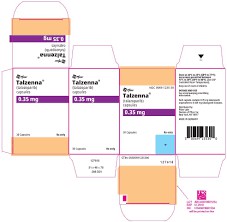
Talazoparib also improved OS at a median follow-up of 52.5 months. The median OS was 45.8 months in the talazoparib group and 37.0 months in the control group (HR, 0.796; 95% CI, 0.661-0.958; P=0.0155). Additional analysis showed that talazoparib improved OS in patients without BRCA changes (HR, 0.749; 95% CI, 0.582-0.963; P = 0.0237), but did not significantly improve OS in patients without any HRR changes (HR, 0.782; 95% CI, 0.582-1.050; P = 0.1008).
The median time to cytotoxic chemotherapy in the talazoparib group was longer than that in the control group- Not reached and 56.1 months (HR, 0.568; 95% CI, 0.446-0.722; P<0.0001). The proportion of patients who received any subsequent anti-tumor systemic therapy was lower in the talazoparib group (37.4%) than in the control group (52.6%).
No new security findings. The incidence rate of treatment-related adverse events (AE) was 99.0% in the talazoparib group and 95.8% in the control group. The incidence of serious treatment-related AEs was 21.4% and 3.2%, respectively. The discontinuation rates due to adverse events were 21.6% and 13.0% respectively. Fatal treatment-related adverse events occurred in 1 patient in the talazoparib group and 2 patients in the control group.
The most common treatment-emergent AEs (in talazopanib and control groups, respectively) were anemia (67.8% and 20.0%), neutropenia (37.7% and 7.2%), fatigue (34.9% and 30.2%), back pain (26.9% and 20.7%), and thrombocytopenia (25.6% and 4.0%). However, Dr. Agarwal noted that 49.0% of patients in the talazoparib group already had grade 1-2 anemia at baseline.
These data support the use of talazoparib plus enzalutamide as a standard initial treatment option for patients with mCRPC.
Reference materials:https://www.oncologynurseadvisor.com/reports/talazoparib-improves-os-as-first-line-treatment-in-mcrpc/
[ 免责声明 ] 本页面内容来自公开渠道(如FDA官网、Drugs官网、原研药厂官网等),仅供持有医疗专业资质的人员用于医学药学研究参考,不构成任何治疗建议或药品推荐。所涉药品可能未在中国大陆获批上市,不适用于中国境内销售和使用。如需治疗,请咨询正规医疗机构。本站不提供药品销售或代购服务。


