
.jpeg)
Important information in the instructions for avatrombopag and what patients should pay attention to
Avatrombopag is a thrombopoietin receptor agonist (TPO-RA). It stimulates the differentiation and maturation of megakaryocytes in the bone marrow by activating the thrombopoietin receptor (TPO-R), thereby increasing platelet production. The drug has been approved for use in two broad patient groups: those with chronic liver disease who are about to undergo invasive procedures, and those with chronic immune thrombocytopenia (ITP) who have not responded well to first-line treatments. Before using this product, patients should fully understand the key information in the instructions to ensure the safety and efficacy of the medication.
First of all, from the perspective of indications, avatrombopag is not suitable for all cases of thrombocytopenia. For example, certain patients with secondary thrombocytopenia or general suppression of bone marrow hematopoiesis caused by chemotherapy are not recommended groups. This drug is suitable for patients with chronic liver disease combined with hypothrombocytosis, especially when they are about to undergo invasive procedures (such as biopsy, endoscopy, ablation, etc.). It can increase platelets in the short term and reduce the risk of intraoperative bleeding. In addition, for patients with chronic immune thrombocytopenia (ITP), especially when hormone drugs, immunoglobulin therapy or splenectomy are ineffective, Sucoxin is used as an alternative for long-term management of platelet levels.
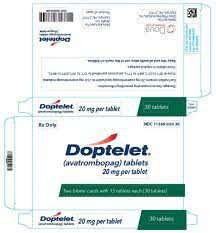
As for usage and dosage, patients should strictly follow the doctor’s instructions to take the medicine. For patients with chronic ITP, the recommended initial dose is 20 mg orally once a day, and doctors will gradually adjust it based on changes in platelets. The usual goal is to maintain platelets between 50 and 200×10⁹/L to avoid bleeding caused by too low a level and thrombosis caused by an excessive level. The maximum dose should not exceed 40 mg daily. It should be noted that most of these patients require long-term medication, and the length of treatment depends on disease control and individual response. Therefore, routine blood tests must be performed regularly to evaluate drug effects and adjust dosage.
For patients with chronic liver disease, they need to take it for a short period of time according to the time of surgery. If the baseline platelet count is less than 40×10⁹/L, the recommended dose is 70 mg daily for 5 consecutive days; if the platelet count is between 40 and <50×10⁹/L, the recommended dose is 60 mg daily for 5 consecutive days. The 10th to 13th day after taking it is the time when platelets reach the peak, so it is suitable to arrange the operation time. It should be noted that this drug is not recommended for long-term regulation of platelet levels related to liver disease, nor can it be used to "correct" platelet counts to normal. The purpose is to "raise to a safe threshold" rather than "normalize".
In terms of safety, although Sukesin is generally well tolerated, there are still some adverse reactions. Common side effects include headache, fatigue, nausea, diarrhea, elevated transaminases, etc. Individual patients may experience serious adverse events such as portal vein system thrombosis, especially when the basic liver function is poor or the platelet rate rises too fast. Therefore, doctors will fully assess the patient's risk of thrombosis before prescribing medication, and monitor blood images, liver function and coagulation indicators during medication.
Finally, special reminder is that avatrombopag is not a "blood-enhancing" drug that has immediate effect. Its platelet-raising effect usually begins to appear 4-7 days after taking the medicine, and reaches its peak around 10-13 days. Therefore, patients should not increase the dosage or stop taking the medicine on their own because the platelet count does not rise within a short period of time. For people with chronic ITP, efficacy evaluation usually requires continuous medication for more than several weeks, and requires a comprehensive judgment based on original platelet levels, disease progression, and responsiveness to other treatment options.
Reference materials:https://go.drugbank.com/drugs/DB11995
[ 免责声明 ] 本页面内容来自公开渠道(如FDA官网、Drugs官网、原研药厂官网等),仅供持有医疗专业资质的人员用于医学药学研究参考,不构成任何治疗建议或药品推荐。所涉药品可能未在中国大陆获批上市,不适用于中国境内销售和使用。如需治疗,请咨询正规医疗机构。本站不提供药品销售或代购服务。


