
.jpeg)
Which generation of targeted drug is dasatinib? How are its efficacy and indications different from other targeted drugs?
Dasatinib (Dasatinib) is a second-generation tyrosine kinase inhibitor (TKI), used to treat hematological malignancies such as chronic myelogenous leukemia (CML) and acute lymphoblastic leukemia (ALL). It prevents the proliferation and growth of tumor cells by targeting BCR-ABL tyrosine kinase and other tyrosine kinases. As a second-generation TKI, dasatinib has a stronger inhibitory effect than first-generation drugs (such as imatinib) and has better efficacy in some drug-resistant CML patients.
Compared with the first generation TKI (such as imatinib), dasatinib can overcome some of the resistance caused by BCR-ABL mutations, and is especially more effective for patients who are resistant to imatinib. Dasatinib can inhibit more types of BCR-ABL mutations, and its efficacy has been shown to be good in the treatment of patients with chronic, accelerated and acute CML. In addition, dasatinib also has inhibitory effects on other tyrosine kinases such as the SRC family, c-KIT, and EPHA2, making it possible in some cases to have a broader therapeutic effect than first-generation drugs.
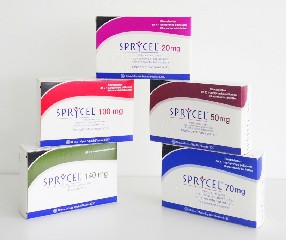
Compared with the third generation TKI (such as bositinib), dasatinib is less selective. Although it is ineffective against some common mutations (such as T315I mutation), its clinical effect is still good in most BCR-ABL related drug resistance cases. Third-generation TKIs such as bositinib are particularly effective against the T315I mutation, but dasatinib still has a wide range of indications, especially in the treatment of diseases such as CML and ALL. Therefore, dasatinib is still widely used in clinical use in patients who are resistant or intolerant to imatinib.
In general, dasatinib, as a second-generation targeted drug, relies on its strong anti-tumor effect and anti-BCR-ABLThe ability to overcome mutational resistance has made it a commonly used drug for the treatment of chronic myelogenous leukemia and acute lymphoblastic leukemia. Its efficacy exceeds that of first-generation drugs to some extent, but in the face of specific mutations, third-generation targeted drugs provide more effective treatment options.
Reference materials:https://go.drugbank.com/drugs/DB01254
[ 免责声明 ] 本页面内容来自公开渠道(如FDA官网、Drugs官网、原研药厂官网等),仅供持有医疗专业资质的人员用于医学药学研究参考,不构成任何治疗建议或药品推荐。所涉药品可能未在中国大陆获批上市,不适用于中国境内销售和使用。如需治疗,请咨询正规医疗机构。本站不提供药品销售或代购服务。


