
.jpeg)
What is the mechanism of action of fostatinib? How does it act on cancer cells?
Fostamatinib is an oral Syk (non-receptor tyrosine kinase) inhibitor that mainly regulates immune responses and cell signaling by inhibiting the activity of Syk kinase. It has been developed to treat some autoimmune diseases and some malignant tumors, especially showing certain potential in the treatment of cancers with immune escape mechanisms. The mechanism of action of fostatinib involves the regulation of immune cell function and changes in the tumor cell microenvironment.
The direct effect of fostatinib on tumor cells cannot be ignored. By inhibiting Syk, fostatinib can affect the proliferation, migration and invasion capabilities of tumor cells. Studies have shown that fostatinib can slow down the growth rate of tumor cells and reduce their ability to spread in the blood, thereby reducing the risk of tumor metastasis. In addition, fostatinib may further inhibit tumor growth and spread by regulating angiogenesis in the tumor microenvironment.
Reference: https://www.tavalisse.com/
The main mechanism of action of fostatinib is to inhibit Syk kinase. Syk is an important signal transduction molecule that plays a central role in the activation and proliferation of immune cells and various other cell types. In the tumor microenvironment, Syk kinase plays an important role in immune evasion, tumor cell migration, and angiogenesis. By inhibiting Syk, fostatinib can reduce the activity of these signaling pathways that are beneficial to tumor growth and spread, and interfere with the biological behavior of tumors.
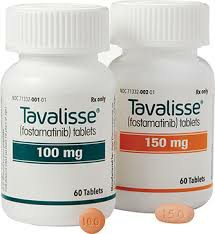
The direct effect of fostatinib on tumor cells cannot be ignored. By inhibiting Syk, fostatinib can affect the proliferation, migration and invasion capabilities of tumor cells. Studies have shown that fostatinib can slow down the growth rate of tumor cells and reduce their ability to spread in the blood, thereby reducing the risk of tumor metastasis. In addition, fostatinib may further inhibit tumor growth and spread by regulating angiogenesis in the tumor microenvironment.
Reference: https://www.tavalisse.com/
[ 免责声明 ] 本页面内容来自公开渠道(如FDA官网、Drugs官网、原研药厂官网等),仅供持有医疗专业资质的人员用于医学药学研究参考,不构成任何治疗建议或药品推荐。所涉药品可能未在中国大陆获批上市,不适用于中国境内销售和使用。如需治疗,请咨询正规医疗机构。本站不提供药品销售或代购服务。


