
.jpeg)
Bezuclastinib combined with sunitinib elicits preliminary activity and is safe in pretreated GIST
Based on Bezuclastinib (CGT9486) compared with historical data based on findings from Part 1 of the Phase 3 Peak study (NCT05208047) published in 2025 The combination with sunitinib produced favorable efficacy results and long-term tolerability in patients with previously treated gastrointestinal stromal tumors (GIST).
In the open-label, multicenter trial, the median progression-free survival (PFS) among all patients (n=42) was 10.2 months (95% CI, 7.4-19.4), and the median survival of patients before receiving TKI treatment was 2.5 months (range 1-6). After imatinib, the median PFS for patients who received second-line combination therapy was 19.4 months (95% CI, 1.0 - not estimable). Of note, 3 of 7 patients who received 1 TKI were still receiving treatment 19 months later. Efficacy compares favorably with historical data in previously treated GIST. In Part 1, bezuclastinib and sunitinib combination therapy encouraged long-term safety and tolerability, with a median treatment duration of 32 weeks.
In80% of GIST cases, major activating mutations are found in KIT, mainly in exon 11 or exon 9. Although the TKI imatinib can be used to suppress mutations, resistance to this drug increases to 60% within 2 years. This is driven by additional mutations in KIT exons 13/14 or exons 17/18. The investigational combination of bezuclastinib plus sunitinib allows for broad activity across the mutational spectrum and may target the full spectrum of primary and secondary resistance. This approach was also tested in the Phase 1/2 PLX121-01 trial (NCT02401815), in which bezuclastinib plus sunitinib was well tolerated and demonstrated clinical activity in patients with relapsed/refractory advanced solid tumors.
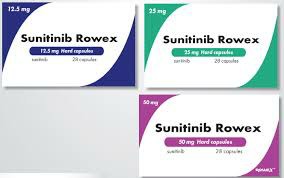
Researchers presented results from Part 1a (optimized formulation lead-in part[n=19]) and Part 1b (test drug interaction part[n=23]) of the Peak study. In Part 1a, bezuclastinib at a daily dose of 300 mg or 600 mg bezuclastinib was coadministered with sunitinib at a daily dose of 37.5 mg; the selected doses were then used in Part 1b.
In Part of the randomized portion of the study, patients who had previously received imatinib were randomized 1:1 to receive 600 mg of bezuclastinib daily plus 37.5 mg of sunitinib or 37.5 mg of sunitinib alone. Also in part 2, mutated circulating tumor DNA was collected at baseline and at disease progression. Patients who progressed in the sunitinib monotherapy arm may be eligible to move to the trial treatment arm.
The primary endpoint of Part 1a is the pharmacokinetics of bezuclastinib; the primary endpoint of Part 1b is the pharmacokinetics of bezuclastinib, sunitinib, and the main active metabolite of sunitinib; and the primary endpoint of Part 2 is PFS according to RECIST 1.1 criteria. Of note, the current enrollment status for all 3 study parts is complete.
Based on investigator assessment of observed responses,The objective response rate was 27.5% for all patients treated with bezuclastinib plus sunitinib and 33% for patients previously treated with imatinib. Among all patients, 27.5% had a partial response, 57.5% had stable disease, and 15.0% had progressive disease. In addition, the disease control rate is 80%.
Regarding safety, most treatment-emergent adverse events (TEAEs) were low CTCAE grade and reversible. A total of three patients experienced serious adverse events, including Grade 2 neutropenia and fever, Grade 3 platelet count decrease; Grade 2 bacterial peritonitis and Grade 3 febrile neutropenia; Grade 3 anemia, fatigue, and peripheral edema. All 3 patients had serious adverse events suspected to be related to the study drug.
In addition,29% of patients had their dose of study medication reduced due to TEAEs, and a total of 2 patients discontinued treatment due to TEAEs, including grade 2 rash, grade 1 abdominal pain, and grade 3 diarrhea. The combination of bezuclastinib and sunitinib did not appear to increase the severity of adverse events associated with sunitinib monotherapy and was well tolerated, with a median treatment duration of 32 weeks.
Patients in parts 1a and 1b of the study all had grade 3 or higher diarrhea, hypertension, neutropenia, elevated alanine aminotransferase/aspartate aminotransferase levels, anemia, and hypokalemia. Common grade-1 adverse events include diarrhea, fatigue, hypertension, nausea, hair color changes, gastroesophageal reflux disease, dysgeusia, decreased appetite, rash, and neutropenia. This combination was well tolerated, with few discontinuations due to adverse events.
Reference materials:https://www.onclive.com/view/bezuclastinib-plus-sunitinib-elicits-preliminary-activity-is-safe-in-pretreated-gist
[ 免责声明 ] 本页面内容来自公开渠道(如FDA官网、Drugs官网、原研药厂官网等),仅供持有医疗专业资质的人员用于医学药学研究参考,不构成任何治疗建议或药品推荐。所涉药品可能未在中国大陆获批上市,不适用于中国境内销售和使用。如需治疗,请咨询正规医疗机构。本站不提供药品销售或代购服务。


