
.jpeg)
Trametinib VS Dabrafenib: A big competition between two targeted drugs!
Trametinib and dabrafenib are two important targeted drugs currently used to treat BRAF mutation-positive melanoma. They are usually used in combination to exert a synergistic effect to improve the therapeutic effect. Both drugs are approved for the treatment of advanced and metastatic melanoma, thyroid cancer, non-small cell lung cancer, etc., especially patients with BRAF V600E mutations. Although they are all targeted therapeutic drugs, there are some differences in their mechanisms of action, efficacy, side effects, and indications. These differences have an important impact on patients' choice of treatment options.
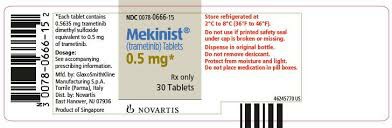
Trametinib is aMEK inhibitor that mainly acts on the MEK1/2 signaling pathway to inhibit the proliferation and growth of tumor cells. Dabrafenib is a BRAF inhibitor that specifically inhibits the tyrosine kinase activity of BRAF V600 mutant tumor cells. The mechanisms of the two are different, but when used together, they can inhibit the proliferation and spread of tumors at different levels and increase the effectiveness of treatment. Especially in patients with BRAF V600E mutated melanoma, combined therapy can effectively delay the progression of the disease and improve the patient's survival rate.
In terms of clinical effects, studies have shown that the combination treatment of dabrafenib and trametinib can significantly improve patients' progression-free survival (PFS) and overall survival (OS) than either drug alone. Specifically, dabrafenib rapidly inhibits tumor cell growth by directly inhibiting the BRAF V600 mutant tyrosine kinase, while trametinib further blocks downstream tumor proliferation signals by inhibiting the MEK1/2 pathway. Therefore, combination therapy has a stronger antitumor effect than monotherapy.
Although combination therapy brings better efficacy, it is also accompanied by certain side effects. Common adverse reactions include rash, fever, fatigue, joint pain, abnormal liver function, etc. Trametinib, as a MEK inhibitor, may cause more significant rash and edema, while dabrafenib may cause fever and joint pain.
Reference materials:https://go.drugbank.com/drugs/DB08911
[ 免责声明 ] 本页面内容来自公开渠道(如FDA官网、Drugs官网、原研药厂官网等),仅供持有医疗专业资质的人员用于医学药学研究参考,不构成任何治疗建议或药品推荐。所涉药品可能未在中国大陆获批上市,不适用于中国境内销售和使用。如需治疗,请咨询正规医疗机构。本站不提供药品销售或代购服务。


