
.jpeg)
How many years can treatment with Ixazomib/Enleri be maintained? How safe is long-term use of the medication?
Ixazomib, an oral proteasome inhibitor, is primarily used to treat patients with multiple myeloma (MM), especially those who require maintenance therapy after initial treatment. Maintenance therapy refers to the continued use of medication during the remission period after initial treatment to help prolong progression-free survival (PFS) and improve overall survival (OS). The use of ixazomib, particularly its potential as maintenance therapy, has been demonstrated in multiple clinical studies, and its advantages as an oral agent make it a viable option for long-term maintenance therapy in patients.
The maintenance treatment effect of ixazomib is first reflected in its ability to help delay the recurrence and progression of multiple myeloma. Multiple myeloma is a highly heterogeneous hematological malignancy whose clinical features include abnormal proliferation of plasma cells in the bone marrow. Initial treatment usually includes a combination of chemotherapy, immunomodulatory drugs, and proteasome inhibitors. However, despite patients achieving clinical remission with initial treatment, myeloma cells may remain and are at risk of relapse. Therefore, maintenance therapy becomes a key strategy for long-term patient management.
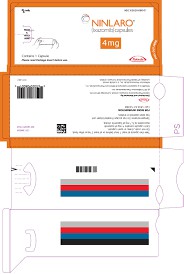
According to clinical studies, ixazomib combined with other drugs (such as dexamethasone) has good efficacy in maintenance treatment. For example, the Tourmaline-MM3 study showed that after initial treatment, patients treated with ixazomib maintenance therapy significantly prolonged progression-free survival (PFS). The study showed that patients who received maintenance therapy with ixazomib had longer disease control times than those in the placebo group alone, providing solid evidence for the use of ixazomib as a maintenance therapy.
Although maintenance therapy with ixazomib is effective, not all patients benefit from it. Individual differences in treatment effects are closely related to the patient's underlying condition, initial treatment regimen, and the combination of ixazomib and other drugs. Therefore, patient treatment plans need to be individually tailored to ensure optimal treatment results.
As an oral proteasome inhibitor, the safety of ixazomib is one of the most concerning issues for patients during its use. Research on the safety of patients with long-term use of ixazomib has gradually accumulated. Overall, the safety of ixazomib in long-term use is controllable, but there is still a certain risk of side effects.
As an oral drug, ixazomib brings a more convenient treatment experience to patients. However, patients taking long-term medications often face compliance issues. To ensure the maximum effect of ixazomib treatment, patients need to strictly adhere to the medication plan under the guidance of their doctor. Healthcare teams often provide targeted support to help patients manage side effects and improve treatment compliance.
For patients taking ixazomib for a long time, regular follow-up and examination are very important. Patients need to undergo regular blood routine, liver function tests, neurological examinations, etc. in order to detect potential side effects and make adjustments in time. In addition, patients should be aware of and proactively report any uncomfortable symptoms so that doctors can respond as early as possible and optimize treatment plans.
Reference materials:https://www.ninlaro.com/
[ 免责声明 ] 本页面内容来自公开渠道(如FDA官网、Drugs官网、原研药厂官网等),仅供持有医疗专业资质的人员用于医学药学研究参考,不构成任何治疗建议或药品推荐。所涉药品可能未在中国大陆获批上市,不适用于中国境内销售和使用。如需治疗,请咨询正规医疗机构。本站不提供药品销售或代购服务。


