
.jpeg)
Adagrasiib Medication Guide: Dosage adjustment, correct usage and safety precautions
The trade name of adagrasib is Krazati. It is a targeted drug targeting KRAS G12C mutation. It is mainly used to treat patients with non-small cell lung cancer (NSCLC) and metastatic colorectal cancer (mCRC) carrying KRAS G12C mutation. Adagrasiib prevents the proliferation and spread of tumor cells by inhibiting the activity of KRAS G12C mutant protein. KRAS G12C mutation is an important driver mutation in cancer, especially common in non-small cell lung cancer. Therefore, the emergence of adagrasib provides a new treatment option for these patients. During the treatment process, patients need to strictly follow the dosage requirements and usage instructions in the instructions to ensure the efficacy and safety of the drug.
1. Indications
Adagrasiib is mainly suitable for the treatment of patients with non-small cell lung cancer (NSCLC) with KRAS G12C mutation, especially those with locally advanced or metastatic cases. These patients have usually received first-line or multiple lines of treatment, but their disease has not been effectively controlled, so adagrasib provides them with a new first-line treatment option. In addition to non-small cell lung cancer, adagrasib is also approved for the treatment of patients with metastatic colorectal cancer (mCRC) with KRAS G12C mutations, and is also indicated for those who have previously received chemotherapy.
For patients taking adagrasib, it is first necessary to determine whether they carry the KRAS G12C mutation through molecular testing. This is because the mechanism of action of adagrasib only inhibits the KRAS G12C mutation, so it is important to confirm the mutation status before use.
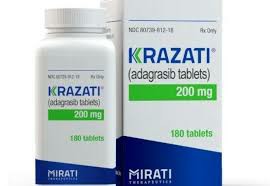
2. Usage and dosage
The recommended dose of adagrasiib is600 mg, taken orally, twice a day. It is recommended to take it at a fixed time point to ensure that the drug maintains a stable blood concentration in the body. Adagrasiib can be taken on an empty stomach or with food, but the tablet must be swallowed whole and avoid crushing or chewing the tablet. Patients should continue taking the medication as recommended by their physician until disease progression or unacceptable toxicity occurs.
In the case of missed doses, if the patient forgets to take the medication and the next dose is more than 6 hours away, the patient can take it as soon as possible; if the next dose is less than 6 hours away, the patient should skip the missed dose and continue to take the next dose as planned. Patients should not increase their dosage to make up for missed doses to avoid unnecessary side effects.
It should be noted that during the treatment process, the doctor will adjust the dosage according to the patient's specific situation, especially the tolerance to the drug. For patients who experience more serious side effects, the drug may need to be temporarily discontinued or the dose adjusted. The dosage and treatment plan for each patient should be carefully managed by professional doctors based on clinical manifestations and individual responses.
3. Dosage adjustment
In some cases, the dose of adagrasiib may need to be adjusted. The main reasons for adjustment include drug side effects, especially the occurrence of adverse reactions such as liver dysfunction, gastrointestinal reactions, and rash. For people who experience serious side effects, doctors may recommend lowering the dose or suspending treatment until the side effects are relieved.
In addition, adagrasiib needs to be used with caution in patients with hepatic impairment, as the metabolism of this drug is dependent on liver function. For patients with mild to moderate impairment of liver function, doctors may consider adjusting the dose or increasing the frequency of monitoring. Adagarasib is not recommended for patients with severe hepatic impairment.
4. Adverse reactions
Although adagrasib has good efficacy as a targeted therapy, patients may still experience certain adverse reactions during use. The most common side effects include fatigue, nausea, decreased appetite, diarrhea, and rash. These reactions are usually mild to moderate and may resolve after a period of treatment.
References:https://www.krazati.com/
[ 免责声明 ] 本页面内容来自公开渠道(如FDA官网、Drugs官网、原研药厂官网等),仅供持有医疗专业资质的人员用于医学药学研究参考,不构成任何治疗建议或药品推荐。所涉药品可能未在中国大陆获批上市,不适用于中国境内销售和使用。如需治疗,请咨询正规医疗机构。本站不提供药品销售或代购服务。


