
.jpeg)
Progress of clinical trials of rubicatin/rubitin: What is the efficacy and safety?
Lurbinectedin is an anti-tumor drug extracted from marine organisms. It mainly interferes with the transcription process of tumor cells and induces apoptosis by inhibiting the activity of RNA polymerase II. Since its introduction, rubicatin has been subject to clinical trials in a variety of tumor types, with particular focus in the field ofsmall cell lung cancer (SCLC).
In a multicenter, single-arm, open-label Phase II clinical trial, investigators evaluated the efficacy and safety of rubicatin in patients with recurrent SCLC. A total of 105 patients were included in the trial. These patients had previously received platinum-containing chemotherapy regimens, but their disease had progressed. The study results showed that the overall response rate of rubicatin in platinum-sensitive and platinum-resistant patients was 45% and 22.2% respectively, the median overall survival was 9.3 months, the 12-month overall survival rate was 34.2%, and the disease control rate reached 68.6%.
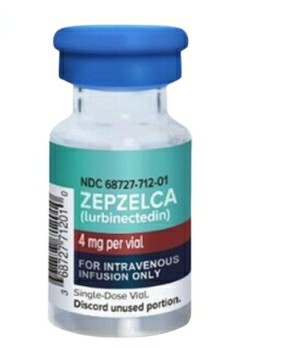
Based on the above study results, the U.S. Food and Drug Administration (FDA) accelerated approval of rubicatin on June 15, 2020, for the treatment of patients with metastatic SCLC who have progressed after platinum-containing chemotherapy. This is the first time in 24 years that the FDA has approved a chemical anti-tumor drug monotherapy for SCLC. Subsequently, the National Comprehensive Cancer Network (NCCN) listed rubicatin as a treatment option for SCLC patients with disease recurrence after previous systemic therapy in its oncology clinical practice guidelines.
In terms of safety, rubicartin showed relatively controllable adverse effects. Common adverse events include myelosuppression, such as neutropenia and thrombocytopenia, and gastrointestinal effects, such as nausea and vomiting. Most adverse reactions were manageable, and no new safety signals emerged.
However, it should be noted that although rubicatin has shown positive efficacy in second-line treatmentSCLC, its effect in first-line treatment needs to be further verified. In the ATLANTIS trial, rubicatin combined with doxorubicin was used in the first-line treatment of SCLC. Although there was an improvement in progression-free survival, it did not reach statistical significance and was accompanied by certain hematological toxicity.
Reference materials:https://www.zepzelca.com/
[ 免责声明 ] 本页面内容来自公开渠道(如FDA官网、Drugs官网、原研药厂官网等),仅供持有医疗专业资质的人员用于医学药学研究参考,不构成任何治疗建议或药品推荐。所涉药品可能未在中国大陆获批上市,不适用于中国境内销售和使用。如需治疗,请咨询正规医疗机构。本站不提供药品销售或代购服务。


