
.jpeg)
Canafenib/cetuximab plus chemotherapy drives ORR improvement in BRAF V600E+ mCRC
Based on data from the phase 3 BREAKEWATER trial (NCT04607421) published in 2025, the combination of encorafenib , cetuximab and mFOLFOX compared to mFOLFOX6 alone 6 (fluorouracil, leuvovorin, and oxaliplatin), there was a statistically significant and clinically meaningful improvement in the overall response rate (ORR) in patients with metastatic colorectal cancer (mCRC) harboring a BRAF V600E mutation.
Results show that patients who receivedcanafenibin combination with cetuximab and chemotherapy (n=1 10) had an ORR of 60.9% (95% CI, 51.6%-69.5%), compared with 40.0% (95% CI, 31.3%-49.3%) in patients who received chemotherapy alone (n=110; odds ratio 2.443; 95% CI 1.403-4.253; one-sided P=0.0008). In the experimental arm, best responses included complete response (CR; 2.7%), partial response (58.2%), stable disease (28.2%), progressive disease (PD; 2.7%) non-CR/non-PD (2.7%), and not evaluable (NE; 5.5%). In the control group, these corresponding rates were 1.8%, 38.2%, 30.9%, 3.6%, 8.2%, and 17.3%, respectively.
Data fromBREAKWATER study supports canafenib plus cetuximab and mFOLFOX6 as a new standard of care for first-line treatment of patients with BRAF V600E-mutant mCRC and forms the basis for accelerated approval by the U.S. Food and Drug Administration (FDA). In December 2024, FDA granted accelerated approval to encofenib in combination with cetuximab and mFOLFOX6 to treat patients with mCRC who carry the BRAF V600E mutation, which is detected by FDA-approved tests.
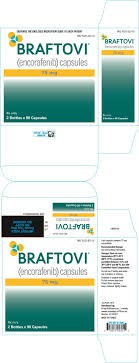
Researchers in this open-label, multicenter study recruited at leastPatients aged 16 years (or at least 18 years, depending on the country) with BRAF V600E mutated mCRC, per local or central laboratory testing. 1Prior systemic therapy in the metastatic setting is not allowed. Key inclusion criteria include measurable disease meeting RECIST 1.1 criteria; ECOG performance status 0 or 1; and adequate bone marrow, liver and kidney function. Progression-free survival and ORR of canafenib plus cetuximab and mFOLFOX 6 versus mFOLFOX 6 alone were the dual primary endpoints of the trial, as assessed by BICR. Of note, in this analysis, the first 110 patients in each study arm were evaluated for ORR. Overall survival (OS) is a key secondary endpoint. OS was tested only if the ORR difference was statistically significant.
The median time to response in the canafenib plus cetuximab and mFOLFOX6 group was 7.1 weeks (range, 5.7-53.7), compared with 7.3 weeks (range, 5.4-48.0) in the chemotherapy group. The estimated duration of response (DOR) was 13.9 months (range: 8.5-not evaluable [NE]) and 11.1 months (range: 6.7-12.7), respectively. In the experimental group, the 6-month and 12-month DOR rates were 68.7% and 22.4%, respectively. In the control group, the two rates were 34.1% and 11.4%, respectively. The benefit in ORR was consistent with the experimental protocol across subgroups.
The median follow-up time of OS in the experimental group was 10.3 months (95% CI, 8.6-11.6), and in the control group was 9.8 months, 95% CI, 7.5-11.3. Canafenibcombined with cetuximab and mFOLFOX6 group and mFOLFOX The median OS of the 6 groups were NE (95% CI, 19.8-NE) and 14.6 months (95% CI 13.4-NE) respectively (HR, 0.47; 95% CI 0.318-0.691; P=0.0000454). At the time of this analysis, the OS difference was not statistically significant.
Regarding safety, 99.6% of patients in the experimental group (n=231) experienced any grade of treatment-emergent adverse events (TEAE), while the rate in the control group (n=228) was 97.8%. The incidence rates of grade 3/4 TEAEs were 74.0% and 61.0%, respectively. The incidence of grade 5 TEAEs was 4.3% and 4.4%, respectively. Serious TEAEs were reported in 37.7% of patients in the canafenib plus cetuximab and mFOLFOX 6 group, compared with 34.6% in the mFOLFOX 6 group. TEAEs resulted in permanent discontinuation of any treatment, dose reduction of any treatment, and dose interruption of any treatment in 20.8%, 61.0%, and 84.8% of patients in the canafenib plus cetuximab and mFOLFOX6 groups, respectively. The corresponding rates in the control group were 14.9%, 47.8% and 64.0% respectively.
Reference materials:https://www.onclive.com/view/encorafenib-cetuximab-plus-chemo-drives-orr-improvement-in-braf-v600e-mcrc
[ 免责声明 ] 本页面内容来自公开渠道(如FDA官网、Drugs官网、原研药厂官网等),仅供持有医疗专业资质的人员用于医学药学研究参考,不构成任何治疗建议或药品推荐。所涉药品可能未在中国大陆获批上市,不适用于中国境内销售和使用。如需治疗,请咨询正规医疗机构。本站不提供药品销售或代购服务。


