
.jpeg)
Study highlights long-term efficacy of ritexitinib in treating alopecia areata
Studies have shown that Ritlecitinib is effective in the long-term treatment of alopecia areata patients with scalp hair loss greater than or equal to 25%. The study found that patients experienced significant hair regrowth and reported significant improvement in their condition. These findings highlight the effectiveness of extended rituxitinib treatment in patients with severe scalp hair loss caused by alopecia areata.
ALLEGRO-LT is an ongoing, long-term, open-label, multicenter, Phase 3 study of ritixitinib in adults and adolescents with alopecia areata (AA). A study was conducted to evaluate the safety and efficacy of ritinib for 24 months in patients with AA and ≥25% scalp alopecia.
ALLEGRO-LT enrolled patients with relapse who had previously received a study intervention in the ALLEGRO Phase 2a or 2b/3 studies, as well as de novo patients who had not received treatment in either study. Emerging cohort results are reported here. AA patients aged ≥12 years with ≥25% scalp hair loss received a loading dose of ritinib 200 mg daily for 4 weeks, followed by 50 mg ritinib daily.
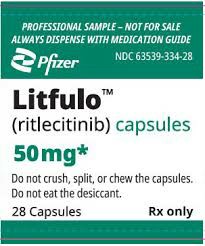
Efficacy outcomes included the proportion of patients with a Hair Loss Severity Tool (SALT) score of ≤20 and ≤10, the proportion of patients with a Patient Global Impression of Change (PGI-C) score of "moderate improvement" or "significant improvement," and eyebrow assessment (EBA) and eyelash assessment (ELA) responses (patients with abnormal baseline EBA/ELA improved ≥2 grades from baseline or normal scores).
Results:The mean (SD) ritixitinibexposure time among the 449 newly enrolled patients was 728.7 (273.81) days. At 24 months (as observed), 73.5% and 66.4% of patients had SALT scores ≤20 and ≤10; 82.4% had PGI-C responses; 60.8% and 65.7% of patients had EBA and ELA responses.
Treatment-emergent adverse events (AEs) were reported by 86.1% of patients; most were mild or moderate in severity, with the most common being a positive severe acute respiratory syndrome coronavirus 2 test (24.2%), headache (20.8%), and pyrexia (13.0%). The incidence rates of serious adverse events, serious adverse events, and treatment discontinuation were 4.9%, 6.0%, and 6.5%, respectively. There were 6 cases of herpes zoster infection, 4 cases of serious infection, 3 cases of malignant tumors (excluding non-melanoma skin cancers), and 3 cases of major cardiovascular adverse events. In patients with AA and ≥25% scalp alopecia, ritinib demonstrated clinical efficacy and an acceptable safety profile with long-term treatment.
References:https://medicaldialogues.in/dermatology/news/study-highlights-long-term-efficacy-of-ritlecitinib-in-alopecia-areata-142685
[ 免责声明 ] 本页面内容来自公开渠道(如FDA官网、Drugs官网、原研药厂官网等),仅供持有医疗专业资质的人员用于医学药学研究参考,不构成任何治疗建议或药品推荐。所涉药品可能未在中国大陆获批上市,不适用于中国境内销售和使用。如需治疗,请咨询正规医疗机构。本站不提供药品销售或代购服务。


