
.jpeg)
Which generation of targeted drug is afatinib? What is its role in lung cancer treatment?
Afatinib is a second-generation irreversible EGFR tyrosine kinase inhibitor (TKI), mainly used to treat EGFR mutation-positive non-small cell lung cancer (NSCLC) patients. As an oral targeted drug, afatinib's unique mechanism of action enables it to irreversibly inhibit the EGFR family (including EGFR, HER2, and HER4), thereby blocking the growth signals of cancer cells. This irreversible binding characteristic makes it have a more durable effect than the first-generation EGFR-TKI (such as gefitinib and erlotinib), and can overcome some drug resistance to a certain extent.
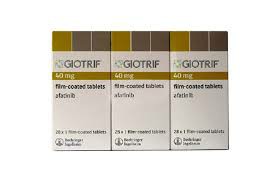
In the treatment of lung cancer,EGFR mutation is one of the most common driver gene mutations, especially in Asian non-smoking female patients. Afatinib is mainly used for the first-line treatment of patients with advanced or metastatic NSCLC with EGFR exon 19 deletion (Del19) or L858R mutation. Its efficacy has been fully verified in the LUX-Lung 3 and LUX-Lung 6 clinical trials. Compared with traditional chemotherapy, afatinib significantly improved progression-free survival (PFS) and objective response rate (ORR), and improved patients' quality of life. In addition, afatinib was also proven to be more advantageous in prolonging PFS and reducing the risk of disease progression than the first-generation EGFR-TKI (gefitinib) in the LUX-Lung 7 study.
Although afatinib is effective inEGFR mutation-positive lung cancer, its use still requires attention to the issue of drug resistance. The resistance mechanism of EGFR-TKI drugs is relatively complex. The most common acquired resistance mutation is the T790M mutation, which will reduce the inhibitory effect of afatinib. When a patient's disease progresses due to the T790M mutation, it is usually necessary to switch to a third-generation EGFR-TKI (such as osimertinib), which can specifically inhibit the T790M mutation. In addition, some patients may experience side effects such as rash, diarrhea, and stomatitis after taking afatinib, but most of them can be relieved through dose adjustment or symptomatic treatment.
Reference materials:https://www.giotrif.com/
[ 免责声明 ] 本页面内容来自公开渠道(如FDA官网、Drugs官网、原研药厂官网等),仅供持有医疗专业资质的人员用于医学药学研究参考,不构成任何治疗建议或药品推荐。所涉药品可能未在中国大陆获批上市,不适用于中国境内销售和使用。如需治疗,请咨询正规医疗机构。本站不提供药品销售或代购服务。


