
.jpeg)
How effective is ribociclib? Is its application effect stable in clinical treatment?
Ribociclib is a selective CDK4/6 inhibitor, mainly used to treat estrogen receptor-positive, HER2-negative advanced or metastatic breast cancer, especially for those breast cancer patients with hormone receptor-positive and HER2 negative expression. Ribociclib works by inhibiting cyclin-dependent kinases (CDK) 4 and CDK6< /span>, prevents tumor cells from progressing from the G1 stage to the S stage, thereby effectively inhibiting the proliferation of tumor cells. Clinical studies have shown that ribociclib can significantly prolong the progression-free survival (PFS) of patients when combined with endocrine therapy, and its efficacy is significant.
In clinical trials, the effect of ribociclib combined with aromatase inhibitors (such as anastrozole) or tamoxifen in the treatment of hormone receptor-positive, HER2-negative breast cancer has been fully verified. Take MONALEESA-2, MONALEESA-3 and MONALEESA-7 Represented by clinical trials such as , research shows that ribociclib not only performs well in prolonging the progression-free survival of patients, but also effectively delays disease progression, especially for patients with hormone receptor-positive, HER2-negative, metastatic breast cancer. Compared with endocrine therapy alone, the combination treatment regimen with ribociclib can significantly improve the efficacy.
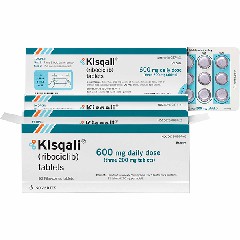
The efficacy of ribociclib is relatively stable in clinical treatment, especially for patients who have failed endocrine therapy. Long-term follow-up and clinical practice have shown that ribociclib combined with endocrine therapy can effectively control tumor progression and can sustain its efficacy in most patients. However, a small number of patients may develop drug resistance after a period of treatment. Despite this, ribociclib, as a targeted therapy drug, has fewer side effects and stable efficacy compared with chemotherapy, so it has become one of the important treatment options in the treatment of breast cancer.
The clinical application effect of ribociclib is satisfactory, but it is also accompanied by certain side effects. The most common side effects include leukopenia, neutropenia, liver function abnormalities, etc., and these side effects are usually effectively monitored and managed during treatment. In order to reduce the occurrence of adverse reactions, doctors will regularly monitor the patient's hematological indicators and liver function, and adjust the dose or suspend treatment according to the specific situation. Although side effects are common, ribociclib's side effects are relatively mild compared with other anti-cancer drugs, and the stability and durability of its therapeutic effect make it one of the important drugs for the treatment of hormone receptor-positive breast cancer.
Reference materials: https://us.kisqali.com/
[ 免责声明 ] 本页面内容来自公开渠道(如FDA官网、Drugs官网、原研药厂官网等),仅供持有医疗专业资质的人员用于医学药学研究参考,不构成任何治疗建议或药品推荐。所涉药品可能未在中国大陆获批上市,不适用于中国境内销售和使用。如需治疗,请咨询正规医疗机构。本站不提供药品销售或代购服务。


