
.jpeg)
What is the general course of treatment for vigabatrin/vigabatrin in children with spasticity?
Vigabatrin/vigabatrin is an irreversible GABA transaminase inhibitor that is widely used to treat childhood spasms (infant spasms, West syndrome) and other refractory epilepsy types. Its mechanism of action is mainly by inhibiting the activity of GABA transaminase and increasing the concentration of γ-aminobutyric acid (GABA), thereby inhibiting epileptic discharges. Infantile spasticity is a severe epileptic syndrome in infants and young children that, if left untreated, may affect neurodevelopment, so early intervention is crucial.
In the treatment of infantile spasms, vigabatrin is considered one of the drugs of choice, especially for infantile spasms associated with tuberous sclerosis complex (Tuberous Sclerosis Complex, TSC). Clinical studies have shown that the drug is highly effective in controlling spasticity attacks, and some children can see significant improvement within days to weeks of treatment. However, the length of vigabatrin treatment varies between individuals, as well as the severity of the condition and response to treatment.
In general, treatment with vigabatrin is usually divided into several stages. The first is the initial treatment stage. Doctors usually adjust the dose according to the child's weight. The starting dose is about 50mg/kg/day, which can then be gradually increased to a maximum of 150mg/kg/day, taken in two divided doses. Most children can observe a reduction in the frequency of seizures within 2 to 4 weeks. If no obvious effect is seen after 4 weeks, the doctor may adjust the dose or consider switching to other anti-epileptic drugs, such as ACTH (adrenocorticotropic hormone) or steroid drugs.
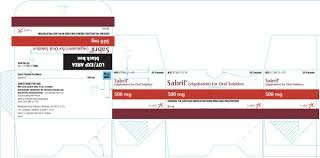
If vigabatrin is effective during the initial treatment phase, the child will often continue maintenance treatment for several months to ensure adequate disease control. Most clinical guidelines recommend that when spasticity has completely disappeared within three to six months, gradual dose reduction and eventual discontinuation may be considered. But if a child's seizure symptoms return, the doctor may recommend restarting vigabatrin or a combination of other antiepileptic drugs.
For some children with high risk factors, such as those with tuberous sclerosis, the course of vigabatrin may be longer. Studies have shown that early treatment with vigabatrin in such children can significantly reduce the frequency of epileptic seizures and may have a certain protective effect on neurodevelopment. Therefore, vigabatrin may need to be continued for at least 12 months or longer in the treatment of tuberous sclerosis-related infantile spasms.
However, because vigabatrin may cause serious side effects such as visual field defects, children's vision needs to be closely monitored during long-term use. European and American guidelines recommend that children should receive an eye examination every 3 to 6 months during treatment to assess whether visual field damage has occurred. If severe visual field loss is discovered during treatment, your doctor may consider adjusting the dose or switching to another medication.
In general, the duration of vigabatrin treatment in children with spasticity varies based on individual circumstances. For most children, if the initial treatment is effective within 4 to 6 weeks, it is usually recommended to continue it for 3 to 6 months to ensure that the disease is adequately controlled. For children with tuberous sclerosis, the course of treatment may be longer and may require continued treatment for 12 months or longer. Regardless of the length of treatment, regular follow-up and monitoring of vision and neurological development are very important. Parents should strictly follow the medication plan under the guidance of a doctor to ensure that the child obtains the best treatment effect.
Reference materials:https://www.sabril.net/
[ 免责声明 ] 本页面内容来自公开渠道(如FDA官网、Drugs官网、原研药厂官网等),仅供持有医疗专业资质的人员用于医学药学研究参考,不构成任何治疗建议或药品推荐。所涉药品可能未在中国大陆获批上市,不适用于中国境内销售和使用。如需治疗,请咨询正规医疗机构。本站不提供药品销售或代购服务。


