
.jpeg)
Tepotinib plus osimertinib shows activity in EGFR+ non-small cell lung cancer
Based on the 2nd issue of INSIGHT published in 2 study (NCT03940703), the combination of Tepotinib and Osimertinib provided clinical benefit with manageable toxicity for patients with EGFR-mutated non-small cell lung cancer (NSCLC). The dual trial (n=98) had a confirmed objective response rate (ORR) of 50.0% (95% CI, 39.7%-60.3%), which was composed entirely of partial responses (PR); 13% of patients had stable disease for at least 6 weeks and 23% had disease progression.
Notably, the ORR achieved with the combination was consistent across prespecified subsets. Patients with a MET GCN of at least 10 (n=53) had an ORR of 56.6% (95% CI, 42.3%-70.2%). In addition, patients with a MET to CEP7 ratio of 2 or higher (n=48) had an ORR of 56.3% (95% CI, 41.2%-70.5%), and patients with a MET to CEP7 ratio of less than 2 (n=50) had an ORR of 44.0% (95% CI, 30.0%-58.7%). The study results suggest that tepotinib plus osimertinib is a potential chemotherapy-sparing oral targeted therapy option for patients in this setting, for whom there is a high unmet need.
The open-label phase 2 INSIGHT 2 study enrolled patients with advanced or metastatic EGFR-mutated NSCLC who received first-line oscitinib, achieved objective clinical benefit, and experienced disease progression. They were at least 18 years old, had an ECOG performance status of 0 or 1, a minimum life expectancy of 12 weeks, measurable disease according to RECIST 1.1 criteria, and confirmed MET amplification. Of note, patients with asymptomatic brain metastases who did not require steroids, radiation therapy, or surgery within 2 weeks before study treatment were allowed.
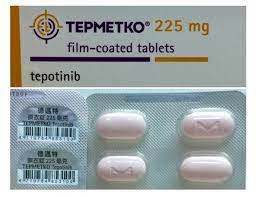
The trial has an initial safety run-in period to determine the recommended phase 2 dose (RP2D) of the dual drug; this is followed by the main treatment period. After receiving combination therapy in a safety trial, patients with MET amplification were randomized 2:1 to receive tepotinib plus osimertinib (n=128) or tepotinib alone (n=12).
After 12 patients were enrolled in the monotherapy group, all patients were assigned to the combination therapy group. The dose of tepotinib is500mg, the dose of osimertinib is 80mg. Treatment was continued until disease progression, death, adverse effects (AEs) leading to discontinuation or discontinuation of treatment.
The primary endpoint of the study is ORR as assessed by the Central Independent Review Committee (IRC) and confirmed by RECIST 1.1 criteria. Secondary endpoints include duration of response (DOR), progression-free survival (PFS), overall survival (OS), health-related quality of life and safety. Intracranial response, including confirmed ORR, disease control, DOR, and PFS, served as exploratory endpoints. The researchers also conducted an exposure-response analysis.
Additional efficacy data showed that among the 49 patients who achieved a response in the main active population, the median DOR was 8.5 months (95% CI, 6.1-not estimable [NE]). At 6 months and 9 months, 66% (95% CI, 50%-77%) and 48% (95% CI, 33%-62%) of patients were event-free, respectively. The median follow-up time was 11.5 months (interquartile range, 9.0-13.8), and the median progression-free survival was 5.6 months (95% CI, 4.2-8.1); the event-free rates at 6 months and 8 months were 48% (95% CI, 37%-58%) and 30% (95% CI, 20%-40%), respectively. The median follow-up was 12.7 months (IQR, 9.9-20.3), and the median OS was 17.8 months (95% CI, 11.1-NE); the event-free rates at 6 months and 8 months were 81% (95% CI, 72%-88%) and 71% (95% CI, 60%-79%), respectively.
54% of patients who discontinued treatment (n=76) continued to receive additional anticancer therapy. A total of 24 patients had brain metastases at baseline evaluable by RANO-BM criteria. Through IRC, the intracranial confirmed ORR of patients in both groups was 29.2% (95% CI, 12.6%-51.1%), including a 25% complete response rate and a 4% PR rate; 50% of patients had stable disease. The intracranial disease control rate was 79.2% (95%CI, 57.8%-92.9%). Median intracranial DOR was NE (95% CI, 3.6-NE), and median intracranial PFS was 7.8 months (95% CI, 3.9-N)
Fifty-four percent of patients experienced a Grade 1 or 2 treatment-related adverse event (TRAE); 29% experienced a Grade 3 event, 2% experienced a Grade 4 event, and 3% experienced a Grade 5 event. The most common TRAEs are diarrhea, peripheral edema, paronychia, nausea, hypoalbuminemia, decreased appetite, increased aspartate aminotransferase, increased serum creatinine, vomiting, rash, anemia, increased alanine aminotransferase, increased lipase, QT prolongation, fatigue, decreased platelet count, decreased neutrophil count, acute kidney injury, carbuncle, dermatitis, febrile neutropenia, hepatolysis, malaise, and myelosuppression. Grade 4 events included decreased white blood cell count, increased lipase, decreased platelet count, decreased neutrophil count, and pleural effusion.
Researcher’s evaluation and confirmation,Four toxic deaths were possibly related to the trial drug: pneumonia, dyspnea, decreased platelet count, and respiratory failure. One death was attributed to pneumonia and dyspnea. Serious TRAEs were experienced by 13% of patients. TRAEs resulted in a dose reduction of at least 1 study drug in 20% of patients; they resulted in temporary discontinuation of at least 1 study drug in 30% of patients and permanent discontinuation in 10% of patients.
Reference materials:https://www.onclive.com/view/tepotinib-plus-osimertinib-demonstrates-activity-in-egfr-nsclc
[ 免责声明 ] 本页面内容来自公开渠道(如FDA官网、Drugs官网、原研药厂官网等),仅供持有医疗专业资质的人员用于医学药学研究参考,不构成任何治疗建议或药品推荐。所涉药品可能未在中国大陆获批上市,不适用于中国境内销售和使用。如需治疗,请咨询正规医疗机构。本站不提供药品销售或代购服务。


