
.jpeg)
What are the detailed instructions for fenelinone?
【Drug Overview】
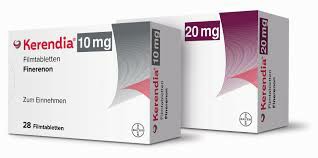
Finerenone , trade name: Kerendia, is a nonsteroidal selective aldosterone receptor antagonist (MRA) primarily used to reduce worsening of renal function and cardiovascular risk in adults with chronic kidney disease (CKD) associated with type 2 diabetes (T2D). Compared with traditional aldosterone receptor antagonists (such as spironolactone and eplerenone), fenelinone is more selective and can reduce the adverse effects related to potassium retention while maintaining good proteinuria-lowering and cardiovascular protection effects.
【Indications】
Finelidone is suitable for patients with chronic kidney disease (CKD) who have type 2 diabetes and is mainly used to reduce the risk of:
eGFR (estimated glomerular filtration rate) continues to decline
End-stage renal disease (ESKD)
cardiovascular death
nonfatal myocardial infarction
Hospitalized for heart failure
【Mechanism of action】
Finelidone is a selective nonsteroidalMRA that blocks the binding of aldosterone to its receptors and reduces inflammation and fibrosis. Its unique molecular structure enables it to reduce the risk of water and sodium retention while providing dual protection to the kidneys and cardiovascular system. Compared with traditional MRA, fenelinone reduces the risk of hyperkalemia and is better tolerated.
【Usage and Dosage】
The recommended dose of fenelidone needs to be adjusted based on the patient'seGFR level:
1. Starting dose
eGFR≥60mL/min/1.73m²: 20mg each time, orally, once a day
eGFR 25-59mL/min/1.73m²: 10mg each time, orally, once a day
eGFR<25mL/min/1.73m²: Not recommended
2. Maintenance dose
The target maintenance dose is 20 mg each timeOrally, once a day
Take medicineThe dose needs to be adjusted after 4 weeks according to the patient's serum potassium level
3. Dose adjustment plan
1) Serum potassium ≤4.8mEq/L
If the starting dose is10mg, it can be increased to 20mg, once a day
If the starting dose is20mg, continue to maintain 20mg, once a day
2) Serum potassium 4.8-5.5mEq/L: Maintain the current dose without adjustment
3) Serum potassium>5.5mEq/L: Suspend taking the medicine until the serum potassium level returns to ≤5.0mEq/L, then resume taking 10mg, once a day
【Drug use for special groups】
1. Patients with liver function impairment: Patients with mild liver function impairment do not need to adjust the dosage, and patients with moderate to severe liver impairment should use it with caution.
2. People with impaired renal function:It is not recommended for patients with eGFR<25 mL/min/1.73m².
3. Elderly people: No special dose adjustment is required, but serum potassium levels need to be closely monitored.
4. Pregnant and lactating women: Since aldosterone receptor antagonists may have an impact on fetal development, pregnant women should avoid using them. Lactating women should decide whether to stop taking the drug or stop breastfeeding after weighing the risks.
【Adverse reactions】
1. Hyperkalemia (the most common): It may cause nausea, abnormal heart rhythm, fatigue, etc. Serum potassium levels should be monitored regularly.
2. Hypotension: Some patients may experience mild dizziness or hypotension, and blood pressure changes need to be closely monitored.
3. Deterioration of renal function: may lead to an increase in serum creatinine levels, and eGFR should be evaluated regularly.eGFR.
4. Mild gastrointestinal discomfort (nausea, diarrhea, etc.): usually resolves on its own.
[Drug interactions]
1. Strong CYP3A4 inhibitors (such as clarithromycin, itraconazole, ritonavir): can significantly increase the plasma concentration of fenelidone, and their combined use is contraindicated.
2. Moderate inhibitors of CYP3A4 (such as verapamil, fluconazole): combination should be avoided. If combined use is necessary, the dose of fenelidone needs to be reduced.
3. CYP3A4 inducers (such as carbamazepine, rifampicin, St. John's wort): can reduce the efficacy of fenelidone and are not recommended for combined use.
4. Other drugs that increase blood potassium (such asACEI, ARB, potassium supplements): Serum potassium levels should be closely monitored when used together.
【Contraindications】
Patients with serum potassium>5.0mEq/L and uncontrollable;
Those with severe liver function impairment;
Patients with eGFR<25mL/min/1.73m²;
Patients receivingstrong CYP3A4 inhibitor treatment;
【Clinical research and efficacy】
The efficacy and safety of fenelidone were verified in theFIDELIO-DKD trial (a global, multicenter, randomized controlled study). This study shows that fenelidone can effectively reduce the risk of CKD progression and cardiovascular complications. Compared with placebo, patients have a significantly slower decline in eGFR and lower proteinuria levels. In addition, the FIGARO-DKD study also confirmed the advantages of fenelidone in reducing the risk of cardiovascular events in patients with T2D and CKD.
【Notes】
1. Monitoring of serum potassium levels: It is recommended to monitor serum potassium levels before treatment, 4 weeks after the start of treatment, and regularly thereafter, and adjust the dose or discontinue the drug if necessary.
2. Blood pressure management: Fenelidone may cause a slight drop in blood pressure, and patients with hypotension should use it with caution.
3. Renal function monitoring: Regular assessment of eGFR is required during use to prevent deterioration of renal function.
Reference materials:https://www.kerendia.com/
[ 免责声明 ] 本页面内容来自公开渠道(如FDA官网、Drugs官网、原研药厂官网等),仅供持有医疗专业资质的人员用于医学药学研究参考,不构成任何治疗建议或药品推荐。所涉药品可能未在中国大陆获批上市,不适用于中国境内销售和使用。如需治疗,请咨询正规医疗机构。本站不提供药品销售或代购服务。


