
.jpeg)
What is the correct usage and dosage of tofacitinib? How to adjust the dosage according to individual condition?
1. Basic usage and dosage of tofacitinib
Tofacitinib is a Janus kinase (JAK) inhibitor mainly used to treat immune-related diseases such as rheumatoid arthritis (RA), psoriatic arthritis (PsA) and ulcerative colitis (UC). This drug needs to be used under the guidance of a doctor, and the dose should be adjusted according to the patient's condition, liver and kidney function, and other risk factors.
Common dosage recommendations are as follows:
Rheumatoid Arthritis (RA) and Psoriatic Arthritis (PsA):
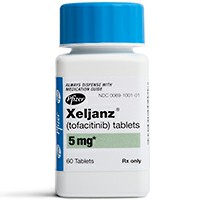
Standard dosage: The common strength of tofacitinib tablets is 5 mg, and the recommended dosage is 5 mg twice daily.
Extended-release tablets (XR): Extended-release tablets of tofacitinib are usually 11 mg, and the recommended dose is once daily.
Ulcerative colitis (UC):
Induction therapy (initial phase): The recommended dose for the first 8 weeks is 10 mg twice daily.
The dosage adjustment of tofacitinib needs to take into account the patient's renal function, liver function, risk of infection and drug interactions. The following are the specific adjustments:
(1) Patients with renal insufficiency
Moderate or severe renal impairment (eGFR < 60 mL/min/1.73m²):
The standard dose needs to be halved, that is, 5 mg once a day or 11 mg as an extended-release tablet once every other day.
(2) Patients with liver function impairment
Moderate hepatic impairment (Child-Pugh class B): The dose needs to be reduced by half, that is, 5 mg once a day or 11 mg extended-release tablets once every other day.
Severe hepatic impairment (Child-Pugh class C): Tofacitinib is not recommended.
(3) Combined with severe infection or leukopenia
If the absolute neutrophil count (ANC) is lower than 1000/mm³ or the lymphocyte count is lower than 500/mm³, use should be suspended and whether to restart medication will be evaluated after recovery.
If the patient develops a serious infection (such as pneumonia, sepsis, etc.), treatment should be suspended until the infection is controlled before resuming medication.
(4) Elderly patients over 65 years old
Because elderly patients are at higher risk for infection, cardiovascular disease, and blood clots, caution is recommended and lower doses may be considered.
3. How to take tofacitinib and precautions
(1) How to take
Take with or without food. Swallow with a full glass of water and avoid chewing or breaking the tablets.
Sustained-release tablets (XR) should be swallowed whole and should not be broken, otherwise the sustained-release effect of the drug will be affected.
(2) Avoid combination with certain drugs
Tofacitinib is mainly metabolized by CYP3A4 enzymes and CYP2C19 enzymes, so it is necessary to avoid coadministration with strong CYP3A4 inhibitors (such as ketoconazole, ritonavir) or strong inducers (such as rifampicin), otherwise it may affect the efficacy of the drug or increase side effects.
4. Possible problems and countermeasures during medication
Common side effects: headache, diarrhea, nausea, elevated blood lipids, elevated liver enzymes, etc., are usually mild and can be relieved on their own.
Increased risk of infection: Tofacitinib suppresses the immune system, making patients more susceptible to respiratory infections, tuberculosis, shingles, and more. If symptoms such as fever, cough, skin rash, etc. occur, seek medical attention immediately.
Thrombosis and cardiovascular risks: Long-term use may increase the risk of venous thrombosis (DVT), pulmonary embolism (PE) and heart disease. Patients with high-risk factors should use it with caution.
Regular examination: It is recommended to regularly monitor blood routine, liver and kidney function, blood lipid levels and infection markers during medication to ensure safe medication.
Tofacitinib is a JAK inhibitor used in rheumatoid arthritis, psoriatic arthritis and ulcerative colitis. The standard dose is usually 5 mg twice daily, but dosage adjustment may be required in patients with renal insufficiency, impaired hepatic function, or elderly patients. During medication, you need to pay attention to risks such as infection, blood clots, liver and kidney dysfunction, etc., and monitor your physical condition regularly. Reasonable adjustment of dosage under the guidance of a doctor can effectively improve the therapeutic effect and reduce adverse reactions.
Reference: https://www.xeljanz.com/
Tofacitinib is a Janus kinase (JAK) inhibitor mainly used to treat immune-related diseases such as rheumatoid arthritis (RA), psoriatic arthritis (PsA) and ulcerative colitis (UC). This drug needs to be used under the guidance of a doctor, and the dose should be adjusted according to the patient's condition, liver and kidney function, and other risk factors.
Common dosage recommendations are as follows:
Rheumatoid Arthritis (RA) and Psoriatic Arthritis (PsA):
Standard dosage: The common strength of tofacitinib tablets is 5 mg, and the recommended dosage is 5 mg twice daily.
Extended-release tablets (XR): Extended-release tablets of tofacitinib are usually 11 mg, and the recommended dose is once daily.
Ulcerative colitis (UC):
Induction therapy (initial phase): The recommended dose for the first 8 weeks is 10 mg twice daily.
Maintenance treatment: The recommended dose is 5 mg twice daily, or extended-release tablet 11 mg once daily.
The dosage adjustment of tofacitinib needs to take into account the patient's renal function, liver function, risk of infection and drug interactions. The following are the specific adjustments:
(1) Patients with renal insufficiency
Moderate or severe renal impairment (eGFR < 60 mL/min/1.73m²):
The standard dose needs to be halved, that is, 5 mg once a day or 11 mg as an extended-release tablet once every other day.
(2) Patients with liver function impairment
Moderate hepatic impairment (Child-Pugh class B): The dose needs to be reduced by half, that is, 5 mg once a day or 11 mg extended-release tablets once every other day.
Severe hepatic impairment (Child-Pugh class C): Tofacitinib is not recommended.
(3) Combined with severe infection or leukopenia
If the absolute neutrophil count (ANC) is lower than 1000/mm³ or the lymphocyte count is lower than 500/mm³, use should be suspended and whether to restart medication will be evaluated after recovery.
If the patient develops a serious infection (such as pneumonia, sepsis, etc.), treatment should be suspended until the infection is controlled before resuming medication.
(4) Elderly patients over 65 years old
Because elderly patients are at higher risk for infection, cardiovascular disease, and blood clots, caution is recommended and lower doses may be considered.
3. How to take tofacitinib and precautions
(1) How to take
Take with or without food. Swallow with a full glass of water and avoid chewing or breaking the tablets.
Sustained-release tablets (XR) should be swallowed whole and should not be broken, otherwise the sustained-release effect of the drug will be affected.
(2) Avoid combination with certain drugs
Tofacitinib is mainly metabolized by CYP3A4 enzymes and CYP2C19 enzymes, so it is necessary to avoid coadministration with strong CYP3A4 inhibitors (such as ketoconazole, ritonavir) or strong inducers (such as rifampicin), otherwise it may affect the efficacy of the drug or increase side effects.
4. Possible problems and countermeasures during medication
Common side effects: headache, diarrhea, nausea, elevated blood lipids, elevated liver enzymes, etc., are usually mild and can be relieved on their own.
Increased risk of infection: Tofacitinib suppresses the immune system, making patients more susceptible to respiratory infections, tuberculosis, shingles, and more. If symptoms such as fever, cough, skin rash, etc. occur, seek medical attention immediately.
Thrombosis and cardiovascular risks: Long-term use may increase the risk of venous thrombosis (DVT), pulmonary embolism (PE) and heart disease. Patients with high-risk factors should use it with caution.
Regular examination: It is recommended to regularly monitor blood routine, liver and kidney function, blood lipid levels and infection markers during medication to ensure safe medication.
Tofacitinib is a JAK inhibitor used in rheumatoid arthritis, psoriatic arthritis and ulcerative colitis. The standard dose is usually 5 mg twice daily, but dosage adjustment may be required in patients with renal insufficiency, impaired hepatic function, or elderly patients. During medication, you need to pay attention to risks such as infection, blood clots, liver and kidney dysfunction, etc., and monitor your physical condition regularly. Reasonable adjustment of dosage under the guidance of a doctor can effectively improve the therapeutic effect and reduce adverse reactions.
Reference: https://www.xeljanz.com/
[ 免责声明 ] 本页面内容来自公开渠道(如FDA官网、Drugs官网、原研药厂官网等),仅供持有医疗专业资质的人员用于医学药学研究参考,不构成任何治疗建议或药品推荐。所涉药品可能未在中国大陆获批上市,不适用于中国境内销售和使用。如需治疗,请咨询正规医疗机构。本站不提供药品销售或代购服务。


