
.jpeg)
What is the effect of ribociclib combined with endocrine therapy in the treatment of breast cancer?
Ribociclib is a targeted drug that is a CDK4/6 inhibitor and is often used in combination with endocrine therapy to treat HR-positive, HER2-negative metastatic or locally advanced breast cancer. CDK4/6 inhibitors inhibit the proliferation of tumor cells by inhibiting cyclin-dependent kinases 4 and 6 (CDK4/6), especially the proliferation of HR-positive breast cancer cells.
In addition, the safety of ribociclib has also received widespread attention. Most patients experience tolerable side effects when using ribociclib combination therapy, such as mild hypoleukemia, abnormal liver function, etc., and these side effects can usually be managed by adjusting the dose. Despite certain side effects, the combined use of ribociclib and endocrine therapy undoubtedly provides a new treatment option for patients with HR-positive breast cancer, especially those for whom traditional endocrine therapy is ineffective or whose disease progresses rapidly.
Ribociclib, used in combination with endocrine therapy, provides significant therapeutic benefits for patients with HR-positive, HER2-negative breast cancer, especially those with advanced or metastatic breast cancer. Combination therapy can significantly extend progression-free survival and improve patient prognosis. Although there may be some side effects, its efficacy and tolerability make it an important option for the treatment of breast cancer.
Reference: https://us.kisqali.com/
The combination of endocrine therapy (such as tamoxifen or aromatase inhibitors) and ribociclib has achieved clinically significant efficacy. Studies have shown that the combination of ribociclib and endocrine therapy can significantly improve progression-free survival (PFS), which is more significant than the use of endocrine therapy alone. Ribociclib blocks the proliferation of tumor cells, slows down tumor growth and prolongs patients' disease-free survival.
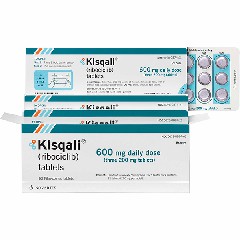
In addition, the safety of ribociclib has also received widespread attention. Most patients experience tolerable side effects when using ribociclib combination therapy, such as mild hypoleukemia, abnormal liver function, etc., and these side effects can usually be managed by adjusting the dose. Despite certain side effects, the combined use of ribociclib and endocrine therapy undoubtedly provides a new treatment option for patients with HR-positive breast cancer, especially those for whom traditional endocrine therapy is ineffective or whose disease progresses rapidly.
Ribociclib, used in combination with endocrine therapy, provides significant therapeutic benefits for patients with HR-positive, HER2-negative breast cancer, especially those with advanced or metastatic breast cancer. Combination therapy can significantly extend progression-free survival and improve patient prognosis. Although there may be some side effects, its efficacy and tolerability make it an important option for the treatment of breast cancer.
Reference: https://us.kisqali.com/
[ 免责声明 ] 本页面内容来自公开渠道(如FDA官网、Drugs官网、原研药厂官网等),仅供持有医疗专业资质的人员用于医学药学研究参考,不构成任何治疗建议或药品推荐。所涉药品可能未在中国大陆获批上市,不适用于中国境内销售和使用。如需治疗,请咨询正规医疗机构。本站不提供药品销售或代购服务。


