
.jpeg)
How effective is durvalumab (durvalumab) in the treatment of small cell lung cancer? How long is the medication cycle?
Durvalumab is a humanized anti-PD-L1 monoclonal antibody that blocks PD-L1 and < The interaction between span>PD-1 and B7.1 restores the immune response of T cells to tumors and enhances the body's anti-tumor ability. Unlike PD-1 inhibitors, durvalumab mainly acts on PD-L1, avoiding interference with other immunosuppressive pathways mediated by PD-1, and may reduce the occurrence of autoimmune-related adverse reactions in some cases.
Small cell lung cancer (SCLC) is a highly aggressive type of lung cancer that accounts for approximately 10% to 15% of all lung cancer cases. SCLCProliferates rapidly and is prone to early distant metastasis, so the prognosis is poor. In the past, the standard treatment of SCLC mainly relied on chemotherapy (such as etoposide combined with platinum chemotherapy), but drug resistance was a serious problem and the survival period was short. In recent years, the emergence of immune checkpoint inhibitors (such as PD-L1 and PD-1 PD-1 inhibitors) has brought new hope for the treatment of SCLC. As a PD-L1 inhibitor, durvalumab has been confirmed to have certain survival benefits in the treatment of extensive-stage small cell lung cancer (ES-SCLC) and has been included in some guideline recommendations.
The efficacy of durvalumab in the treatment of small cell lung cancer
The efficacy of durvalumab in SCLC is mainly based on the CASPIAN study, which is an international multi-center, Phase III clinical trial evaluated the efficacy of durvalumab combined with chemotherapy in patients with extensive-stage small cell lung cancer (ES-SCLC). The results of the study showed that durvalumab combined with chemotherapy significantly improved overall survival (OS) compared with patients who received etoposide combined with platinum-based chemotherapy alone.
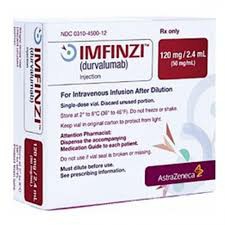
Specifically, inCASPIANIn the study, the median overall survival (mOS) of patients who received durvalumab plus chemotherapy was 13.0 months, compared with patients who received chemotherapy alone. mOS was 10.3 months, and the risk of death was reduced by 27%. In addition, the 2 annual survival rate has also improved. The 2 annual survival rate in the durvalumab group reached 22.9%, while the chemotherapy alone group was only 14.4%. These data indicate that durvalumab can effectively prolong the survival time of SCLC patients and improve the possibility of long-term survival to a certain extent.
In addition, the safety profile of durvalumab was acceptable. In the CASPIAN study, the incidence of adverse reactions in patients who received durvalumab combined with chemotherapy was similar to that in the chemotherapy alone group. The most common adverse reactions included bone marrow suppression (such as neutropenia), fatigue, nausea, and immune-related adverse reactions (such as hepatitis, pneumonia, thyroid dysfunction, etc.). Compared with chemotherapy, the adverse reactions of immunotherapy are manageable to a certain extent, and it can bring more lasting effects in some patients.
Durvalumab dosage cycle
The recommended dose and duration of durvalumab are similar to other immune checkpoint inhibitors. In the treatment of SCLC, durvalumab is usually combined with etoposide and carboplatin or cisplatin for first-line treatment. The standard usage is intravenous infusion once every 3 weeks, 1500 each time mg for 4 cycles, followed by maintenance therapy alone (that is, no combination with chemotherapy), intravenous infusion once every 4 weeks, 1500 mg each time, until the disease progresses or the patient cannot tolerate it.
The design of this medication regimen is mainly to quickly control the tumor in combination with chemotherapy in the early stage, and at the same time, introduce immunotherapy to delay disease progression and improve long-term survival rate. Single-agent durvalumab treatment in the maintenance treatment phase can further activate the immune system, continuously inhibit tumor growth, while reducing chemotherapy-related adverse reactions and improving patient tolerance and quality of life.
The role of durvalumab inSCLC treatment
Currently, durvalumab has been recommended by multiple international guidelines for the first-line treatment of extensive-stage small cell lung cancer. For example, the National Comprehensive Cancer Network (NCCN) guidelines and the European Society for Medical Oncology (ESMO) guidelines both recommend durvalumab combined with chemotherapy as ES-SCLCfirst-line treatment options. Compared with other immune checkpoint inhibitors (such as atezolizumab), durvalumab has similar efficacy, but its dosage frequency is lower (once every 4 weeks in the maintenance period, compared with once every 3 weeks for atezolizumab), which may improve patient compliance to a certain extent.
In addition, durvalumab has also shown good efficacy in other tumor types besides SCLC (such as non-small cell lung cancer, bladder cancer, etc.), and its application in the field of immunotherapy continues to expand. In the future, with the accumulation of more clinical trial data, the optimal treatment strategy and combination treatment regimen of durvalumab in SCLC may be further optimized to improve the survival benefit of more patients.
Durvalumab, as a PD-L1 inhibitor, has shown good efficacy in the first-line treatment of extensive-stage small cell lung cancer (ES-SCLC). It can significantly prolong the survival time of patients and improve long-term survival rate. Its standard medication regimen includes early combination chemotherapy (once every 3 weeks for a total of 4 cycles) + maintenance monotherapy (once every 4 weeks until disease progression), which has good tolerance and compliance. Although immune-related adverse reactions require close monitoring, the overall safety profile is acceptable. Therefore, durvalumab has become an important choice for immunotherapy of SCLC and is gradually playing a greater role in clinical application.
Reference materials:https://www.imfinzi.com/
[ 免责声明 ] 本页面内容来自公开渠道(如FDA官网、Drugs官网、原研药厂官网等),仅供持有医疗专业资质的人员用于医学药学研究参考,不构成任何治疗建议或药品推荐。所涉药品可能未在中国大陆获批上市,不适用于中国境内销售和使用。如需治疗,请咨询正规医疗机构。本站不提供药品销售或代购服务。


