
.jpeg)
Zotuximab combined with chemotherapy approved in China for treatment of CLDN18.2+ advanced gastric/GEJ adenocarcinoma
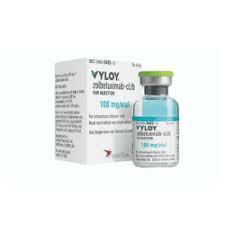
The National Medical Products Administration of China (NMPA) has approved Zolbetuximab (Zolbetuximab)-Vyloy in combination with a fluoropyrimidine- and platinum-containing chemotherapy regimen for the first-line treatment of patients with locally advanced unresectable or metastatic HER2-negative gastric cancer or gastroesophageal junction (GEJ) adenocarcinoma whose tumors are Claudin18.2 (CLDN18.2) positive. The regulatory decision is supported by data from the Phase 3 SPOTLIGHT (NCT03504397) and GLOW (NCT03653507) trials.
Approximately35% of Chinese patients with advanced and metastatic gastric cancer and GEJ cancer have tumors that express CLDN18.2. By specifically targeting this biomarker with zotuximab, we were able to stimulate selective cell death and reduce the overall number of CLDN18.2-positive cells in the tumor. The NMPA's approval of zotuximab provides a new precision medicine for first-line use in China and supports the ongoing ambition to drive advancement and innovation in cancer care.
In October 2024, the U.S. Food and Drug Administration (FDA)approved zotuximab in combination with a fluoropyrimidine- and platinum-containing chemotherapy regimen for the first-line treatment of adult patients with locally advanced unresectable or metastaticHER2-negative gastric adenocarcinoma or GEJ adenocarcinoma whose tumors were determined to be CLDN18.2 positive by an FDA-approved test.
1. SPOTLIGHT experimental data
Results from the global, randomized, placebo-controlled, double-blindSPOTLIGHT study showed that zotuximab plus chemotherapy produced a statistically significant reduction in the risk of progression or death compared with placebo plus chemotherapy (HR, 0.75, 95% CI 0.60-0.94; P=0.0066). Patients who received zotuximab plus chemotherapy (n=283) had a median progression-free survival (PFS) of 10.61 months (95% CI, 8.90-12.48) compared with patients who received placebo plus chemotherapy (n=282) The PFS was 8.67 months (95% CI, 8.21-10.28). The estimated 12-month and 24-month PFS rates in the zotuximab arm were 49% (95% CI, 42%-55%) and 24% (95% CI, 17%-32%), respectively. In the placebo group, these rates were 35% (95% CI, 28%-42%) and 15% (95% CI, 9%-22%), respectively.
The study included at least18-year-old patients with CLDN18.2-positive, HER2-negative, previously untreated, locally advanced unresectable or metastatic gastric or GEJ adenocarcinoma. CLDN18.2 positivity was defined as at least 75% of tumor cells showing moderate to strong membranous CLDN18 staining, as determined by central immunohistochemistry. Other key inclusion criteria include radiologically evaluable disease according to RECIST 1.1 criteria, ECOG performance status of 0 or 1, and adequate organ function. PFS according to RECIST 1.1 criteria was used as the primary endpoint of the trial. Key secondary endpoints include overall survival (OS) and time to confirmed progression.
1. GLOW experimental data
In the global, randomized, double-blind, placebo-controlledGLOW trial, patients (n=254) who received zotuximab plus CAPOX had a median PFS of 8.21 months (95% CI, 7.46-8.84) , while patients who received placebo plus CAPOX (n=253) had a median PFS of 6.8 months (95% CI, 6.14-8.08) (HR, 0.687; 95% CI, 0.544-0.866; P=0.0007). In the experimental group, the PFS rates at 12 months and 24 months were 35% and 14%, respectively. Those rates in the placebo group were 19% and 7%, respectively.
The investigators recruited patients with previously untreated, locally advanced unresectable or metastatic gastric/GEJ adenocarcinoma, CLDN18.2 positive, HER2 negative. The definition of CLDN18.2 positivity reflects the SPOTLIGHT trial criteria. Patients also required an ECOG performance status of 0 or 1. PFS is the primary endpoint of the trial. Secondary endpoints include OS, time to confirmed exacerbation, overall response rate, duration of response, safety and patient-reported outcomes.
3. Safety data
Results from the SPOTLIGHT and GLOW studies showed that the incidence of serious treatment-emergent adverse events (TEAEs) was similar between the zotuximab and placebo groups. The most common teae of any grade in patients treated with zotuximab include nausea, vomiting, and decreased appetite.
GlobalAbout 30% of patients in the Phase 3 GLOW trial are from mainland China. The results of this study indicate that zotuximab combined with chemotherapy provides a significant survival benefit for patients with CLDN18.2-positive, HER2-negative advanced gastric and GEJ cancer. Analysis of data from the Chinese subgroup showed that Chinese gastric cancer [patients] benefited significantly in terms of survival and quality of life. The NMPA approved zobetuximab, which will provide a valuable and effective first-line treatment option for Chinese patients with advanced gastric cancer.
Reference materials:https://www.onclive.com/view/zolbetuximab-plus-chemo-wins-approval-in-china-for-cldn18-2-advanced-gastric-gej-adenocarcinoma
[ 免责声明 ] 本页面内容来自公开渠道(如FDA官网、Drugs官网、原研药厂官网等),仅供持有医疗专业资质的人员用于医学药学研究参考,不构成任何治疗建议或药品推荐。所涉药品可能未在中国大陆获批上市,不适用于中国境内销售和使用。如需治疗,请咨询正规医疗机构。本站不提供药品销售或代购服务。


