
.jpeg)
Molotinib/mometinib improves OS in myelofibrosis patients pretreated with ruxolitinib
Momelotinib/momelotinib demonstrated improved overall survival (OS) in ruxolitinib myelofibrosis patients compared with best available therapy (BAT), according to data from a matched-adjusted indirect comparison (MAIC) analysis presented at ASH Annual Meeting & Expo 2024.
Data from the mismatch analysis showed that patients who received molotinib (n=383) had a more favorable median OS compared with patients who receivedBAT (n=267; HR, 0.373; 95% CI, 0.297-0.469; P<0.001). In the base case model (Model 1), the median OS also favored molotinib (n=89) and BAT (HR, 0.512; HR, 0.358-0.732; P<0.001). In the surrogate-adjusted model (Model 2), median OS again favored molotinib (n=117) versus BAT (HR, 0.484; 95% CI, 0.347-0.675; P<0.001).
In addition, the median OS benefit in the subgroup of patients with anemia (n=255) who received molotinib was compared with patients who received BAT (n=174; HR, 0.384; 95% CI, 0.293-0.504; P<0.001). Data from model 1 also showed that compared with the BAT group, patients treated with molotinib (n=98) in this subgroup had a median OS benefit (HR, 0.542; 95% CI, 0.387-0.759; P<0.001). The results of model 2 showed that compared with BAT, molotinib (n=146) had a median OS benefit (HR, 0.487; 95% CI, 0.360-0.660; P < 0.001).
[Although] the trials used in this analysis did not provide long-term results, this MAIC suggests that molotinib may provide a greater OS benefit than BAT in the overall cohort and in the anemia population in patients with myelofibrosis who have previously received ruxolitinib tablets. In September 2023, the U.S. Food and Drug Administration (FDA) approved molotinib for the treatment of adult patients with moderate or high-risk myelofibrosis, including primary myelofibrosis or secondary myelofibrosis and anemia. This regulatory decision is supported by results from the Phase 3 MOMENTUM (NCT04173494) and SIMPLIFY-1 trials (NCT01969838).
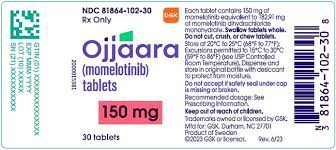
For their analysis, Palandri and colleagues performed a MAIC analysis comparing patients who received molotinib during the MOMENTUM, SIMPLIFY-1, or phase 3 SIMPLIFI-2 trials (NCT02101268) with 267 patients who received BAT in the real-world retrospective RUX-MF study at 26 European hematology centers.
Eligible patients had myelofibrosis and received molotinib or BAT as second-line therapy. BAT includes hydroxyurea, danazol, corticosteroids, erythropoiesis-stimulating agents, and investigational drugs other than molotinib. Comparisons were performed among patients in the chronic phase, thereby excluding patients in the accelerated or blast phase. The anemic subgroup was defined as patients with hemoglobin levels less than10g/dL.
Patients treated with molotinib were reweighted to match the BAT population using 2 models with different matching factors. Both models 1 and 2 used patient age, male gender, BMI higher than 25 kg/m2, myelofibrosis subtype, and myelofibrosis risk score as matching factors. Model 1 also uses hemoglobin level below 10g/dL, white blood cell count above 25x10^9/L, spleen length of at least 10cm, and total symptom score as matching factors.
Additional results from the MAIC analysis showed that when patients randomized to ruxolitinib tablets in SIMPLIFY-1 were excluded from the sensitivity analysis, there was significant improvement in model 1 (HR, 0.479; 95% CI, 0.29 2-0.786; P=0.004) and model 2 (HR, 0.512; 95%CI: 0.330-0.797; P=0.003), the median OS benefit of molotinib is still higher than that of BAT. These data were excluded to eliminate potential survival effects in patients who were not using a JAK inhibitor or who received ruxolitinib tablets during the 24 weeks prior to the study.
When patients randomly assigned to MOMENTUM to receive molotinib were excluded, the results were comparable to BAT using model 1 (HR, 0.551; 95% CI, 0.379-0.800; P= The median OS benefit of molotinib also existed compared to population-matched model 2 (HR, 0.521; 95% CI, 0.366-0.742; P<0.001). These data were excluded to eliminate the potential impact of COVID-19 on survival outcomes.
In the anemia subgroup, when excluding data for SIMPLIFY-1, model 1 (HR, 0.502; 95% CI, 0.335-0.754; P=0.001) and model 2 (HR , 0.533; 95% CI, 0.351-0.722; POS benefit was better than BAT. Similarly, when excluding data from MOMENTUM, the results were comparable to BAT using model 1 (HR, 0.678; 95% CI, 0.457-1005; P = 0.053) and model 2 using population matching (HR, 0.5 46; 95%CI, 0.394-0.757; P<0.001), compared with the median OS benefit of molotinib.
Collectively, combined the results from the SIMPLIFY-2 trial and MOMENTUM, these data further support the use of molotinib as the standard of care for patients with myelofibrosis and anemia in this setting.
References:https://www.onclive.com/view/maic-points-to-improved-os-with-momelotinib-in-ruxolitinib-pretreated-myelofibrosis
[ 免责声明 ] 本页面内容来自公开渠道(如FDA官网、Drugs官网、原研药厂官网等),仅供持有医疗专业资质的人员用于医学药学研究参考,不构成任何治疗建议或药品推荐。所涉药品可能未在中国大陆获批上市,不适用于中国境内销售和使用。如需治疗,请咨询正规医疗机构。本站不提供药品销售或代购服务。


