
.jpeg)
Axitinib/Axitinib Medication Guidelines
1. Overview of Drugs
Common name: Axitinib (Axitinib)
Business name: Inlyta (Inlyta)
Alias: axitinib
2. Indications
Axitinib is mainly used to treat the following diseases:
1) First-line advanced renal cell carcinoma (RCC): It can be used in combination with avelumab or pembrolizumab and is suitable for first-line treatment of patients with advanced renal cell carcinoma.
2) Second-line advanced renal cell carcinoma: As monotherapy for patients with advanced renal cell carcinoma after failure of previous systemic therapy.
3. Usage and dosage
1) Recommended dosage:
First-line treatment in combination with avelumab: The initial dose is 5 mg orally twice daily 12 hours apart. May be used in combination with avelumab 800 mg as an intravenous infusion every two weeks until disease progression or unacceptable toxicity. Consider increasing the dose of axitinib if necessary.
First-line treatment with pembrolizumab: Initial dose is 5 mg orally twice daily 12 hours apart. May be used in combination with pembrolizumab 200 mg every 3 weeks or 400 mg every 6 weeks as an intravenous infusion over 30 minutes until disease progression or unacceptable side effects. Also consider increasing the dose of axitinib when clinically necessary.
Second-line treatment: When used as a single agent, the recommended starting oral dose is 5 mg twice daily, with or without food, approximately 12 hours apart.
2) Medication instructions: Patients are advised to swallow the entire tablet with a full glass of water. In the event of vomiting or missed doses, patients should not take the missed dose but should continue taking it at the next prescribed time.
3) Dose adjustment: The dose should be adjusted according to the patient’s safety and tolerability. During treatment, if the patient tolerates axitinib for two consecutive weeks without grade 2 or above adverse reactions, has normal blood pressure, and does not use antihypertensive drugs, an increase may be considered.
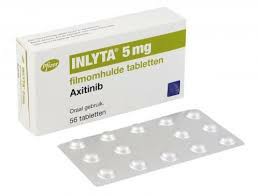
4. Adverse reactions
In clinical studies, common adverse reactions of axitinib include:
Diarrhea
high blood pressure
fatigue
difficulty speaking
nausea and vomiting
Loss of appetite
weight loss
Palm-Plantar Paresthesia Syndrome
hemorrhage
hypothyroidism
Increased proteinuria
Cough and constipation
In addition, serious adverse events related to arteries, including aneurysms and dissections, have been reported post-marketing.
5. Supply and storage
Axitinib tablet specifications include1mg and 5mg. Storage conditions are 20°C to 25°C (68°F to 77°F), with permitted temperature deviations from 15°C to 30°C (59°F to 86°F).
6. Mechanism of action
Axitinib works by inhibiting receptor tyrosine kinases, specifically vascular endothelial growth factor receptors (VEGFR)-1, -2, and -3. These receptors are closely related to pathological angiogenesis, tumor growth, and cancer progression. Studies have shown that axitinib can inhibit VEGF-mediated endothelial cell proliferation and survival, and shows the effect of inhibiting tumor growth and VEGFR-2 phosphorylation in mouse models.
Reference materials:https://dailymed.nlm.nih.gov/dailymed/drugInfo.cfm?setid=84137882-e000-47da-bd5b-fa76ab3c76f9##
[ 免责声明 ] 本页面内容来自公开渠道(如FDA官网、Drugs官网、原研药厂官网等),仅供持有医疗专业资质的人员用于医学药学研究参考,不构成任何治疗建议或药品推荐。所涉药品可能未在中国大陆获批上市,不适用于中国境内销售和使用。如需治疗,请咨询正规医疗机构。本站不提供药品销售或代购服务。


