
.jpeg)
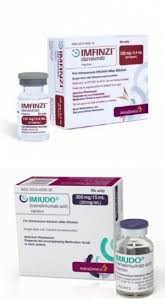
Instructions for tremelimumab
1. Common name: Tremelimumab
Product name:Imjudo
All names: temlimumab, tremelimumab, temlimumab, tremelimumab, ticilimumab
2. Indications:
1. Hepatocellular carcinoma: Tremelimumab combined with durvalumab (durvalumab) is suitable for the treatment of adult patients with unresectable hepatocellular carcinoma (uHCC).
xa0
2. Non-small cell lung cancer: Testumumab combined with durvalumab and platinum-based chemotherapy is suitable for the treatment of adult patients with metastatic non-small cell lung cancer (NSCLC) without sensitizing epidermal growth factor receptor (EGFR) mutations or anaplastic lymphoma kinase (ALK) genomic tumor abnormalities.
3. Usage and dosage:
1. Hepatocellular carcinoma:
Patients with body weight≥30kg should first receive a single dose of 300 mg intravenous injection of temsitumumab on day 1 of the first cycle, and then use imrvalumab< /span>1500mg intravenously, then continue every4 weeks with a single dose of 1500mg durvalumab intravenously;< span>Patients weighing <30kg are treated with a single dose of 4 mg/kg intravenously and 20 mg/kg intravenous durvalumab on day 1 of cycle 1, followed by a single dose of 20 mg/kg durvalumab every 4 weeks thereafter until disease progression or unacceptable toxicity occurs. Administration of both drugs usually does not require hospitalization.
2. Non-small cell lung cancer:
Patients weighing ≥30kg received a single dosetemsilimumab 75 mg intravenously , followed by durvalumab 1500 mg intravenouslybody weight Pan>Patients <30kg received a single dose of temsitumumab 1 mg/kg intravenously, followed by durvalumab 20 mg/kg intravenously, administered every three weeks for cycles 1-4. From the firstCycle 5 begins, with dosing intervals ranging from every 3 weeks to every 4 weeks, with optional pemetrexed treatment beginning at week 12 until disease progression or intolerable toxicity.
4. Adverse reactions:
Among the safety groups summarized in clinical studies, the most common adverse reactions of temsitumumab (>20%) are nausea (37%), decreased appetite (25%) and fatigue (22%), with the most common grade 3 or 4 ( >10%) laboratory abnormalities were neutropenia (39%), leukopenia (21%), lymphopenia (20%), anemia (20%), hyponatremia (14%), elevated lipase (12%), and thrombocytopenia (11%).
5. Storage:
Tesetumumab injection is a clear to slightly opalescent, colorless to slightly yellow solution. It does not contain preservatives. Do not freeze or shake. Give the drug as soon as it is ready for infusion. If the infusion solution cannot be administered immediately and requires storage, the total time from preparation to the start of administration should not exceed 24 hours in a refrigerator at 2°C to 8°C (36°F to 46°F) and 24 hours at room temperature to 30°C (86°F).
6. Special groups:
In response to findings from animal studies and the mechanism of action of temsitumumab, fetal harm may occur when temsitumumab is administered to pregnant women. Since serious adverse reactions may occur in breastfed children, women are advised to take temsitumumab during and after the last dose. Do not breastfeed for the next 3 months. Females of childbearing potential should use effective contraception during treatment with temsitumumab and for 3 months after the last dose.
7. Mechanism of action:
CTLA-4 is a negative regulator of T cell activity. Texitumumabis a monoclonal antibody that bindsCTLA-4 and blocks the interaction with its ligands CD80 and CD86, releasing CTLA-4-mediated inhibition of T cell activation. In synergistic mouse tumor models, blocking CTLA-4 activity resulted in reduced tumor growth and increased T cell proliferation in tumors.
8. Notes:
1. Serious and fatal immune-mediated adverse reactions:
Immune-mediated pneumonitis occurred in 1.3% of patients treated with temsilimumab in combination with durvalumab, and 6% developed Immune-mediated colitis or diarrhea (cytomegalovirus(CMV) infection) occurred, 7.5% developed immune-mediated hepatitis, 1.3% developed immune-mediated adrenal insufficiency, 1% developed immune-mediated hypophysitis/hypopituitarism, 1.5% developed immune-mediated thyroiditis adenitis, 4.6% developed immune-mediated hyperthyroidism, 11% developed immune-mediated hypothyroidism, 0.5% developed immune-mediated type 1 diabetes, 0.7% developed immune-mediated nephritis, 4.9% developed immune-mediated rash or dermatitis, and 2.3% developed immune-mediated pancreatitis. Depending on severity, withhold or permanently discontinue coadministration of temselimumab with durvalumab.
[ 免责声明 ] 本页面内容来自公开渠道(如FDA官网、Drugs官网、原研药厂官网等),仅供持有医疗专业资质的人员用于医学药学研究参考,不构成任何治疗建议或药品推荐。所涉药品可能未在中国大陆获批上市,不适用于中国境内销售和使用。如需治疗,请咨询正规医疗机构。本站不提供药品销售或代购服务。


