
.jpeg)
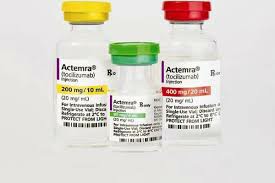
Instructions for Tocilizumab Injection
1. Generic name: Tocilizumab
Product name: Actemra (RoActemra)
All names: Tocilizumab, Tocilizumab, Amerol,Actemra, RoActemra
2. Indications:
1. Rheumatoid arthritis (RA): Tocilizumab is indicated for the treatment of adult patients with moderately to severely active rheumatoid arthritis who have failed to respond to one or more disease-modifying antirheumatic drugs (DMARDs).
2. Giant cell arteritis (GCA): Tocilizumab is suitable for the treatment of giant cell arteritis (GCA) in adult patients.
3. Systemic sclerosis-related interstitial lung disease (SSc-ILD): Tocilizumab is suitable for slowing down the decline of lung function in adult patients with systemic sclerosis-related interstitial lung disease.
4. Polyarticular juvenile idiopathic arthritis (PJIA): Tocilizumab is applicable to the treatment of patients 2 years and older with active polyarticular juvenile idiopathic arthritis.
5. Systemic juvenile idiopathic arthritis (SJIA): Tocilizumab is applicable to the treatment of patients 2 years and older with active systemic juvenile idiopathic arthritis.
6. Cytokine release syndrome (CRS): Tocilizumab is indicated for the treatment of severe or life-threatening cytokine release syndrome (adults and pediatric patients 2 years of age and above) induced by chimeric antigen receptor (CAR) T cells.
7. New coronavirus pneumonia (COVID-19): Tocilizumab is suitable for the treatment of new coronavirus pneumonia in hospitalized adult patients who are receiving systemic corticosteroids and require supplemental oxygen, non-invasive or invasive mechanical ventilation, or extracorporeal membrane oxygenation (ECMO).
3. Usage and dosage:
1. Recommended dose: Tocilizumab can be used as monotherapy or in combination with methotrexate or other non-biological drugs, as an intravenous infusion or subcutaneous injection. Because body weight may fluctuate, do not change the dose based solely on weight measurements at a single visit.
(1) Rheumatoid Arthritis (RA):As an intravenous infusion, The recommended dose of tocilizumab for adult patients is 4 mg/kg every 4 weeks, then increased to 8 mg/kg every 4 weeks based on clinical response. Doses exceeding 800 mg per infusion are not recommended for patients with RA. Patients weighing less than 100 kg are advised to receive 162 mg subcutaneously every other week and then increasing to once weekly based on clinical response. Patients weighing 100 kg or more are recommended to receive 162 mg subcutaneously every week. When transitioning from intravenous tocilizumab therapy to subcutaneous administration, the first subcutaneous dose should be given instead of the next scheduled intravenous dose.
(2) Giant cell arteritis (GCA): The recommended dose of tocilizumab for adult patients is 6 mg/kg every 4 weeks as a single 60-minute intravenous infusion, combined with a tapering course of glucocorticoids. For adults with GCA, the recommended dose of tocilizumab is 162 mg subcutaneously administered once weekly in combination with tapering courses of glucocorticoids. Based on clinical considerations, a dose of 162 mg subcutaneously every other week may be prescribed and this drug may be used alone after discontinuation of glucocorticoids.
(3) Systemic sclerosis-associated interstitial lung disease (SSc-ILD):The recommended dose of tocilizumab is 162 mg subcutaneously once weekly.
(4) Polyarticular Juvenile Idiopathic Arthritis (PJIA): For PJIA patients weighing less than 30kgTocilizumab
(5) Systemic juvenile idiopathic arthritis (SJIA): Recommendation of tocilizumab for patients weighing less than 30kg The recommended dose is 12mg/kg. For patients weighing more than 30kg, the recommended dose of tocilizumab is 8mg/kg, once every 2 weeks, as a 60-minute intravenous infusion. The recommended subcutaneous dose of tocilizumab for patients weighing less than 30 kg is 162 mg once every two weeks, and for patients weighing greater than 30 kg, the recommended subcutaneous dose of tocilizumab is 162 mg once a week.
(6) Cytokine release syndrome (CRS): only treated by intravenous route, patients weighing less than 30kgThe recommended dose of tocilizumab is 12mg/kg. For patients weighing more than 30kg, the recommended dose of tocilizumab is 8mg/kg, intravenously infused every 60 minutes. It may be used alone or in combination with corticosteroids. If there is no clinical improvement in the signs and symptoms of CRS after the first dose, up to three additional doses of tocilizumab may be given, The interval between consecutive doses should be at least 8 hours. Doses exceeding 800 mg per infusion are not recommended for patients with CRS.
(7) New coronavirus pneumonia (COVID-19):The recommended dose of tocilizumab for the treatment of adult patients with new coronavirus pneumonia is 8mg/kg, a single 60-minute intravenous infusion. If clinical signs or symptoms worsen or do not improve after the first dose, another infusion of tocilizumab can be given at least 8 hours after the first infusion. It is not recommended that patients with COVID-19 should infuse more than 800 mg per infusion.
2. Dose adjustment: If the patient develops severe infection, tocilizumab treatment should be suspended until the infection is controlled. Interruption of dosing may be necessary if associated laboratory abnormalities occur, including elevated liver enzymes, neutropenia, and thrombocytopenia.
4. Adverse reactions:
The most common side effects of tocilizumab observed in clinical trials were upper respiratory tract infection (more than 10% of patients), nasopharyngitis (common cold), headache, and hypertension (at least 5%). ALT is elevated in at least 5% of patients, but most patients are asymptomatic. Elevated total cholesterol levels are common. Less common side effects include dizziness, various infections, and skin and mucosal reactions such as mild rash, gastritis, and mouth ulcers. Rare but serious reactions are gastrointestinal perforation (0.26% within 6 months) and allergic reactions (0.2%). After tocilizumab was put on the market, adverse reactions such as fatal allergic reactions, Stevens-Johnson syndrome, pancreatitis, drug-induced liver injury, hepatitis, liver failure, and jaundice occurred.
5. Storage:
Tocilizumab injection is a preservative-free, sterile, clear, colorless to pale yellow solution that must be refrigerated at 36°F to 46°F (2°C to 8°C) and not frozen. Protected from light, prefilled syringes and auto-injectors can be stored at 86°F (30°C) or below for up to 2 weeks after removal from the refrigerator. Prefilled syringes and auto-injectors must always be kept in their cartons.
6. Taboo:
Tocilizumab is contraindicated in patients with known hypersensitivity to tocilizumab or any of its components.
7. Mechanism of action:
Tocilizumab with soluble and membrane-boundBinds to IL-6 receptors (sIL-6R and mIL-6R) and has been shown to inhibit IL-6-mediated signaling through these receptors. IL-6 is a pleiotropic pro-inflammatory cytokine produced by multiple cell types, including T and B cells, lymphocytes, monocytes, and fibroblasts. IL-6 has been shown to be involved in a variety of physiological processes, such as T cell activation, induction of immunoglobulin secretion, initiation of acute phase protein synthesis in the liver, and stimulation of hematopoietic precursor cell proliferation and differentiation. Synoviocytes and endothelial cells also produce IL-6, leading to local production of IL-6 in joints affected by inflammatory processes such as rheumatoid arthritis.
[ 免责声明 ] 本页面内容来自公开渠道(如FDA官网、Drugs官网、原研药厂官网等),仅供持有医疗专业资质的人员用于医学药学研究参考,不构成任何治疗建议或药品推荐。所涉药品可能未在中国大陆获批上市,不适用于中国境内销售和使用。如需治疗,请咨询正规医疗机构。本站不提供药品销售或代购服务。


