
.jpeg)
Pralsetinib has rewritten the treatment landscape for lung cancer. How do Chinese patients cope with the high costs of not being covered by medical insurance?
The International Association for the Study of Lung Cancer (IASLC) and many top medical journals have frequently reported new developments in precision targeted therapy, among which the treatment results of RETgene fusion-positive non-small cell lung cancer (NSCLC) are particularly eye-catching. This rare but dangerous subtype of lung cancer (accounting for about 1-2% of all NSCLC) has long lacked effective treatment, and chemotherapy and immunotherapy have had limited effect. Until the advent of the highly selective RET inhibitor pralsetinib (Pralsetinib), this dilemma was completely changed. This oral targeted drug, known as "a revolutionary drug in the field of lung cancer RET", has been approved for marketing in the United States, China and other countries, and its clinical data shows excellent response rates and survival benefits. However, for Chinese patients, a cruel reality is that although platinib has been launched in China, it has not yet been included in the national medical insurance catalog. The self-pay price of tens of thousands of yuan per box has discouraged many families. This article will comprehensively analyze the efficacy data and usage strategies of platinib, and focus on analyzing the huge price differences and accessible drug purchase channels at home and abroad, providing patients with a practical survival guide.
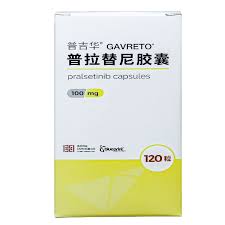
Platinib’s breakthrough
Platinib (trade name: Gavreto®/Gavreto®) is a potent, highly selective oral RET tyrosine kinase inhibitor. Its mechanism of action is highly targeted: by specifically binding to the ATP binding pocket of the RET protein, it blocks abnormal signaling pathways caused by RET fusion or mutation, thereby accurately inhibiting the growth, proliferation and survival of tumor cells.
Their"revolutionary" significance is reflected in the excellent efficacy on specific patient groups:
1.High response rate: In the global pivotalI/IIphaseARROW study, patients who had previously received platinum-based chemotherapy
2.Strong brain activity: Platinib shows excellent intracranial activity against the common problem of brain metastasis in lung cancer. Among patients with measurable brain metastases at baseline, the intracranial objective response rate (IC-ORR) reached 56%, bringing unprecedented control hope to this group of patients with extremely poor prognosis.
3.Frontline treatment status established: Based on excellent clinical data, platinib has been approved in China and the United States for the first-line treatment of RETfusion-positive NSCLC. This means that eligible patients can directly use this highly effective targeted drug without undergoing chemotherapy first, achieving better quality of life and longer survival.
The indications of platinib are not limited to lung cancer. It is also approved for RET mutant medullary thyroid cancer (MTC) and RET fusion-positive thyroid cancer that require systemic treatment, demonstrating its broad-spectrum anti-tumor ability against RET targets.
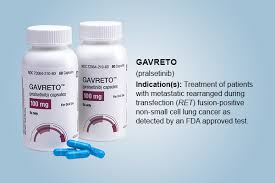
Efficacy data and clinical positioning
Platinib's solid clinical data has rapidly increased its recommendation status in authoritative domestic and foreign guidelines (such asNCCNguidelines, CSCOguidelines).
1.The cornerstone of late-line treatment: For previously treated patients, the ARROW study confirmed that platinib is the standard treatment option. The overall response rate of 61% and the median response duration of nearly two years have completely changed the situation of "no drugs available" for this type of patients.
2.New standard of first-line treatment: In treatment-naïve patients, the performance of platinib is even more astonishing. Studies have shown that the objective response rate (ORR) of first-line use of platinib exceeds 70%, and the median progression-free survival (PFS) is significantly extended. Compared with traditional chemotherapy, targeted therapy usually has more controllable toxicity and a higher quality of life for patients.
3.Overcoming brain metastasis: Its strong blood-brain barrier penetration ability allows patients with brain metastasis to achieve dual control of intracranial and extracranial lesions through oral drugs without the need for separate radiotherapy or surgery, which is difficult to achieve with traditional chemotherapy drugs.
Based on these data, platinib has become an indispensable core drug in the full-course management of RETfusion-positive NSCLC patients.
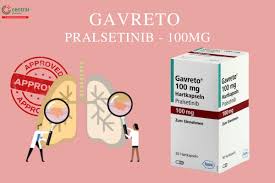
Side Effect Management and Medication Instructions
Like all targeted drugs, platinib may be accompanied by a series of adverse reactions while bringing significant efficacy. Common side effects that need to be managed include:
1.High blood pressure: This is one of the most common side effects, with a high incidence rate. Patients must monitor their blood pressure regularly during medication and use antihypertensive drugs under the guidance of a doctor to control it if necessary.
2.Hepatotoxicity: may lead to an increase in aspartate aminotransferase (AST) and alanine aminotransferase (ALT). Liver function needs to be reviewed regularly during treatment.
3.Interstitial lung disease/Pneumonia (ILD): Although the incidence is not high, it is a serious adverse reaction that requires high vigilance. If patients develop new or worsening cough, dyspnea, or fever, they should seek medical attention immediately and suspend medication.
4.Other common reactions: including constipation, fatigue, musculoskeletal pain, etc., most of which are mild to moderate and can be relieved through symptomatic treatment.
Core medication principles:
1.Gene testing first: Before using platinib, the presence of RET gene fusion must be confirmed through tissue or blood biopsy. This is the prerequisite for precise treatment.
2.Regular monitoring: Strictly abide by medical instructions, regularly review blood routine, liver and kidney function, electrolytes (especially blood phosphorus, because hypophosphatemia is also common) and chest imaging examinations.
3.Doctor-patient communication: Any discomfort should be communicated to the attending doctor in a timely manner, and do not adjust the dosage or stop the medication on your own.
Domestic and foreignOriginal drug and generic drug prices
Price is the most realistic and severe challenge in current platinib treatment. There is a huge price gap between domestic and foreign markets.
1.Domestic market price (original drug, not covered by medical insurance)
The original drug Platinib has been launched in China, but as it has not yet entered into national medical insurance negotiations, patients must pay entirely out of their own pocket:
100mg*120tablets/box: The price is about about 20,000 yuan.
Based on the standard dose (400mg, once a day), patients need to take approximately 120 capsules per month (i.e. one box120 capsules or two boxes of 60 capsules), the monthly treatment cost can easily exceed 20,000 yuan, which is unbearable for most families.
2.Overseas original drug price
Overseas original drugs are also expensive, such as:
United States/European version: The price is extremely high and is usually not considered by Chinese patients.
3.Overseas generic drug selection: Laos version brings“vital” opportunities
Under the huge economic pressure, the generic drug of Platinib, approved by the Ministry of Health of Laos, has become an important supplementary option.
Laos generic drugs (100mg*120pills/box): the market price is about more than 3,000 yuan. Its pharmaceutical ingredients are basically the same as those of the original drug and have passed corresponding quality inspections.
The significance of the huge price difference: The price of generic drugs is only about one-tenth of that of domestic original drugs, which makes long-term maintenance treatment an economically possible option and undoubtedly opens a "life path" for countless patients.
Important risk reminder: The selection of generic drugs must be done through a formal and qualified cross-border medical platform or pharmacy to ensure that the source of the drug is reliable and the informed consent of the doctor is obtained. Absolutely avoid using unknown channels such as individuals to prevent the purchase of counterfeit or substandard medicines, which may delay treatment and endanger health.
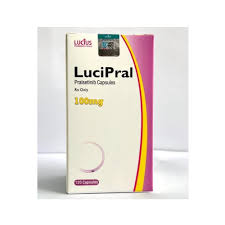
Patients’ Guide to Drug Purchasing and Decision Making
Faced with complex situations, patients can follow the following path to make decisions:
1.Confirm the mutation and clarify the indications: First, conduct a genetic test at an authoritative hospital and confirm that the RET fusion is positive.
2.Assess financial ability: Frankly assess the financial situation with your family and calculate an affordable treatment budget.
3.Understand local accessibility: Consult the oncology department of a large domestic tertiary hospital or the DTP pharmacy to learn about the exact price and purchase process of the original drug.
4. Explore compliant overseas channels: If you consider generic drugs, you should spend time researching and selecting a reputable international medical consulting agency or compliant cross-border pharmacy to verify its qualifications and drug traceability information.
5. In-depth communication with the attending doctor: Communicate openly and honestly with the attending doctor about all drug purchase possibilities (including generic drugs) to ensure medical safety is the ultimate bottom line.
FAQFAQ
1. Is Platinib a chemotherapy drug?
No. It is a precise targeted therapy drug that only works on tumor cells carrying specific RET gene mutations. Compared with chemotherapy, which "kills both good and bad", it has a different side effect spectrum and is usually easier to manage.
2. How long does it take for the medication to take effect?
Effectiveness is usually observed at the first imaging evaluation after the first cycle of treatment (approximately 2-3 months). Some patients may experience relief of symptoms in a shorter period of time.
3. What to do if drug resistance develops?
Resistance is a common challenge in targeted therapy. Currently, new drugs targeting platinib resistance (such as new generation RET inhibitors) are in the clinical research stage. After drug resistance, genetic testing should be performed again to find new treatment targets or consider participating in clinical trials.
4. Can I stop taking the medicine or reduce the dosage on my own?
Absolutely not. Unauthorized discontinuation or dose reduction may lead to rapid tumor progression. Any dosage adjustment must be determined by the attending physician based on efficacy and side effects.
Platinib represents a milestone in the treatment ofRETfusion-positive lung cancer, transforming a fatal disease into a drug-controllable chronic disease. However, the economic wall built by the lack of medical insurance is still a huge obstacle in the way of survival for many Chinese patients. While calling on the country to accelerate the inclusion of such life-saving innovative drugs in medical insurance, high-quality generic drugs obtained through formal channels have become a realistic and important life support point.
For patients and their families, in the era of precision medicine, knowledge is power. Understanding the disease, understanding the drugs, understanding all possible pathways, and making the rational choice that best suits your situation under the guidance of a professional doctor is the key first step to winning this battle of life.
xa0
References
1.Pivotal clinical study (ARROW trial):Gainor, J. F., et al. "Pralsetinib for RET fusion–positive non–small-cell lung cancer (ARROW)." New England Journal of Medicine (2021).
2.China National Medical Products Administration (NMPA) approval information
3.The U.S. Food and Drug Administration (FDA)About Pralsetinib (Pralsetinib)Drug Instructions
4.National Comprehensive Cancer Network (NCCN) Clinical Practice Guidelines: Non-Small Cell Lung Cancer (2025 Edition)
[ 免责声明 ] 本页面内容来自公开渠道(如FDA官网、Drugs官网、原研药厂官网等),仅供持有医疗专业资质的人员用于医学药学研究参考,不构成任何治疗建议或药品推荐。所涉药品可能未在中国大陆获批上市,不适用于中国境内销售和使用。如需治疗,请咨询正规医疗机构。本站不提供药品销售或代购服务。


