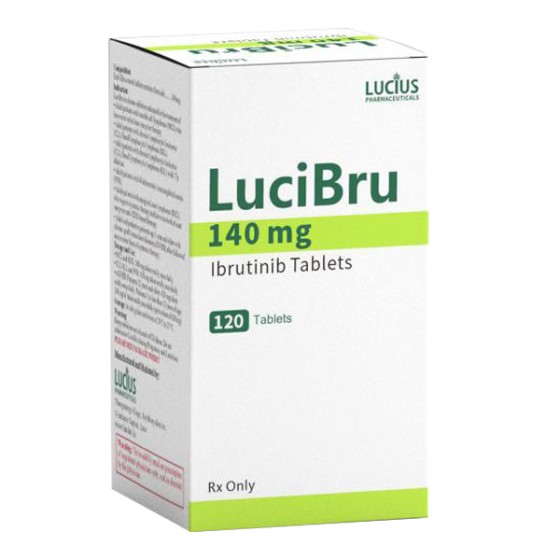
.jpeg)
Important Information for Safe Use of Ibrutinib
Ibrutinib (generic name: Ibrutinib) is a targeted therapy prescription drug that exerts therapeutic effects by inhibiting Bruton's tyrosine kinase (BTK). It is suitable for patients with the following conditions:
Adult patients with mantle cell lymphoma (MCL) who have received at least one treatment.
Adult patients with chronic lymphocytic leukemia (CLL)/small lymphocytic lymphoma (SLL).
Adult patients with Waldenström's macroglobulinemia (WM).
Adult patients with marginal zone lymphoma (MZL) who require systemic treatment and have undergone specific prior treatment.
Patients aged 1 and above with chronic graft-versus-host disease (cGVHD) who have experienced failure in one or multiple systemic treatments.
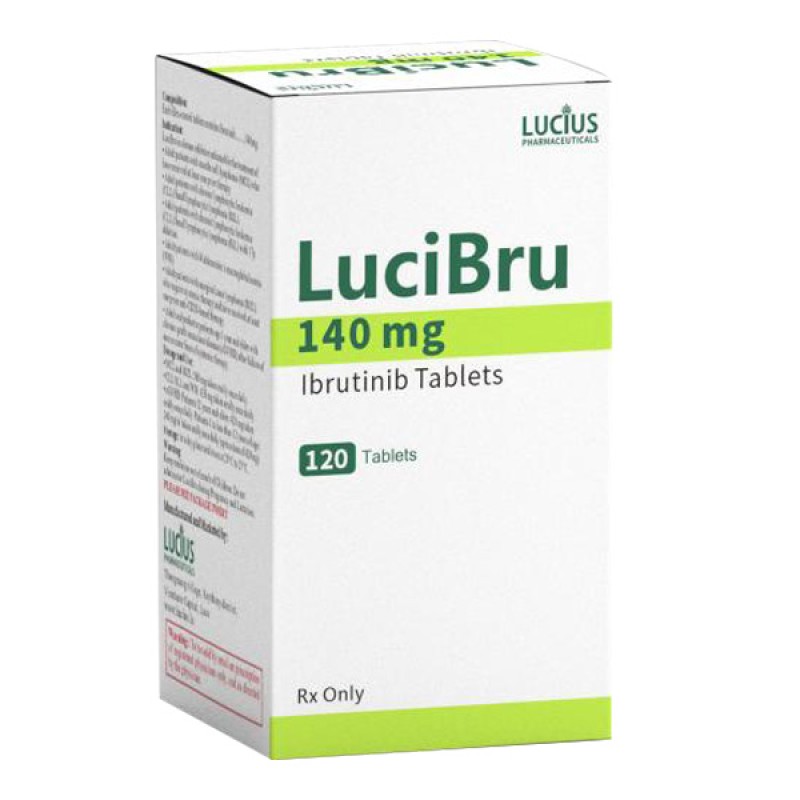
Recommended dosage
Mantle cell lymphoma and marginal zone lymphoma: Take orally 560 mg once daily.
Chronic lymphocytic leukemia/small lymphocytic lymphoma and Waldenström macroglobulinemia: take orally 420 mg once daily.
Chronic graft-versus-host disease:
Patients aged 12 and above: take orally 420 mg once daily.
Patients aged 1 to less than 12 years: Oral administration at a dose of 240 mg/m² per day based on body surface area (maximum dose is 420 mg).
Main side effects
Ibrutinib may cause serious side effects, which require close monitoring:
Bleeding: Common bleeding events during treatment may be severe or even fatal, especially when combined with anticoagulants. Pay attention to symptoms such as bloody stool, black stool, hematuria, abnormal or uncontrollable bleeding, hematemesis, hemoptysis, worsening ecchymosis, dizziness, or persistent severe headache, and seek immediate medical attention.
Infection: Severe infections, including opportunistic infections, may occur. If you experience fever, chills, fatigue, confusion, or signs of infection, seek immediate medical attention.
Cardiac issues: Atrial fibrillation/flutter, ventricular arrhythmias, heart failure, etc., may occur, and those with pre-existing cardiac risks should be particularly vigilant. If you experience palpitations, arrhythmia, dizziness, shortness of breath, lower limb edema, chest pain, or syncope, you should seek immediate examination (such as an electrocardiogram) and evaluate for dose adjustments.
Hypertension: New-onset or worsening hypertension may occur, requiring blood pressure monitoring and appropriate treatment.
Reduction of blood cells: Commonly seen are decreased counts of white blood cells, platelets, and red blood cells, requiring regular monitoring of blood routine tests.
Tumor lysis syndrome (TLS): Rapid decomposition of cancer cells may lead to TLS, causing kidney failure, arrhythmia, epilepsy, etc., which requires prevention and monitoring.
Dose adjustment scheme
Heart failure (Grade 2):
Mantle cell lymphoma/marginal zone lymphoma: reduce to 420 mg/day for the first time, reduce to 280 mg/day for the second time, and discontinue for the third time.
Other indications: Reduce to 280 mg/day for the first time, reduce to 140 mg/day for the second time, and discontinue for the third time.
Heart failure (Grade 3):
Mantle cell lymphoma/marginal zone lymphoma: reduce to 420 mg/day for the first time, and discontinue for the second time.
Other indications: Reduce to 280 mg/day for the first time, and discontinue for the second time.
Heart failure of ≥3 grade or arrhythmia of 4 grade: Discontinue the medication upon initial occurrence.
Grade 4 hematological toxicity:
Mantle cell lymphoma/marginal zone lymphoma: reduce to 420 mg/day for the first time, reduce to 280 mg/day for the second time, and discontinue the medication for the third time.
Other indications: Reduce to 280 mg/day for the first time, reduce to 140 mg/day for the second time, and discontinue the medication for the third time.
Drug interactions and dosage adjustments
Dosage adjustment is required when used in combination with CYP3A4 inhibitors:
Moderate CYP3A4 inhibitor: Reduce the dosage of ibrutinib to 420 mg once daily.
When used in combination with voriconazole or posaconazole oral suspension: reduce the dosage to 280 mg once daily.
When used in combination with posaconazole injection or extended-release tablets: reduce the dosage to 140 mg once daily.
Co-administration should be avoided with: other potent CYP3A4 inhibitors (such as ketoconazole, itraconazole, clarithromycin, nefazodone, and various antiviral combination preparations containing ritonavir).
Important notice
This product is a prescription drug, and its use must strictly follow medical advice. Doctors will decide on individualized treatment plans and necessary dosage adjustments based on the patient's specific condition, treatment response, and severity of side effects. Patients must not change the dosage or discontinue the medication on their own. During treatment, they should regularly visit the doctor for follow-up, monitor blood routine, cardiac function, and related adverse reaction signs to ensure safe and effective treatment.
[ 免责声明 ] 本页面内容来自公开渠道(如FDA官网、Drugs官网、原研药厂官网等),仅供持有医疗专业资质的人员用于医学药学研究参考,不构成任何治疗建议或药品推荐。所涉药品可能未在中国大陆获批上市,不适用于中国境内销售和使用。如需治疗,请咨询正规医疗机构。本站不提供药品销售或代购服务。