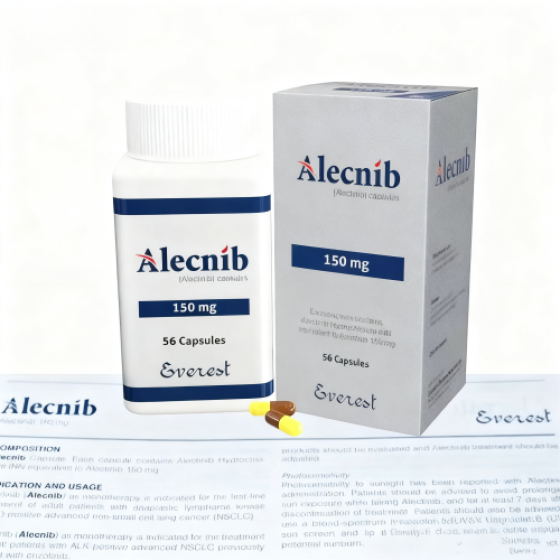
.jpeg)
Alectinib for ALK-Positive Lung Cancer: Efficacy, Side Effects & Clinical Outlook
Alectinib,also known as Alecensa,is a highly effective second-generation tyrosine kinase inhibitor specifically designed for patients with ALK-positive advanced non-small cell lung cancer(NSCLC).This medication demonstrates excellent efficacy and tolerability in both first-line and second-line treatments,becoming an important option for ALK-positive lung cancer therapy.
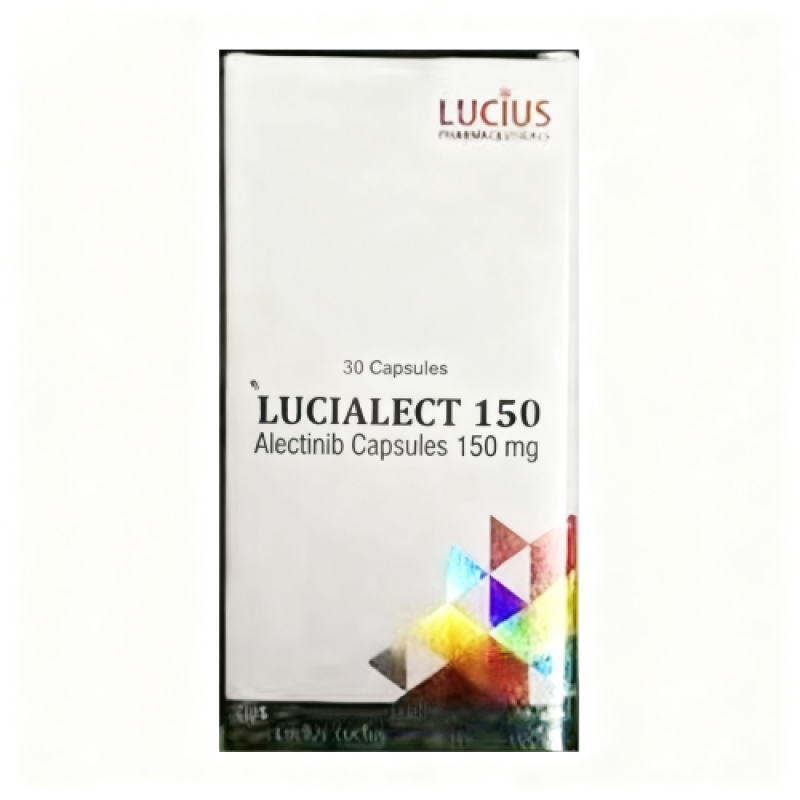
1.First-Line Treatment Advantages
For newly diagnosed ALK-positive advanced NSCLC patients,Alectinib performs excellently as the preferred treatment option.ALEX clinical trial data shows that compared to first-generation ALK inhibitor Crizotinib,Alectinib significantly extends patients'progression-free survival(PFS),effectively reducing tumor progression risk,establishing its priority position in first-line treatment.
2.Second-Line Treatment Efficacy
When disease progression occurs after first-line treatment or patients cannot tolerate it,Alectinib serves as a reliable second-line treatment choice.ALUR trial confirms that compared to traditional chemotherapy,Alectinib demonstrates higher overall response rates and longer progression-free survival in second-line treatment,providing new treatment hope for progressive patients.
3.Brain Metastasis Control
Lung cancer brain metastasis is a common complication for ALK-positive patients.Alesion 2.0 research indicates that Alectinib can effectively cross the blood-brain barrier,with approximately 39%of brain metastasis patients showing lesion reduction or complete disappearance,demonstrating excellent central nervous system control capability.
4.Resistance Management
Long-term Alectinib use may develop resistance.For resistant patients,third-generation ALK inhibitors(such as Lorlatinib,Brigatinib)can serve as subsequent treatment options.Doctors need to regularly evaluate treatment plans and adjust medication strategies or adopt combination therapy when necessary.
5.Safety and Side Effects
Alectinib has overall good tolerability.Common side effects include fatigue,decreased appetite,nausea,vomiting,diarrhea,rash,etc.,mostly mild to moderate.These can be effectively relieved through dose adjustment or symptomatic treatment.Patients should undergo regular check-ups and promptly report discomfort symptoms.
6.Personalized Treatment
Each patient's response to medication varies.Some patients show significant efficacy with good disease control;others may have poorer responses.During treatment,close monitoring of disease changes is required,with flexible adjustment of treatment plans based on individual circumstances.
7.Comprehensive Treatment Strategy
Lung cancer treatment requires diversified strategies.Alectinib can be combined with other medications or radiotherapy to reduce resistance risk and improve treatment efficacy.For patients with local progression or drug intolerance,radiation therapy and other local interventions are also viable options.
8.Future Clinical Outlook
With continuous advancement in lung cancer research,ALK-positive lung cancer treatment continues to progress.Alectinib,as an approved targeted medication,brings new hope to patients.More new drugs targeting ALK fusion genes will emerge in the future,further optimizing treatment outcomes.
Summary
Alectinib demonstrates excellent performance in ALK-positive advanced NSCLC treatment,with significant first and second-line efficacy and outstanding brain metastasis control.Patients should use medication under medical supervision,closely monitor disease condition and side effects,achieving personalized precision treatment.
[ 免责声明 ] 本页面内容来自公开渠道(如FDA官网、Drugs官网、原研药厂官网等),仅供持有医疗专业资质的人员用于医学药学研究参考,不构成任何治疗建议或药品推荐。所涉药品可能未在中国大陆获批上市,不适用于中国境内销售和使用。如需治疗,请咨询正规医疗机构。本站不提供药品销售或代购服务。