
.jpeg)
Zanzalintinib plus atezolizumab versus regorafenib in previously treated metastatic colorectal cancer without MSI-H or dMMR tumors
A reportedPhase III clinical trial (STELLAR-303) found that the multi-target tyrosine kinase inhibitorszanzalintinib and atezolizumab (atezolizumab) combination improves overall survival in patients with previously treated relapsed or refractory metastatic colorectal cancer without microsatellite instability-high (MSI-H) or mismatch repair-deficient (dMMR) tumors.
Study details
In the open-label trial,901 patients from 16 countries were randomly assigned to receive zanzalintinib 100 mg daily plus 1,200 mg every 3 weeks between September 2022 and July 2024. Atezolizumab (n=451) or regorafenib 160 mg daily on days 1 to 21 of a 28-day cycle (n=450). Study treatments were continued if investigators observed sustained clinical benefit or until unacceptable toxicity or the need for alternative anticancer treatments. Among patients who reported race or ethnicity, 58% were white and 38% were Asian. The dual primary endpoints were overall survival in the intention-to-treat population and in the subgroup of patients without liver metastases.
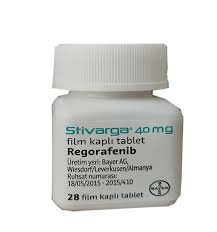
Key Findings
The median follow-up time was 18.0 months (interquartile range = 14.6-21.5 months). The median overall survival in the zanzalintinib plus atezolizumab group was 10.9 months (95% confidence interval = 9.9-12.1 months), compared with regora In the fenib group, it was 9.4 months (95% confidence interval = 8.5-10.2 months) (stratified hazard ratio [HR] = 0.80, 95% confidence interval = 0.69-0.93, P = 0.0045). Separation of the Kaplan-Meier curves occurred early and has since favored zanzalintinib plus atezolizumab. The incidence rates at 12 months and 24 months were 46% and 38%, 20% and 10% respectively. (Laughter)
In an interim analysis of overall survival in patients without liver metastases (zanzalintinib plus atezolizumab group187 cases (41%), 197 cases (44%) in the regorafenib group, zanzalintinib plus atezolizumab group, the median overall survival was 15.9 months ( 95%CI=13.5-17.6 months), while the regorafenib group was 12.7 months (95%CI=10.9-15.5 months) (stratified HR=0.79, 95%CI=0.61-1.03, P=0.087).
Grade 3 or worse treatment-related adverse events occurred in 60% of the zanzalintinib plus atezolizumab group compared with 37% of the regorafenib group; the most common were hypertension (15% vs. 9%), proteinuria (6% vs. 2%), fatigue (6% vs. 2%), and diarrhea (6% vs. 2%). The incidence of treatment-related palmar-plantar red blood cell paresthesia was lower in the zanzalintinib plus atezolizumab group (any grade = 16% vs. 50%; grade 3, 3% vs. 9%). Serious treatment-related adverse events occurred in 26% versus 10% of patients. Adverse events led to treatment discontinuation in 18% versus 15% of patients. Deaths considered treatment-related occurred in 5 patients in the zanzalintinib plus atezolizumab group (due to intestinal perforation and pneumonia in 2 patients, renal failure, and altered mental status in each patient) and in 1 patient in the regorafenib group (due to jejunal perforation).
Conclusions:STELLAR-303 is the first Phase 3 clinical trial to significantly improve overall survival in patients with relapsed or refractory metastatic colorectal cancer (non-MSI-H or dMMR) with an immunotherapy-based regimen (zanzalintinib-atezolizumab ). This combination represents a chemotherapy-free treatment option with a novel mechanism of action for heavily pretreated patients in need of improved therapy.
References: UpdatedNovember 2025, https://ascopost.com/news/november-2025/zanzalintinib-plus-atezolizumab-vs-regorafenib-in-previously-treated-metastatic-colorectal-cancer-without-msi-h-or-dmmr-tumors/
[ 免责声明 ] 本页面内容来自公开渠道(如FDA官网、Drugs官网、原研药厂官网等),仅供持有医疗专业资质的人员用于医学药学研究参考,不构成任何治疗建议或药品推荐。所涉药品可能未在中国大陆获批上市,不适用于中国境内销售和使用。如需治疗,请咨询正规医疗机构。本站不提供药品销售或代购服务。


