
.jpeg)
Tepotinib produces better response in adenocarcinoma versus non-adenocarcinoma MET exon 14 skipped non-small cell lung cancer
Tepotinib showed superior objective response rate (ORR) and disease control rate (DCR) in patients with adenocarcinomaMET exon 14 skipping non-small cell lung cancer (NSCLC) than in patients with non-adenocarcinoma, according to a subgroup analysis of the REAL-MET study. A subgroup analysis of a study submitted in 2025 showed that the ORRs in patients with adenocarcinoma (n=56) were 70.6% and 40.9%, respectively, while MET exon 14 in non-adenocarcinoma (n=23) skipped NSCLC (P=0.021). Specifically, among patients with adenocarcinoma, complete response (CR), partial response (PR), stable disease (SD), and progressive disease (PD) were reported in 0%, 64.3%, 23.2%, and 3.6%, respectively. These rates for nonadenocarcinoma patients were 0%, 39.1%, 34.9%, and 21.7%, respectively. In addition, the DCR of patients with adenocarcinoma and non-adenocarcinoma was 96.1% and 77.3%, respectively (P=0.023).
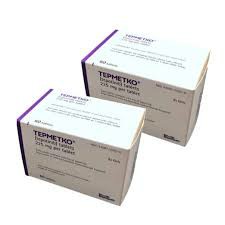
The current real-world analysis found that non-adenocarcinoma histology accounted for 29.1% of patients with MET exon 14-skipping NSCLC, with squamous cell carcinoma, sarcomatoid carcinoma, and adenosquamous carcinoma being the most common subtypes. In February 2024, the FDA approved tepotinib for the treatment of patients with metastatic NSCLC who carry MET exon 14 skipping alterations. The previous accelerated approval of the drug in February 2021 was supported by data from the Phase 2 VISION trial (NCT02864992).
What is the background, design, and patient characteristics of the REAL-MET study?
This retrospective, multicenter, real-worldreal-MET study was conducted at 6 centers in Japan and included patients (n=98) who received MET exon 14 skipped NSCLC between August 2020 and December 2024. Specifically, the subanalysis portion of the study evaluated the efficacy and safety of tepotinib in patients with non-adenocarcinomas, including squamous cell carcinoma and sarcomatoid carcinoma, as well as adenocarcinoma MET exon 14 skipped NSCLC.
Notably, primary objectives include ORR per RECIST 1.1 criteria, progression-free survival (PFS), overall survival (OS) and safety. Patients included in the study (n=79) had adenocarcinoma (70.9%), squamous cell carcinoma (10.1%), sarcomatoid carcinoma (6.3%), adenosquamous carcinoma (5.1%), and not otherwise specified (NOS) subtype (7.6%). In addition, most patients in both groups received tepotinib as first-line treatment (73.9%; 80.4%).
What are the other efficacy data from the REAL-MET study?
In patients with squamous cell carcinoma (n=8), CR, PR, SD, and PD rates were 0%, 37.5%, 37.5%, and 25.0%, respectively; in patients with sarcomatoid carcinoma (n=5), these rates were 0%, 40.0%, 20.0%, and 40.0%, respectively. The CR, PR, SD and PD rates in patients with adenosquamous carcinoma (n=4) were 0%, 50.0%, 50.0% and 0%, respectively; these rates in patients with NOS disease were 0%, 33.3%, 33.3% and 16.7%, respectively.
After tepotinib treatment, the medianPFS and median OS of patients with adenocarcinoma were better than those of patients with non-adenocarcinoma histology, although the difference was not significant. Specifically, the median PFS for patients without adenocarcinoma was 5.3 months (95% CI, 3.8-6.8), compared with 10.4 months (95% CI, 8.0-12.8) for patients with adenocarcinoma (HR, 0.77; 95% CI, 0.45-1.34; P=0.35). Median OS was 16.0 months (95% CI, 3.8-6.8) versus 24.4 months (95% CI, 15.2-33.5) for patients with nonadenocarcinoma and adenocarcinoma histology, respectively (HR, 0.60; 95% CI, 0.31-1.14; P=0.12).
The median PFS for patients with squamous cell carcinoma, sarcomatoid carcinoma, adenosquamous carcinoma, and NOS disease was 4.7 months (95% CI, 2.7-6.8), 5.3 months (95% CI, 0.0-12.9), 8.1 months (95% CI, 0.4-15.9), and 3.6 months (95% CI, 1.4-5.8), respectively. Among patients with respective disease histology, median OS was 16.0 months (95% CI, 0.3-31.7), 5.9 months (95% CI, 5.6-6.1), 30.8 months, and 13.4 months (95% CI, 10.6-16.1).
Although patients with non-adenocarcinoma had shorter PFS and OS than those with adenocarcinoma, tepotinib showed clinical efficacy in the former subgroup, suggesting that the drug is effective in NSCLC that skips MET exon 14, including cases with non-adenocarcinoma histology.
References: UpdatedSeptember 2025, 11https://www.onclive.com/view/tepotinib-generates-superior-responses-in-adenocarcinoma-vs-non-adenocarcinoma-met-exon-14-skipping-nsclc
[ 免责声明 ] 本页面内容来自公开渠道(如FDA官网、Drugs官网、原研药厂官网等),仅供持有医疗专业资质的人员用于医学药学研究参考,不构成任何治疗建议或药品推荐。所涉药品可能未在中国大陆获批上市,不适用于中国境内销售和使用。如需治疗,请咨询正规医疗机构。本站不提供药品销售或代购服务。


