
.jpeg)
FDA approves Tarlatamab-Imdelltra for the treatment of extensive-stage small cell lung cancer (ES-SCLC)
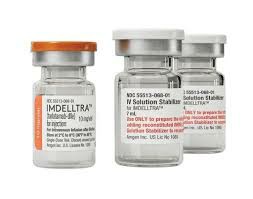
On November 19, 2025, the U.S. Food and Drug Administration (FDA) approved Tarlatamab-Imdelltra (manufactured by Amgen Inc.) for the treatment of adult patients with extensive-stage small cell lung cancer (ES-SCLC). The approval was based on clinical trial data showing disease progression during or after platinum-based chemotherapy. Talatumumab received accelerated approval for this indication in 2024.
1. Drug background and FDA approval
Talatumumab is an immunotherapy drug that is a bispecific antibody that targets an antigen on the surface of small cell lung cancer cells-Delta-like 4 (DLL4). By inhibiting the DLL4 signaling pathway, talatumumab can promote the immune system to recognize and attack cancer cells. The FDA’s approval is based on the results of the DeLLphi-304 clinical trial, which evaluated the efficacy and safety of talatumumab in patients with extensive-stage small cell lung cancer.
II. DeLLphi-304 clinical trial results
DeLLphi-304 is a multicenter, randomized, open-label Phase III clinical trial designed to evaluate the efficacy of talatumumab compared with standard of care (SOC) in patients with small cell lung cancer who have disease progression after platinum-based chemotherapy or anti-PD-(L)1 antibody therapy.
1. Trial design: A total of509 patients participated in the trial and were randomly assigned to the talatumumab group) and the standard treatment group (SOC, including topotecan, lurbinectedin or amrubicin, etc.). The main efficacy indicator is overall survival (OS). Secondary efficacy indicators include progression-free survival (PFS) and patient-reported quality of life.
2. Main therapeutic results:
1) Overall survival (OS):The median OS of the talatumumab group was 13.6 months (95% CI: 11.1, not evaluated), which was higher than the 8.3 months (95% CI: 7.0, 10.2) of the SOC group, and the hazard ratio (HR) was 0.60 (95%) CI: 0.47, 0.77); p value < 0.001, showing that talatumumab prolongs the overall survival of patients.
2) Progression-free survival (PFS):The medianPFS of the talatumumab group was 4.2 months (95% CI: 3.0, 4.4), compared with 3.2 months (95% CI: 2.9, 4.2) of the SOC group. PFS was improved (HR 0.72; 95% CI: 0.59, 0.88; p-value <0.001).
3) Other efficacy indicators: improvement of dyspnea: At the 18th week, the dyspnea symptoms of patients in the talatumumab group were statistically improved, showing that the drug has the potential to improve patients' quality of life.
3. Drug safety and side effects
The prescribing information for talatumumab states that some serious adverse reactions may occur with the use of this drug, including:
1. Cytokine release syndrome (CRS): This syndrome is a systemic inflammatory response caused by an immune response and may pose a threat to the patient's life.
2. Neurotoxicity: including immune effector cell-associated neurotoxic syndrome (ICANS), which is a common side effect in immunotherapy and may affect the patient's nervous system.
3. Cytopenia, infection, hepatotoxicity, hypersensitivity and embryo-fetotoxicity, etc.
Patients need to regularly monitor these potential side effects during treatment and adjust treatment plans based on clinical conditions.
IV. Recommended dosage and usage of talatumumab
Initial dose: 1 mg on day 1 of cycle 1. Subsequent doses: 10 mg on days 8 and 15, then every two weeks until disease progression or unacceptable toxicity. This dosing regimen helps patients maintain stable drug concentrations while maximizing efficacy.
5. Clinical significance and prospects
The approval of talatumumab provides a new treatment option for patients with extensive-stage small cell lung cancer. Small cell lung cancer is a type of lung cancer that progresses rapidly and is difficult to treat. Traditional chemotherapy methods have limited effects and significant side effects. The use of talatumumab can significantly extend patient survival, improve progression-free survival, and reduce symptoms, especially in patients who have failed conventional treatments.
In addition, the application of talatumumab in immunotherapy represents an innovative treatment direction and further enriches the treatment options for small cell lung cancer. As more clinical data accumulate, talatumumab may become a new standard in the treatment of small cell lung cancer, bringing patients longer survival time and higher quality of life.
Keyword tags:FDA approval, Tarlatamab, Imdelltra, small cell lung cancer, ES-SCLC, DeLLphi-304, overall survival, progression-free survival, immunotherapy, cytokine release syndrome
References: Updated on November 19, 2025, https://www.fda.gov/drugs/resources-information-approved-drugs/fda-grants-traditional-approval-tarlatamab-dlle-extensive-stage-small-cell-lung-cancer
[ 免责声明 ] 本页面内容来自公开渠道(如FDA官网、Drugs官网、原研药厂官网等),仅供持有医疗专业资质的人员用于医学药学研究参考,不构成任何治疗建议或药品推荐。所涉药品可能未在中国大陆获批上市,不适用于中国境内销售和使用。如需治疗,请咨询正规医疗机构。本站不提供药品销售或代购服务。


