
.jpeg)
Clinical application and efficacy analysis of durvalumab (durvalumab) combined with chemotherapy regimen
Durvalumab (Durvalumab) is an immune checkpoint inhibitor, a humanized IgG1 monoclonal antibody, which can specifically bind to programmed death ligand 1 (PD-L1), blocking PD-L1 interacts with PD-1 receptors and B7.1 , thus releasing the immunosuppression of T cells by tumor cells and restoring the ability of the immune system to attack tumor cells. With the rapid development of immunotherapy, durvalumab has shown good anti-tumor activity in a variety of solid tumors, and its combination with chemotherapy has become one of the important treatment modes for advanced or unresectable tumors.
In locally advanced unresectable non-small cell lung cancer (NSCLC), durvalumab combined with platinum-based chemotherapy has been shown to significantly improve patient survival. Clinical studies have shown that patients using durvalumab combined with cisplatin or carboplatin plus paclitaxel/gemcitabine regimens have better median progression-free survival (PFS) and overall survival (OS) than the chemotherapy alone group. Combination therapy not only improves the tumor response rate, but also prolongs the disease control time, providing an effective treatment option for patients with advanced NSCLC . In addition, this combination regimen can promote immune memory responses, and some patients can maintain long-term remission after the end of treatment.
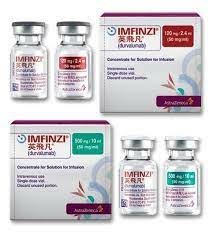
In small cell lung cancer (SCLC) and other solid tumors, durvalumab combined with chemotherapy also shows potential efficacy. For example, in patients with extensive-stage small cell lung cancer, the trial results of durvalumab combined with etoposide and platinum-based chemotherapy showed that the overall response rate (ORR) and progression-free survival were improved, and some patients could be observed to obtain long-term survival benefits. This suggests that durvalumab can not only enhance the direct tumor-killing effect of chemotherapy, but may also control micro-metastasis by activating the immune system, thereby improving the overall efficacy.
The management of side effects of combination chemotherapy regimens is an important part of clinical application. Although durvalumab itself is well tolerated, its combined use with chemotherapy may still increase hematological toxicity, gastrointestinal adverse reactions, and immune-related side effects, such as rash, thyroid dysfunction, and liver function abnormalities. In clinical practice, through regular monitoring of blood routine, liver and kidney function, electrolytes and thyroid function, combined with individualized dose adjustment and supportive treatment, most patients can successfully complete the combined treatment course. In addition, for immune-related adverse events, glucocorticoid or immunosuppressive intervention should be promptly identified and intervened to ensure treatment safety.
Overall, durvalumab (Durvalumab) combined with chemotherapy has shown significant efficacy in advanced non-small cell lung cancer, small cell lung cancer and other solid tumors. Combination chemotherapy can not only improve the response rate and prolong progression-free survival, but may also enhance the long-term immune protection effect of patients. Through standardized side effect management and individualized treatment plans, this combined model provides a safe, feasible and effective treatment strategy for patients with advanced tumors, and at the same time provides clinical practice experience and theoretical basis for the integration of immunotherapy and traditional chemotherapy.
Keyword tag:
PD-L1Inhibitors, immunotherapy, non-small cell lung cancer, small cell lung cancer, combination chemotherapy, side effect management, medical insurance policy, drug price, efficacy evaluation
References:https://www.fda.gov/drugs/resources-information-approved-drugs/durvalumab-imfinzi
[ 免责声明 ] 本页面内容来自公开渠道(如FDA官网、Drugs官网、原研药厂官网等),仅供持有医疗专业资质的人员用于医学药学研究参考,不构成任何治疗建议或药品推荐。所涉药品可能未在中国大陆获批上市,不适用于中国境内销售和使用。如需治疗,请咨询正规医疗机构。本站不提供药品销售或代购服务。


