
.jpeg)
Summary of vorasidenib-VORANIGO clinical trial data and efficacy and resistance in different indications
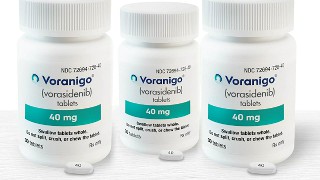
Vorasidenib-VORANIGO is an oral, brain-penetrating IDH1/IDH2 dual inhibitor, mainly used for low-grade gliomas carrying IDH1 or IDH2 mutations (such as 2 grade astrocytoma or oligodendroglioma) postoperative treatment. 2024 8 month, the drug was approved by the US FDA for this indication, and was subsequently approved for marketing in the EU and other regions, marking the first targeted oral drug for IDH mutated low-grade glioma. Its mechanism of action is to inhibit mutant isocitrate dehydrogenase (mIDH) to produce carcinogenic metabolites 2‑HG, thereby interfering with tumor metabolism driving mechanisms, delaying tumor progression, and improving clinical outcomes.
In the III phase INDIGO pivotal trial, vorsidenib significantly improved patients’ progression-free survival (PFS). The study included 331 patients with postoperative 2 grade glioma with IDH1/2 mutations and no enhancing lesions. They were randomly assigned to 40 mg vosidenib or placebo per day. The results showed that the median PFS of the voroxiranib group was about 27.7 months, which was much higher than that of the placebo group, which was about 11.1 months; the risk ratio (HR) was about 0.39, indicating an approximately 61% reduction in the risk of disease progression or death compared with placebo. The secondary endpoint of "time to next intervention (TTNI)" was also significantly longer, reflecting the drug's ability to delay additional treatments such as chemoradiotherapy or further surgery.
Among the patient groups, voroxiranib is particularly effective in patients with non-enhancing lesions . Such patientsPFS The prolongation effect is obvious and the tumor volume is stable or slightly reduced during follow-up. Subgroup analysis showed that approximately 70% of patients experienced no progression events or death during follow-up, reflecting its potential to control tumor growth over the long term. The trial also suggested that vorsidenib can reduce the frequency of epileptic seizures and improve quality of life (such as stable symptoms, improved mobility, etc.). Although it is not used as the primary endpoint, it represents an additional benefit. However, in enhancing glioma or high-grade glioma , early small-scale data suggest that the lesion control effect is relatively limited, and short-term lesions are stable, but the sustained efficacy still needs more research to verify.
Regarding drug resistance, currently it mainly comes from clinical observation and real-world experience rather than large-scale trial reports. Vorsidenib inhibits abnormal metabolism by targeting mutant IDH1/2 . However, with long-term medication, tumors may weaken the inhibitory effect through mechanisms such as activation of bypass pathways and increased heterogeneity of mutation sites, leading to further progression of the disease. In addition, some patients experience toxic reactions such as increased serum aminotransferases during long-term use, which need to be managed through dose adjustment or treatment interruption. Real-world feedback shows that some patients' tumors stabilize or even shrink slightly after taking the drug for several months, and some patients' lesions remain stable after many years of treatment. However, the maintenance time of the therapeutic effect is inconsistent due to individual differences and pathological grade.
Overall, voroxiranib‑VORANIGO showed significant progression-free survival benefit in IDH mutated low-grade glioma and was relatively well tolerated. It is a major breakthrough in the current focus on metabolism-targeted therapy. Clinical data highlight its ability to slow disease progression and delay the need for more invasive treatments, while real-world experience also supports its potential for long-term disease control. As more indication expansion studies (such as high-grade glioma or other IDH mutated tumors) advance, in-depth understanding of drug resistance mechanisms and combination treatment strategies may further optimize its clinical application in the future.
Keyword tag:
Vorasidenib, VORANIGO, clinical trial data, indication efficacy, drug resistance, IDHmutant glioma, progression-free survival, PFS, long-term control, tolerability
Reference materials:https://www.drugs.com/vorasidenib.html
[ 免责声明 ] 本页面内容来自公开渠道(如FDA官网、Drugs官网、原研药厂官网等),仅供持有医疗专业资质的人员用于医学药学研究参考,不构成任何治疗建议或药品推荐。所涉药品可能未在中国大陆获批上市,不适用于中国境内销售和使用。如需治疗,请咨询正规医疗机构。本站不提供药品销售或代购服务。


