
.jpeg)
Is cemiplimab an immune drug or a targeted drug and an in-depth analysis of its PD-1 inhibition mechanism
Cemiplimab is a PD-1 monoclonal antibody that is clearly classified as an immunotherapy drug, rather than a targeted drug in the traditional sense. Although its target is also highly specific, as an immune checkpoint inhibitor, its core mechanism is not to directly inhibit cancer cell division or gene pathways, but to reactivate T cells by lifting the "brakes" of the immune system, restoring their ability to recognize and kill tumors. In recent years, as PD-1/PD-L1 drugs have proven their efficacy in a variety of cancer types, cimepilimab has gradually become an important treatment option in cutaneous squamous cell carcinoma, basal cell carcinoma and other fields. Research on its mechanism has also been in-depth, showing unique pharmacological characteristics.
From the perspective of mechanism of action, cimepilimab is a fully humanized IgG4 PD-1antibodies block the interaction with PD-L1 and PD-L2 ligands by binding to PD-1 receptors on the surface of T cells. When tumor cells express PD-L1, it will bind to PD-1 and transmit inhibitory signals to T cells, causing T cells to enter a "fatigue" state and unable to launch a strong immune attack on the tumor. After cimepilimab blocks this pathway, activation signals on the surface of T cells regain dominance, allowing T cells to recover their proliferation ability, enhance their cytotoxicity, and maintain anti-tumor immune responses for a longer period of time. This mode of action does not directly kill tumors, but mobilizes the immune system to complete the clearance process. Therefore, it is a typical "immune regulatory anti-cancer mechanism" rather than a chemical toxicity or receptor kinase inhibition targeted mechanism.
Compared with otherPD-1 inhibitors, cimepilimab has certain differences in antigen-binding site and affinity, making it particularly advantageous in cutaneous squamous cell carcinoma (CSCC). Studies have shown that CSCC has a higher tumor mutation load (TMB), which means that it expresses more abnormal peptides and is more easily recognized by T cells, so it often responds better to immune checkpoint inhibitor treatment. Cimepilimab shows characteristics such as deep remission and durable response in the context of high mutation load and high PD-L1 expression. The duration of remission in some patients can even exceed several years. This kind of sustained immune activation effect is difficult to achieve with targeted drugs, which also confirms its immunotherapeutic nature.
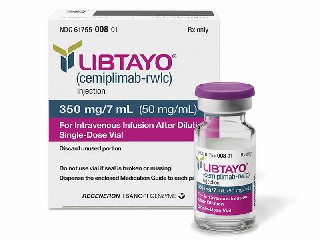
Further observation of its action characteristics shows that cimepilimab not only enhances effector T cells, but also improves the tumor microenvironment (TME). When immunity is reactivated, the number of suppressive cells in tumor tissue such as Tregs will decrease, while the density of anti-tumor cells such as CD8+T cells and NK cells will increase, causing the tumor microenvironment to gradually shift from "immune cold" to "immune hot". In addition, T cells activated by cimipilimab will produce a large number of cytokines, such as IFN-γ, TNF-α. These factors will further inhibit tumor cell proliferation and reduce the ability of tumor immune evasion, forming a "positive feedback immune activation circle." This cascade effect is unique to immune drugs and is completely different from the single-line blocking mechanism of small molecule targeted drugs.
In multiple clinical studies, cimepilimab has demonstrated good response rates and a manageable toxicity profile. Among them, in studies on locally advanced or metastatic CSCC, the objective response rate can reach 40% to 50%, and some patients have achieved complete remission, which is an outstanding achievement in immunotherapy. Its toxicity is mainly caused by traditional immune-related adverse events (irAEs), such as rash, enteritis, hepatitis, thyroid dysfunction, etc., which are similar to other PD-1 drugs. Because it activates immunity rather than directly inhibiting tumor cells, it does not cause rashes, diarrhea, liver toxicity or vascular-related events that are common with targeted drugs. Instead, it mainly focuses on excessive activation of the immune system, which also shows that its mechanism belongs to the category of immunotherapy.
It is worth noting that cimepilimab has also shown potential value in research and exploration for a variety of tumor types, including basal cell carcinoma, lung cancer, and cervical cancer. Among these cancer types, the beneficiary population is still affected by PD-L1 expression, tumor mutation load, microenvironmental characteristics and other factors. These differences in relying on immune biomarkers further confirm its nature as an “immune drug rather than a targeted drug”. The effect of the drug is highly dependent on the immune status rather than whether a single molecular pathway is mutated, which makes cimepilimab an "immune precision type" in precision medicine, different from gene mutation-driven targeting solutions.
In general, cimepilimab is a typical and highly selective immune checkpoint inhibitor that restores the anti-tumor ability of T cells by blocking the PD-1 pathway, and shows significant efficacy in high mutation load cancer types such as cutaneous squamous cell carcinoma. The core of its mechanism is to "relieve the immune brake and restore immune attack" rather than directly targeting the tyrosine kinase or signaling pathway of cancer cells, so it is essentially an immunotherapy drug. As its indications continue to expand, it may become an important immunotherapy option in more tumors in the future.
Keyword tag:
Cimepilimab,PD-1inhibitors, immunotherapy, price, global market, specification cost, accessibility, overseas drug purchase, original drug, generic drug
Reference materials:https://en.wikipedia.org/wiki/Cemiplimab
[ 免责声明 ] 本页面内容来自公开渠道(如FDA官网、Drugs官网、原研药厂官网等),仅供持有医疗专业资质的人员用于医学药学研究参考,不构成任何治疗建议或药品推荐。所涉药品可能未在中国大陆获批上市,不适用于中国境内销售和使用。如需治疗,请咨询正规医疗机构。本站不提供药品销售或代购服务。


