
.jpeg)
Summary of the differences in efficacy between ribociclib (Calilon) and palbocicillin in the combined or comparative treatment of breast cancer
The comparison of ribociclib and palbocicillin in the treatment of hormone receptor-positive, HER2-negative breast cancer has always been an important direction in clinical research. Both are CDK4/6 inhibitors, but they have differences in pharmacokinetics, action selectivity, improvement in clinical endpoints, and adverse reaction spectrum, giving them their own advantages in different patient groups. In recent years, real-world data in first-line and second-line treatments have continued to accumulate, making the differences between the two clearer and providing more clinical evidence for individualized medication.
In terms of clinical efficacy, in a number of large-scale phase III studies, ribociclib has a particularly prominent advantage in improving overall survival. For example, the MONALEESA series of studies showed that, whether combined with fulvestrant or an aromatase inhibitor, ribociclib significantly prolonged patient survival time, and the overall survival gain in some cohorts exceeded one year. This result is very representative among similar drugs, so ribociclib is usually in a higher position in the guideline recommendation level. In contrast, although palbocicillin performed well in progression-free survival in the PALOMA series of studies, it failed to reach statistical significance in the end point of overall survival, which became the most concerning part of the difference in efficacy between the two. However, palbocicillin is still considered a standard and effective first-line regimen, especially in certain subgroups (such as those with lower risk of liver metastasis) with stable PFS performance.
In terms of drug properties, there are differences in the intensity and ratio of inhibition of CDK4 and CDK6. Ribociclib has higher selectivity for CDK4 but weaker inhibition of CDK6, making its anti-tumor mechanism more biased towards blocking ER pathway-dependent tumor proliferation, which may partly explain its advantage in overall survival. Palbocicillin's inhibition of CDK4 and CDK6 is relatively balanced, making it stable in cell cycle arrest, but it is also more likely to cause widespread bone marrow suppression. Many researchers believe that it is the difference in drug effects that leads to the differentiation of the safety spectrum, which indirectly affects the long-term treatment sustainability of different patient groups.
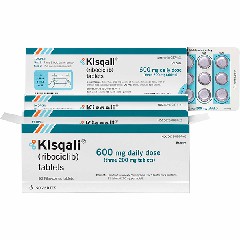
In terms of safety, the most common problem with palbocicillin is neutropenia, and some patients may need to discontinue the drug multiple times or reduce the dose, which is particularly obvious in real-world studies. Although most myelosuppression is not immunosuppressive and is rarely accompanied by serious infections, frequent blood monitoring and dose adjustment are inevitable. The most characteristic adverse reactions of ribociclib are prolongation of the electrocardiogram QT interval and fluctuations in liver function, which must be monitored regularly when combined with aromatase inhibitors. AlthoughQTThe prolongation is mostly mild, but the underlying heart condition still needs to be strictly evaluated and drugs that may affect the heart rhythm must be used with caution. In general, ribociclib is less toxic in terms of bone marrow toxicity, while palbociclib is safer in terms of ECG risks. Therefore, the two have different focuses, and the selection needs to be based on the patient's physical condition and past medical history.
In terms of combined endocrine therapy, both can be used with aromatase inhibitors or fulvestrant. However, judging from the depth of research and level of evidence, ribociclib has more complete survival data and its advantages are more significant in premenopausal female patients. For example, the MONALEESA-7 study shows that ribociclib combined with endocrine therapy can significantly improve the overall survival of young women, which is unique evidence among similar drugs. Many guidelines therefore give priority to the ribociclib regimen in younger patients or those with more aggressive disease. Palbocicillin has advantages in terms of compatibility, tolerability, and broad enrollment. In particular, those who require more flexible dose adjustment are often more suitable for palbocicillin.
Real world data (RWE) further highlights the differences between the two. In a multi-country retrospective study, ribociclib showed a higher treatment persistence rate in long-term follow-up, which may be related to its milder hematological toxicity. With palbocicillin, neutrophils decline rapidly in the first few months of treatment, and some patients have reduced dose density due to multiple suspensions of treatment, which may affect long-term control effects. However, in the context of medical insurance in some countries, due to its early launch and good accessibility, many doctors have accumulated a lot of experience in using palbocicillin, making it still widely used in clinical practice.
To sum up, the differences in efficacy between ribociclib and palbocicillin in the treatment of breast cancer mainly focus on overall survival data, drug selectivity and adverse reaction spectrum. Ribociclib is more suitable for patients who pursue long-term survival benefit, are sensitive to myelosuppression, or are premenopausal women, while palbociclib is suitable for patients who require stable PFS, have poor underlying cardiac status, or need a more familiar dose adjustment strategy. Both are excellent CDK4/6 inhibitors, and the final choice should still be made by doctors based on individualized judgment based on patient characteristics, expected efficacy and tolerability.
Keyword tag:
Ribociclib, Kelilon,CDK4/6Inhibitors, breast cancer, instructions, indications, contraindications, adverse reactions, precautions, side effect management, dose adjustment
Reference materials:https://go.drugbank.com/drugs/DB11730
[ 免责声明 ] 本页面内容来自公开渠道(如FDA官网、Drugs官网、原研药厂官网等),仅供持有医疗专业资质的人员用于医学药学研究参考,不构成任何治疗建议或药品推荐。所涉药品可能未在中国大陆获批上市,不适用于中国境内销售和使用。如需治疗,请咨询正规医疗机构。本站不提供药品销售或代购服务。


