
.jpeg)
Comparison of pharmacological differences and clinical use differences between cobimetinib and bimetinib
Cobimetinib and bimetinib are both oral small molecule MEK inhibitors, but they have differences in pharmacological effects, target selection, clinical indications and usage strategies, which have an important impact on clinical application and efficacy evaluation. MEKInhibitors mainly achieve anti-tumor effects by blocking the RAS-RAF-MEK-ERK signaling pathway, inhibiting tumor cell proliferation and inducing apoptosis. However, there are subtle differences in molecular structure and inhibitory selectivity between cobimetinib and bimetinib, which also lead to different performances in clinical application.
In terms of pharmacological mechanism, cobimetinib mainly reduces cell proliferation signals by selectively inhibiting MEK1/2 kinase activity and blocking MAPK phosphorylation of ERK downstream of the MAPK pathway. It is often used in combination with BRAF inhibitors for the treatment of BRAF V600 mutated melanoma to overcome the resistance problems caused by single-agent BRAF inhibition. In contrast, bimetinib has optimized MEK inhibition selectivity in its molecular structure and has better pharmacokinetic properties, such as longer half-life and more stable plasma concentration. Bimetinib can be used in combination with different BRAF inhibitors or as a single agent for special patient groups such as NRAS mutated melanoma, providing more treatment options.
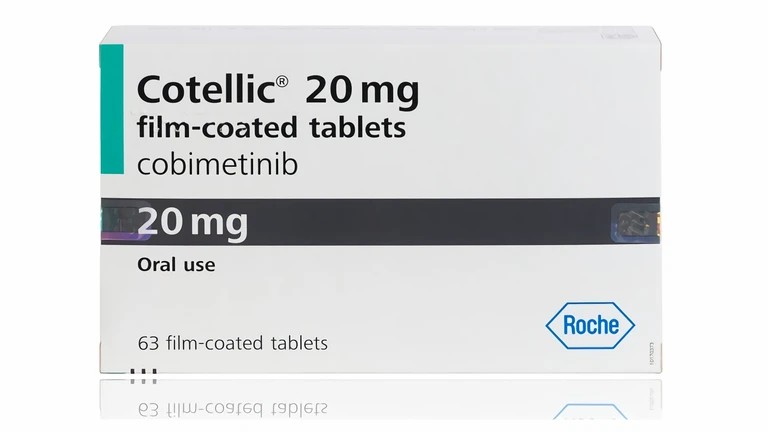
In terms of clinical indications, cobimetinib is mainly approved for the treatment of advanced or metastatic melanoma carrying BRAF V600E or V600K mutations, and is usually used in combination with BRAF inhibitors. Clinical trial data show that this combination regimen can significantly extend progression-free survival and overall survival, improve patients' quality of life, and delay the emergence of drug resistance. In addition to being combined with a BRAF inhibitor, bimetinib is used as a single agent in the treatment of NRAS mutated melanoma. For patients with NRAS mutations, bimetinib provides treatment options that BRAF inhibitors cannot cover, expanding MEKScope of use of inhibitors in melanoma.
In terms of differences in clinical use, when cobimetinib is combined with a BRAF inhibitor, it is necessary to pay attention to the tolerability and dosage adjustment strategies of the two drugs. Common adverse reactions include rash, photosensitivity reaction, diarrhea, abnormal liver function and prolongation of the electrocardiogram QT interval, etc., which require regular monitoring. Bimetinib has a slightly better tolerability due to its more stable blood concentration and optimized pharmacokinetic properties. Side effects such as muscle soreness, retinal changes and increased serum creatine kinase require close observation. The two also differ in the medication cycle, dosage interval and combination strategy. Cobimetinib usually adopts a cyclic regimen of taking medication for 21 days and stopping medication for 7 days, while bimetinib can adopt a flexible regimen of continuous administration or combination with a BRAF inhibitor.
Generally speaking, although cobimetinib and bimetinib are both MEK inhibitors, they have differences in molecular structure, pharmacokinetics, target selection and clinical indications. Cobimetinib is more suitable for combination treatment of BRAF V600mutant melanoma, while bimetinib has broader application potential in patients with NRASmutations or specific BRAFmutations. When making selections, clinicians need to comprehensively consider the patient's mutation type, previous treatment experience, drug tolerance, and the feasibility of the combination regimen to achieve personalized and precise treatment. In the future, with the accumulation of more combined drugs and long-term follow-up data, the treatment strategies and indication ranges of the two will be further optimized to provide more effective options for patients with melanoma and related tumors.
Keyword tag:
Cobimetinib, cobimetinib, bimetinib,MEKinhibitors, pharmacological differences, clinical use differences, indications, combination therapy, side effects
Reference:https://en.wikipedia.org/wiki/Cobimetinib
[ 免责声明 ] 本页面内容来自公开渠道(如FDA官网、Drugs官网、原研药厂官网等),仅供持有医疗专业资质的人员用于医学药学研究参考,不构成任何治疗建议或药品推荐。所涉药品可能未在中国大陆获批上市,不适用于中国境内销售和使用。如需治疗,请咨询正规医疗机构。本站不提供药品销售或代购服务。


