
.jpeg)
Why is it recommended to discontinue EIKANCE 0.01% Atropine Sulfate Eye Drops under certain circumstances and precautions for discontinuation
In some cases, doctors will recommend suspending or discontinuing use 0.01% Atropine Sulfate Eye Drops (EIKANCE). The main reason is that although the concentration of the drug is extremely low, it is still an inhibitor that affects the ciliary muscle regulation function. Some children may have difficulty seeing at close range, worsening of photophobia, or discomfort in learning to read during use. At this time, in order to avoid affecting daily study and life, doctors often adjust the medication according to individual reactions. In addition, if the child's myopia degree has stabilized and the effect further declines after years of continuous use, continued use may not be meaningful, so it may also be recommended to discontinue the drug for observation.
Another reason for stopping the drug comes from the "rebound deepening" phenomenon observed in some studies That is, sudden discontinuation of atropine after long-term use may cause myopia to increase faster in the short term. In order to prevent this phenomenon from being too obvious, it is clinically recommended to evaluate the child's axial growth, refractive development trend and genetic risk at a specific stage, and then stop taking the drug after confirming that the growth has slowed down. Especially for older teenagers whose myopia has stabilized, the risk of discontinuation is low and they are more suitable to enter the observation period.
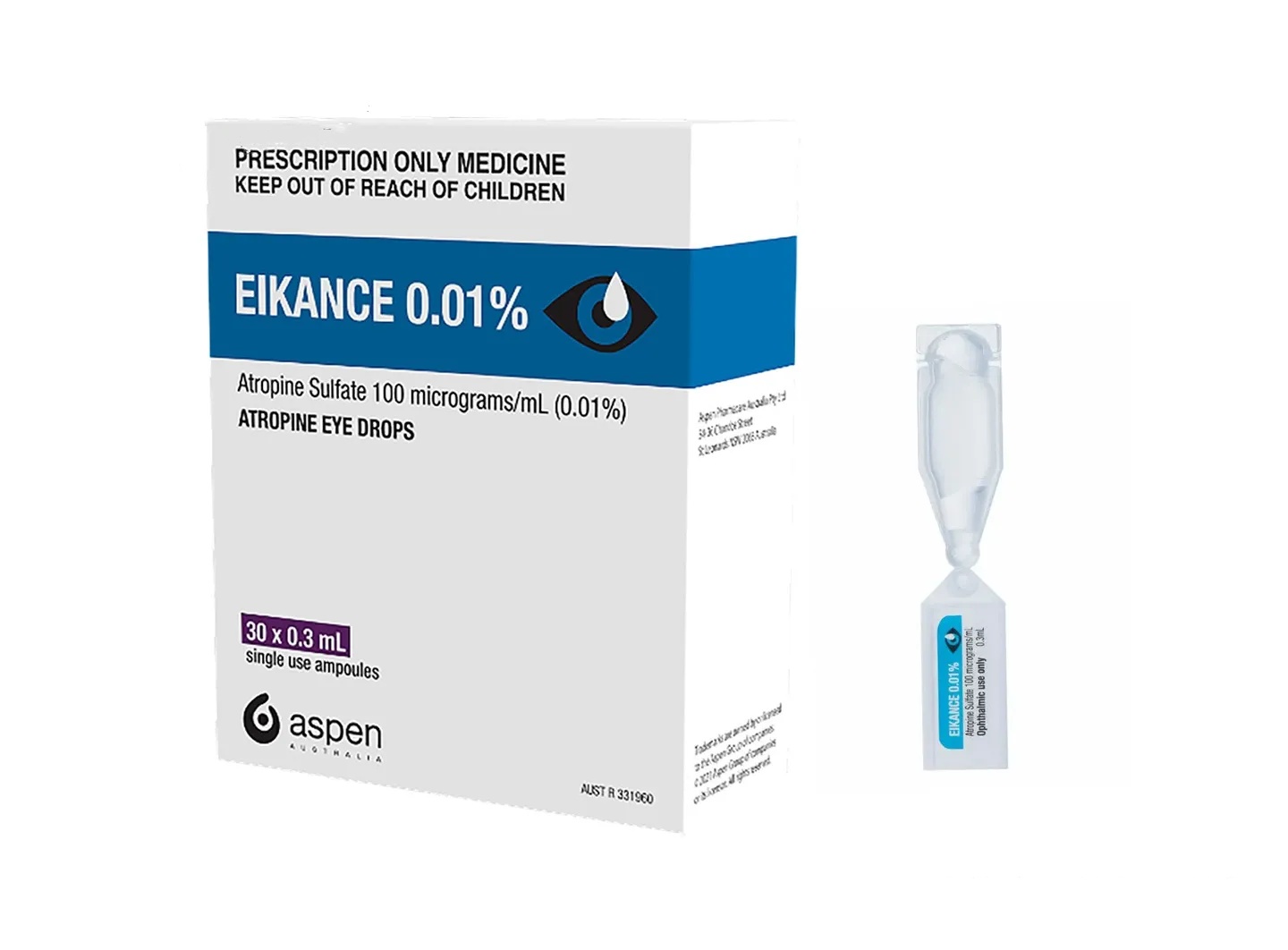
The most important principle when deactivatingEIKANCE is "gradual observation and regular review." Although 0.01%concentration is already the safest low-concentration atropine, it is still recommended to closely monitor the changes in the axial length and the speed of change of the eyeball 1–3 months after stopping the drug. If it is found that the axial length of the eye suddenly exceeds the normal value in a short period of time (for example, the short-term growth significantly exceeds 0.1–0.2mm), the ophthalmologist should be notified as soon as possible to evaluate whether it is necessary to restart drug treatment or to intervene with orthokeratology lenses, peripheral defocus lenses and other methods.
In order to reduce the risk after drug withdrawal, parents need to pay special attention to daily behavioral management, including increasing the exposure time to outdoor natural light, reducing the duration of continuous reading, controlling the use of electronic products, and ensuring adequate light environment. Stopping medication does not mean completely out of control, but entering a new monitoring phase. If the child is in a period of rapid myopia growth (such as preschool and lower grade), the medication needs to be discontinued more cautiously, and if necessary, a more flexible individualized plan can be adjusted under the guidance of a doctor. Overall, discontinuation of EIKANCE requires comprehensive judgment based on medication history, age group, myopia progression rate, and axial growth trend, and must be conducted under the guidance of a professional doctor to ensure that discontinuation is safe, controllable, and effective.
Keyword tag:
Atropine Sulfate Eye Drops,EIKANCE, myopia control, children, reasons for discontinuation, precautions for discontinuation, deepening of rebound, gradual observation, daily behavior management
Reference materials:https://medlineplus.gov/druginfo/meds/a601018.html
[ 免责声明 ] 本页面内容来自公开渠道(如FDA官网、Drugs官网、原研药厂官网等),仅供持有医疗专业资质的人员用于医学药学研究参考,不构成任何治疗建议或药品推荐。所涉药品可能未在中国大陆获批上市,不适用于中国境内销售和使用。如需治疗,请咨询正规医疗机构。本站不提供药品销售或代购服务。


