
.jpeg)
Analysis of the main efficacy and clinical application of Erdafitinib (Bocco) in different tumors
Erdafitinib is an oral small molecule targeted drug that is a fibroblast growth factor receptor (FGFR) tyrosine kinase inhibitor. Its main mechanism of action is to inhibit the abnormal activation of FGFR1-4, block downstream signaling pathways, inhibit tumor cell proliferation, angiogenesis and survival, thereby exerting anti-tumor effects. This drug is specifically targeted at tumor patients carrying FGFR gene mutations or fusions to achieve precise treatment. It is an important drug in the field of FGFR pathway targeted therapy.
Among urinary system tumors, the main indication for erdafitinib is FGFR2/3 locally advanced or metastatic urothelial carcinoma with gene mutations or fusions. Clinical studies have shown that erdafitinib can significantly improve the overall response rate (ORR) and disease control rate (DCR) of these patients. It is especially suitable for patients who have progressed after previous chemotherapy or PD-1/PD-L1 immunotherapy, providing an effective treatment option for refractory urothelial cancer.
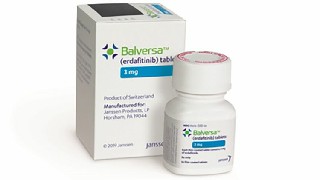
In addition to urothelial cancer, erdafitinib has also shown certain efficacy in other solid tumors carrying FGFR abnormalities. For example, in cholangiocarcinoma, breast cancer and some gastrointestinal tumors, patients with FGFR2/3 abnormalities have a certain sensitivity to erdafitinib, and clinical trials are evaluating its combined or single-drug effects. Research shows that for some patients with FGFR mutation-positive advanced cholangiocarcinoma, erdafitinib can delay disease progression and improve tumor-related symptoms, providing a new direction for precision treatment.
In clinical applications, erdafitinib is administered orally, usually once daily, and the dose can be adjusted based on patient tolerance and serum phosphorus levels. Common adverse reactions include hyperphosphatemia, stomatitis, blurred vision and rash, etc. Regular monitoring of blood phosphorus, liver and kidney function and ophthalmology is required. Overall, erdafitinib, as a FGFR targeted drug, provides precise treatment options for patients with FGFR abnormalities in different tumors. It is especially effective in refractory urothelial cancer that has failed previous treatments, and provides an important clinical treatment plan.
Keyword tags: erdafitinib, FGFR inhibitor, urothelial cancer, cholangiocarcinoma, targeted therapy
Reference materials:https://pubmed.ncbi.nlm.nih.gov/32935605/
[ 免责声明 ] 本页面内容来自公开渠道(如FDA官网、Drugs官网、原研药厂官网等),仅供持有医疗专业资质的人员用于医学药学研究参考,不构成任何治疗建议或药品推荐。所涉药品可能未在中国大陆获批上市,不适用于中国境内销售和使用。如需治疗,请咨询正规医疗机构。本站不提供药品销售或代购服务。


