
.jpeg)
The average number of years that patients can live longer after taking erlotinib (Loret)
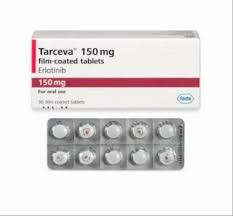
Erlotinib is an oral small molecule epidermal growth factor receptor (EGFR) tyrosine kinase inhibitor. It is mainly used to treat patients with EGFR sensitive mutation-positive non-small cell lung cancer (NSCLC) and some patients with advanced pancreatic cancer. Its mechanism of action is to inhibit the EGFR signaling pathway and block tumor cell proliferation and pro-apoptotic signals, thereby delaying disease progression and improving survival. In clinical practice, erlotinib is widely used in the first- and second-line treatment of advanced NSCLC, providing patients with precise targeted treatment options.
For patients with advanced EGFR mutation-positive NSCLC, pivotal clinical trials (such as OPTIMAL, EURTAC and ARCHER 1050) shows that erlotinib can significantly prolong progression-free survival (PFS). The median PFS in most studies is about 9 to 13 months, which is significantly better than traditional chemotherapy regimens. In terms of overall survival (OS), although individual differences are large, in first-line treatment, the use of erlotinib can prolong the average survival of patients with advanced NSCLC by about 2 to 3 years. For patients who failed second-line or previous treatments, the OS prolongation was slightly lower, but still significantly better than chemotherapy alone or placebo.
Real-world data on the survival benefit of erlotinib are broadly consistent with clinical trial results. Multicenter retrospective studies show that after receiving first-line treatment with erlotinib, the median overall survival of EGFR mutation-positive patients can reach 24 to 36 months, and some patients who respond well to the drug can even survive for more than three years. This shows that for patients who are sensitive to precise targeted therapy, erlotinib can not only control tumor progression, but also significantly improve long-term quality of life.
It should be noted that the survival benefit of erlotinib is affected by multiple factors, including patient age, baseline health status, EGFRMutation types and concomitant diseases and combination therapies. Common adverse reactions such as rash, diarrhea, interstitial lung disease, etc. may affect tolerance, so strict monitoring and individualized management are required during use. Overall, erlotinib provides significant survival benefit for patients with advanced EGFR mutation-positive NSCLC, with an average prolonged survival of approximately 2 to 3 years. It is an effective targeted therapy option that has been proven in real clinical settings.
Keyword tags: erlotinib, EGFR inhibitor, non-small cell lung cancer, prolonged survival, real data
ReferenceInformation:https://pubmed.ncbi.nlm.nih.gov/?term=erlotinib
[ 免责声明 ] 本页面内容来自公开渠道(如FDA官网、Drugs官网、原研药厂官网等),仅供持有医疗专业资质的人员用于医学药学研究参考,不构成任何治疗建议或药品推荐。所涉药品可能未在中国大陆获批上市,不适用于中国境内销售和使用。如需治疗,请咨询正规医疗机构。本站不提供药品销售或代购服务。


