
.jpeg)
Lecanemab (lecanemab)-LEQEMBI instructions, indications and usage analysis
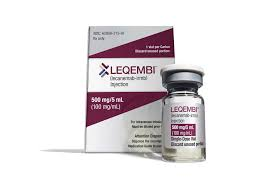
Lecanemab (trade name LEQEMBI) is a humanized IgG1 monoclonal antibody that targets amyloid β protein (Aβ) oligomers and small fiber deposits and is used to treat Alzheimer's disease (AD). Its mechanism of action is mainly by specifically binding to soluble Aβ oligomers and early deposited Aβ plaques to promote immune-mediated clearance, thereby reducing the amyloid load in the brain, improving cognitive function and delaying disease progression. Different from traditional symptomatic treatment drugs, LEQEMBI is a pathologically targeted treatment, aiming to fundamentally intervene in the core pathological process of Alzheimer's disease.
According to the official instructions, LEQEMBI is indicated for patients with mild cognitive impairment (MCI) or mild Alzheimer's disease and abnormal accumulation of Aβ in the brain. The presence of Aβ is usually confirmed by PET imaging or cerebrospinal fluid biomarker testing to ensure that the patient is suitable for targeted antibody therapy. The instructions specifically emphasize that the drug is suitable for patients with early-stage AD. The efficacy is most significant in mild cognitive impairment and mild AD stages. However, for patients with moderate or severe AD, there is currently insufficient evidence to support the efficacy, so it is not recommended as a routine treatment for advanced patients.
In terms of usage and dosage, LEQEMBI is administered by intravenous infusion. The initial recommended dose is approximately 10 mg/kg once every two weeks by intravenous infusion over approximately 45 minutes. During first administration and early infusion, infusion reactions and patient neurological symptoms need to be closely monitored. As the course of treatment progresses, the dose can be maintained based on tolerance and body weight. In clinical studies, treatment periods of at least 12 months are generally recommended to assess sustained improvements in cognitive function and amyloid burden in the brain. Medical staff should pay attention to the patient's blood pressure, heart rate and possible infusion-related adverse reactions, such as fever, chills, rash or blood pressure fluctuations during medication.
In terms of safety, LEQEMBI’s main adverse reactions include immune-related cerebral edema or microbleeds (Amyloid Related Imaging Abnormalities, ARIA), especially ARIA-E (cerebral edema) and ARIA-H (microbleeds or microhaematoma). The instructions recommend regular MRI monitoring before and during treatment to detect and manage the risk of ARIA early. High-risk patients with a history of cerebrovascular disease or antibody-related reactions should use it with caution under the guidance of a doctor. At the same time, common infusion reactions include fever, chills, headache and nausea, which are usually mild to moderate and can be relieved by slowing down the infusion rate or symptomatic treatment.
LEQEMBIEmphasis on individualized treatment plans in clinical applications. Patients need to undergo Aβ testing before treatment to ensure the accuracy of pathological targeting; during treatment, regular cognitive assessment, brain imaging monitoring and laboratory examinations are required to evaluate efficacy and safety. For patients who experience ARIA or other serious adverse events, the dose should be suspended or adjusted in a timely manner, and necessary intervention measures should be taken. Through this precise, monitoring-oriented medication model, LEQEMBI can play a significant role in delaying cognitive decline and improving patients' quality of life, while controlling risks within a manageable range.
In short, lencanezumab (LEQEMBI), as the first approved Aβ-targeting antibody drug, marks an important progress in the treatment of Alzheimer's disease from simple symptomatic management to pathological intervention. The official instructions clarify the indications, usage and dosage, and safety monitoring requirements, providing systematic guidance for clinicians. Reasonable selection of appropriate patients and strict compliance with the infusion protocol and imaging monitoring specifications are the keys to maximizing the efficacy and safe use of LEQEMBI. In the future, as more long-term efficacy and safety data accumulate, the drug is expected to play a broader clinical value in the management of early AD.
Keyword tags: Lencanezumab, Alzheimer's disease, indications, usage and dosage, ARIARisk
Reference materials:https://pmc.ncbi.nlm.nih.gov/articles/PMC11418606/
[ 免责声明 ] 本页面内容来自公开渠道(如FDA官网、Drugs官网、原研药厂官网等),仅供持有医疗专业资质的人员用于医学药学研究参考,不构成任何治疗建议或药品推荐。所涉药品可能未在中国大陆获批上市,不适用于中国境内销售和使用。如需治疗,请咨询正规医疗机构。本站不提供药品销售或代购服务。


