
.jpeg)
What recommendations are contained in the guidelines for the use of filgotinib
Filgotinib(Filgotinib) is an oral small molecule Janus kinase (JAK) inhibitor that mainly exerts anti-inflammatory and immunomodulatory effects by selectively inhibiting JAK1-related signaling pathways. The drug is mainly used to treat immune-mediated chronic inflammatory diseases and is suitable for patients who have insufficient response to or intolerance to traditional treatments.
1. Overview of indications
In rheumatoid arthritis, filgotinib is suitable for adult patients with moderately to severely active disease, especially those who have previously received methotrexate or other disease-modifying anti-rheumatic drugs that have not responded satisfactorily, or who cannot continue to use them due to adverse effects. Based on the patient's specific condition assessment, the drug can be used as a single drug or in combination with MTX or other DMARDs under the guidance of a doctor to control joint inflammation activity, relieve symptoms and improve functional status.
In the field of ulcerative colitis, filgotinib is used for patients with moderate to severe active disease, mainly for people who have failed, are intolerant, or have contraindications to use of conventional treatments. Its immunomodulatory effect helps reduce intestinal mucosal inflammation, thereby improving symptoms such as diarrhea, bloody stools, and abdominal pain. During treatment, corticosteroids can be used alone depending on the stage of the disease or in combination with corticosteroids during specific induction phases.
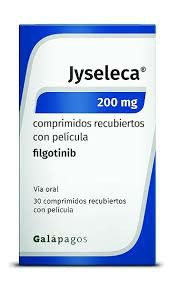
2. Recommended dosage and medication principles
For rheumatoid arthritis, it is usually recommended to take it orally once a day, and the common dose is200mg. For adult patients with a higher risk of venous thromboembolic events (VTE), major adverse cardiovascular events (MACE), or malignancy, it is recommended that the initial or maintenance dose be reduced to 100 mg daily. If disease control is inadequate, the dose may be adjusted after risk assessment. During long-term treatment, the principle of “lowest effective dose” should be followed to balance efficacy and safety.
In the treatment of ulcerative colitis, medication is usually divided into an induction phase and a maintenance phase. During the induction treatment phase, it is recommended to take 200mg orally once a day, and the course of treatment is usually several weeks. If the clinical response is unsatisfactory after the initial induction cycle, the induction time can be extended under the doctor's evaluation; however, if the expected effect is not achieved after a longer induction treatment, discontinuation of the drug should be considered. After entering the maintenance period, the conventional maintenance dose is still 200mg per day. For patients with high-risk factors, the dose can be appropriately reduced and dynamically adjusted according to disease activity.
3. Overview of adverse reactions
In patients with rheumatoid arthritis, the common adverse reactions of filgotinib are mostly mild to moderate, mainly involving gastrointestinal and infection-related manifestations, such as nausea, upper respiratory tract infection, urinary tract infection, dizziness, and lymphopenia in laboratory tests. The types of adverse reactions in patients with ulcerative colitis were generally similar to those in the RA population, and no significantly different safety profiles were observed. It is recommended to regularly monitor blood routine and infection risk during treatment.
4. Interpretation of pharmacological mechanism of action
Figotinib is an ATP-competitive and reversible JAK inhibitor that intervenes in immune responses mediated by a variety of inflammatory factors by inhibiting the intracellular JAK-STAT signaling pathway. JAK1 plays a key role in inflammatory cytokine signal transduction, and the selective inhibition of JAK1 by fibrogotinib is significantly higher than that of JAK2 and JAK3, thus reducing the extensive interference with hematopoiesis and immune balance to a certain extent. At the cellular level, the drug can inhibit the activation of a variety of interleukin and interferon-related signaling pathways and reduce the expression of inflammatory genes. Although its main metabolites are slightly less active, they still make an important contribution to the overall drug efficacy in the body.
5. Precautions for storage and use
Filgotinib should be stored in its original packaging, away from moisture, and the container should be kept tightly closed. The storage environment should comply with the routine storage conditions of drugs to ensure drug stability and efficacy.
Reference materials:https://go.drugbank.com/drugs/DB14845
[ 免责声明 ] 本页面内容来自公开渠道(如FDA官网、Drugs官网、原研药厂官网等),仅供持有医疗专业资质的人员用于医学药学研究参考,不构成任何治疗建议或药品推荐。所涉药品可能未在中国大陆获批上市,不适用于中国境内销售和使用。如需治疗,请咨询正规医疗机构。本站不提供药品销售或代购服务。


