
.jpeg)
Efficacy and cases of ivonib (Tosuvo) in the treatment of patients with cholangiocarcinoma
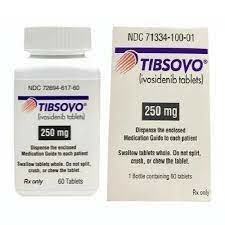
Ivosidenib (common trade name Tibsovo) is an oral small molecule targeted drug designed to inhibit the function of isocitrate dehydrogenase1 (IDH1) mutation. IDH1 is a key enzyme in human cell metabolism, but when it undergoes mutations such as R132, abnormal metabolites D‑2
In the ClarIDHy III phase 1 randomized clinical trial, investigators randomly assigned patients with IDH1 mutations and advanced unresectable or metastatic cholangiocarcinoma who had received at least one line of chemotherapy to receive ivonib 500 mg orally daily or placebo. The primary outcome measure is progression-free survival (PFS) and the secondary outcome measure is overall survival (OS). The results showed that compared with the placebo group, the median PFS in the ivonib group was significantly longer, with a hazard ratio of 0.37 (95% CI 0.25 - 0.54; P < 0.001), indicating that ivosidenib can significantly reduce the risk of disease progression or death. This PFS advantage has propelled ivonib to become the standard late-line treatment option for IDH1 mutated cholangiocarcinoma. In 2021, the U.S. Food and Drug Administration (FDA) approved ivonib based on the results of this trial for the treatment of adult patients with IDH1 mutated cholangiocarcinoma that has progressed after previous systemic therapy.
In this trial, ivonib had an effect on overall survival (OS) also showed a positive trend, but statistical significance was affected by the large proportion of placebo patients who later crossed over to ivosidenib. Data from the unadjusted crossover group indicated that the median OS was 10.3 months in the ivonib group compared with 7.5 months in the placebo group (HR=0.79; 95% CI 0.56‑1.12), showing a marginal improvement; the adjusted data were even more significant (adjusted placebo groupOSOS span>About5.1 months, HR=0.49;95% CI 0.34‑0.70), supporting the potential role of ivonib in improving survival prognosis. Importantly, no drug-related deaths were observed with this treatment, the safety profile was good, and there was no significant decrease in patient quality of survival.
Real-world studies have also confirmed the actual efficacy and tolerability of ivonib in clinical practice. For example, a multicenter, retrospective real-world cohort study included 46 patients with IDH1 mutations who received ivonib. For patients with cholangiocarcinoma, approximately 43.5% are treated as second-line treatment, and 56.5% are treated as third-line or above. The data shows that the median PFS is about 3.7 months, and the median OS is 11.5 months, the disease control rate is close to 50%, which shows that even under real clinical conditions, the drug can still help nearly half of the patients maintain a stable disease state before tumor progression. In addition, compared with standard second-line chemotherapy (such as FOLFOX/CAPOX), ivonib's PFS and
In addition to large-scale cohort studies, some individual case reports more intuitively demonstrate the long-acting control potential of ivonib. A case report describes two patients with previously treated unresectable or metastatic intrahepatic cholangiocarcinoma (both with IDH1 R132mutation) receives daily500 mgAfter treatment with ivonib, long-term progression-free survival (PFS) of 20 months and 13 months were achieved respectively. No obvious serious side effects were observed during the treatment, showing excellent clinical tolerability. This further emphasizes that avosidenib is not only effective in clinical trials, but can also achieve very significant clinical benefits in some patients.
At the level of drug mechanism, ivonib effectively reduces 2‑HG levels by targeting the mutated IDH1 enzyme, thereby restoring the normal metabolism and differentiation information of cells. No., this mechanism has been confirmed in PK/PD research. 2‑HG significantly dropped to close to normal levels after taking the drug, strengthening the biological basis of its targeted therapy.
Although the efficacy varies among different patients and studies, in general, ivonib provides a new treatment method for patients with IDH1 mutated cholangiocarcinoma. It has clear advantages in delaying disease progression and improving disease control rate, and has a good safety profile. Its PFSimprovement and potential OS prolongation, combined with the maintenance of good quality of life, place it in an important position in the field of molecularly targeted therapy. With the accumulation of further real-world data and longer follow-up data, the clinical application prospects of ivonib are expected to become clearer.
Reference materials:https://pubmed.ncbi.nlm.nih.gov/34554208/
[ 免责声明 ] 本页面内容来自公开渠道(如FDA官网、Drugs官网、原研药厂官网等),仅供持有医疗专业资质的人员用于医学药学研究参考,不构成任何治疗建议或药品推荐。所涉药品可能未在中国大陆获批上市,不适用于中国境内销售和使用。如需治疗,请咨询正规医疗机构。本站不提供药品销售或代购服务。


