
.jpeg)
The difference between bimekizumab and secukinumab
Bimekizumab and Secukinumab are both monoclonal antibodies targeting the IL-17 pathway and are used to treat moderate to severe plaque psoriasis and some immune-related diseases. However, there are significant differences in their mechanisms of action, target selectivity, clinical application strategies and efficacy characteristics, which are also important references for clinical drug selection.
Bicizumab was developed by the Belgian pharmaceutical companyUCB, Inc. Its unique feature is its dual-targeting design, which simultaneously inhibits two cytokines, IL-17A and IL-17F. This dual-targeting mechanism means that it can block the IL-17 signaling pathway more comprehensively than chizumab, thereby providing a stronger inhibitory effect on the inflammatory response. IL-17F also plays an important role in the pathogenesis of chronic inflammation and psoriasis. Inhibiting IL-17A alone may not be able to completely control inflammatory activity, but dual targeting can help increase the speed and depth of improvement of skin lesions.
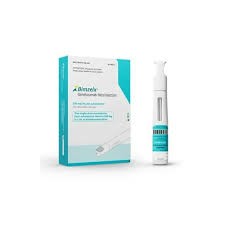
In contrast, secukinumab is a single-target inhibitor of IL-17A. It mainly targets IL-17A and does not have significant inhibitory ability against IL-17F. Since IL-17A is the core factor driving the pathogenesis of psoriasis and spondyloarthritis, secukinumab can still effectively control skin lesions and arthritis symptoms in most patients, but in some patients with refractory or high inflammatory burden, the efficacy may not be as significant as dual-targeted inhibitors. Overseas clinical trial data show that some control groups show a better trend than secukinumab in skin clearance rate, rapid remission rate and long-term maintenance effect of patients with moderate to severe plaque psoriasis, especially in achieving skin clearance (PASI 90 or PASI 100) ratio.
There are also differences between the two in dosing regimen and treatment design. Bicizumab is usually injected every four weeks or every eight weeks, and the dose is adjusted according to the patient's weight and disease severity. The treatment course is optimized based on clinical safety assessment to facilitate long-term maintenance of treatment and patient compliance. Secukinumab is mostly an initial intensification dose (weekly injections in the first few weeks), and then enters the maintenance phase, with injections every four weeks. The program design favors the traditional immunosuppressive model. Different dosing rhythms may also affect patients' treatment experience and quality of life.
In terms of safety, both bicizumab and secukinumab mainly have mild to moderate side effects, with common side effects including upper respiratory tract infection, injection site reaction and mild gastrointestinal discomfort. Bicizumab may increase the risk of oral or skin fungal infections in individual patients due to its dual-targeting effect, but it is generally controllable and can be managed through early intervention and regular monitoring. As a single-target inhibitor, secukinumab has a relatively stable side effect profile and rich experience in clinical application.
To sum up, there are essential differences between bichizumab and secukinumab in their IL-17 pathway inhibition strategies: bicizumab's dual-target design gives it potential efficacy advantages in some patients with high inflammatory burden or refractory conditions, while secukinumab's single-target selection still has efficient and safe therapeutic value in most routine patients. Clinically, the choice of drug should be comprehensively evaluated based on factors such as the severity of the patient's disease, previous treatment history, tolerance, and individual lifestyle.
References:https://www.nejm.org/doi/full/10.1056/NEJMoa2102383
[ 免责声明 ] 本页面内容来自公开渠道(如FDA官网、Drugs官网、原研药厂官网等),仅供持有医疗专业资质的人员用于医学药学研究参考,不构成任何治疗建议或药品推荐。所涉药品可能未在中国大陆获批上市,不适用于中国境内销售和使用。如需治疗,请咨询正规医疗机构。本站不提供药品销售或代购服务。


