
.jpeg)
Summary of the effects, efficacy and clinical application of Crizotinib (Xalkori)
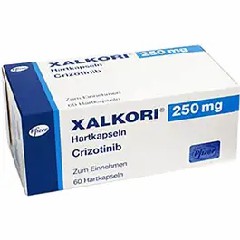
Crizotinib is a classic small molecule targeted drug, which is a multi-target inhibitor of ALK, ROS1 and MET. It has played an important role in the treatment of advanced non-small cell lung cancer since its launch. It was initially famous for its use in the treatment of ALK fusion-positive advanced lung cancer, and then gradually expanded to ROS1 fusion-positive patient groups, becoming one of the first-line regimens highly recommended by international cancer treatment guidelines. Due to its rapid action, high tumor shrinkage rate, and relatively good tolerability, crizotinib is widely used around the world, which is of great significance in promoting the opening of the era of targeted therapy.
The core efficacy of crizotinib comes from the inhibition mechanism of ALK and ROS1 fusion genes. This type of fusion gene will cause continued abnormal proliferation of tumor cells, and drugs can block relevant signaling pathways, causing cancer cells to stop growing and undergo apoptosis. A large amount of clinical data shows that treated ALK patients can usually see the lesions shrink in the short term, and the objective response rate often exceeds 60%—70%. The median progression-free survival of some patients can reach more than one year. In ROS1 positive patients, its efficacy is also excellent, and it is considered to be one of the most widely used ROS1 targeted drugs with relatively stable clinical response. For some patients who have cancer-related symptoms such as cough, chest tightness, and decreased physical strength, drugs can also help their symptoms improve quickly, thereby improving their quality of life.
In terms of clinical application, crizotinib is usually used as the first-line treatment for ALK or ROS1 -positive advanced non-small cell lung cancer, especially for patients who are inoperable or have low radiotherapy value. In addition to lung cancer, some rare tumors with ALK fusions such as inflammatory myofibroblastoma can also benefit from crizotinib, which is an important manifestation of the gradual expansion of its clinical application. For patients with brain metastases, although the drug's penetration rate into the central nervous system is not as good as some new generation ALK inhibitors, it can still achieve a certain disease control effect in some cases, so it may still be a treatment option after a comprehensive evaluation by doctors. In addition, crizotinib can complement other treatments. For example, in patients who have no obvious benefit from immunotherapy or who have poor tolerance to chemotherapy, targeted therapy can often significantly improve disease control rates.
Although crizotinib has outstanding efficacy, it is still necessary to pay attention to its possible drug resistance. After long-term treatment, some patients may have reduced drug efficacy due to mutations or pathway activation. At this time, they usually need to be replaced with second- or third-generation ALK inhibitors, such as alectinib, brigatinib, or lorlatinib. Resistance does not mean treatment failure, but indicates the need to enter the next stage of individualized treatment. At the same time, adverse drug reactions also require close monitoring. Abnormal liver function, visual flashes, gastrointestinal discomfort, and heart rate changes in a small number of patients are common. Most side effects can be controlled by adjusting dosage, improving lifestyle, or combining with symptomatic treatment, and are generally well tolerated.
Overall, the emergence of crizotinib has brought important breakthroughs to patients with ALK and ROS1 positive tumors. It not only prolonged survival, but also made the concept of "precision medicine" more concrete. In the modern lung cancer treatment system, crizotinib still occupies an irreplaceable position, especially for patients who receive targeted therapy for the first time. As next-generation targeted drugs continue to be updated, its status has changed, but as a pioneering multi-target inhibitor, it remains a reliable and high-value option in clinical practice. For patients diagnosed with related gene fusions, significant disease control and long-term benefits can still be achieved by starting crizotinib treatment in a timely manner under the guidance of a doctor.
Reference materials:https://pubmed.ncbi.nlm.nih.gov/24756793/
xa0
[ 免责声明 ] 本页面内容来自公开渠道(如FDA官网、Drugs官网、原研药厂官网等),仅供持有医疗专业资质的人员用于医学药学研究参考,不构成任何治疗建议或药品推荐。所涉药品可能未在中国大陆获批上市,不适用于中国境内销售和使用。如需治疗,请咨询正规医疗机构。本站不提供药品销售或代购服务。


