
.jpeg)
What is revumenib-REVUFORJ and analysis of its pharmacological effects
Revumenib-REVUFORJ is a new type of targeted anti-cancer drug, a small molecule oral inhibitor, mainly used to treat patients with acute myeloid leukemia (AML) who carry a specific NUP98 fusion gene or KMT2A rearrangement. Its research and development background is based on in-depth research on the molecular mechanism of AML, especially the discovery that some AML patients have abnormal gene expression driven by NUP98 fusion protein or KMT2A rearrangement. These abnormalities lead to abnormal proliferation and differentiation disorders of leukemia cells. Revimenib targets the active sites of these key kinesins and blocks their downstream signaling pathways, thereby inhibiting the proliferation of leukemia cells and inducing cell differentiation and apoptosis.
In terms of pharmacological effects, Revimeinib interferes with abnormal gene expression programs by selectively inhibiting the interaction between NUP98 fusion proteins and transcriptional co-activators, causing leukemia cells to stop unlimited proliferation. Unlike traditional chemotherapy drugs, Revimenib does not directly kill all dividing cells, but achieves precise treatment by targeting molecular abnormalities, which means that the drug causes relatively little damage to normal hematopoietic cells, thus reducing the incidence of side effects such as bone marrow suppression. Preclinical experiments show that Revimenib can significantly inhibit the proliferation of NUP98 fusion leukemia cells, while promoting their differentiation into mature blood cells, improving the accuracy and safety of treatment selection.
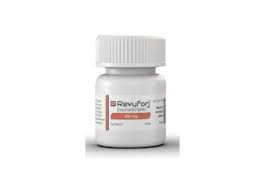
In terms of clinical application, Revimenib is mainly used for patients with relapsed or refractory AML, especially those carrying NUP98 fusion or KMT2A rearrangement. In multiple early-stage clinical trials, revimenib has demonstrated high objective response rates and tolerability. The drug is administered orally and taken according to the dosage schedule every day to facilitate long-term management of the patient. When formulating a medication plan, doctors will comprehensively evaluate the patient's genetic test results, previous treatment history, bone marrow function, and systemic condition to ensure that the drug exerts its maximum efficacy within a safe dosage range.
It is still necessary to pay attention to potential adverse reactions during the use of Revimenib, including mild to moderate gastrointestinal reactions, changes in hematological indicators and mild liver function abnormalities. Although the side effects are generally controllable, it is still necessary to regularly monitor changes in blood routine, liver and kidney function, and clinical symptoms in order to adjust the dosage or take symptomatic treatment in a timely manner. For patients who use other chemotherapy drugs or targeted drugs in combination, doctors will also pay attention to drug interactions to avoid the accumulation of adverse events.
Overall, Revumenib (revumenib)-REVUFORJIt is a precisely targeted drug whose unique pharmacological mechanism enables it to specifically act on AML leukemia cells carrying NUP98 fusion or KMT2A rearrangement, inhibit abnormal proliferation and induce differentiation. Compared with traditional chemotherapy, it is more accurate and safer, providing a new treatment option for patients with relapsed or refractory AML. With the continuous improvement of clinical data, Revimenib is expected to become an important targeted treatment option for specific AML patients, and it also provides new ideas and directions for targeted research on gene-driven leukemia.
Reference materials:https://www.drugs.com/clinical_trials/revumenib.html
[ 免责声明 ] 本页面内容来自公开渠道(如FDA官网、Drugs官网、原研药厂官网等),仅供持有医疗专业资质的人员用于医学药学研究参考,不构成任何治疗建议或药品推荐。所涉药品可能未在中国大陆获批上市,不适用于中国境内销售和使用。如需治疗,请咨询正规医疗机构。本站不提供药品销售或代购服务。


