
.jpeg)
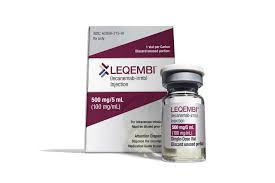
Detailed description of the efficacy, cognitive improvement and clinical observation of lecanemab-LEQEMBI after half a year of use
After taking lencanezumab (LEQEMBI) for six months, the most reliable imaging change is usually a significant decrease in the beta-amyloid load in the brain. Clinical trials and real-world observations show that some patients can see reductions in amyloid plaques on PET scans within 3 to 6 months of treatment, direct biological evidence of the drug's effect. Biomarkers such as related protein levels in plasma or cerebrospinal fluid may also improve accordingly, indicating that the pathological process has been partially intervened.
In terms of cognitive function, 6 months is generally an early time point, and the overall clinical benefit is modest but measurable. Compared with placebo, some subjects showed mild stabilization or slowed progress on sensitive scales (such as memory, executive function or composite cognitive score); improvements in daily living abilities (ADL) and patients' subjective feelings were often less obvious and took longer to become apparent. Therefore, if there is only stagnation or slight improvement within half a year, it is a reasonable expectation and cannot be regarded as a lack of efficacy.
Safety monitoring is an important part of the half-year observation. Common serious adverse reactions of lencanezumab are brain imaging abnormalities (ARIA, including edema or microbleeding). Most of them occur in the early stages of treatment and may be asymptomatic. However, regular MRI monitoring is required according to the guidelines and treatment is suspended or adjusted when moderate or severe ARIA occurs. In addition, we must be wary of injection/infusion reactions, bleeding risks, infections, etc., and medication needs to be administered under experienced medical institutions and followed up regularly.
To sum up, the six-month efficacy is usually most clear based on biological evidence (reduction in amyloid burden), while improvements in cognition and function are mostly slow and vary widely among individuals. Patients and their families should focus on long-term follow-up, combining imaging, cognitive scales and daily functional assessments to judge the efficacy. At the same time, they should strictly abide by MRI monitoring and doctor's recommendations, and deal with possible ARIA or other adverse reactions in a timely manner to ensure that the medication is both safe and likely to bring sustained benefits.
Reference materials:https://en.wikipedia.org/wiki/Lecanemab
[ 免责声明 ] 本页面内容来自公开渠道(如FDA官网、Drugs官网、原研药厂官网等),仅供持有医疗专业资质的人员用于医学药学研究参考,不构成任何治疗建议或药品推荐。所涉药品可能未在中国大陆获批上市,不适用于中国境内销售和使用。如需治疗,请咨询正规医疗机构。本站不提供药品销售或代购服务。


