
.jpeg)
Analysis of Midostaurin maintenance treatment options and treatment course recommendations
Midostaurin is a multi-target tyrosine kinase inhibitor (TKI), which mainly targets FLT3 and KIT< span>, PDGFR and other signaling pathways have significant effects on acute myeloid leukemia (AML), especially FLT3 mutation-positive patients. In FLT3mutatedAML, midostaurin can not only be used in combination with first-line chemotherapy to improve overall survival and progression-free survival, but also shows important value in the maintenance treatment phase after chemotherapy or hematopoietic stem cell transplantation, which can prolong the recurrence interval and stabilize hematological indicators. Scientific and individualized maintenance treatment programs are crucial to improve long-term survival rates and reduce the risk of recurrence.
In the maintenance phase, midostaurin is usually started after the patient has completed homing or chemotherapy induction and consolidation courses. Clinical guidelines recommend that adult patients take 50 mg orally daily in two divided doses for 28 consecutive days as a treatment cycle. The duration of maintenance therapy is usually about 12 months, which can be individually adjusted based on the patient's bone marrow recovery, hematological indicators, molecular marker clearance, and tolerance. For some high-risk patients or those with a higher risk of recurrence, doctors may extend the maintenance cycle, but this needs to be done under the premise of strict monitoring of blood routine and liver and kidney function.
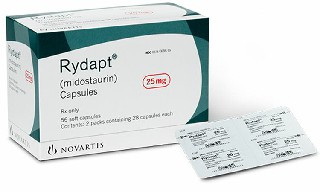
Effectiveness assessment is crucial in maintenance therapy. Drug efficacy and risk of recurrence are mainly judged through regular monitoring of hematological indicators (platelets, white blood cells, red blood cells), bone marrow blast cell ratio, and molecular markers (such as FLT3-ITD or TKD mutation load). Effective maintenance therapy is usually characterized by maintaining the blood count within a safe range, the proportion of bone marrow blast cells continuing to decrease or maintaining normal, and the FLT3 mutation load significantly decreasing or even disappearing. For patients with poor efficacy or abnormal blood images, the dose should be adjusted promptly or other combination treatment options should be evaluated to prevent recurrence or decreased drug tolerance.
Safety management is an important part of maintenance treatment. Common adverse reactions of midostaurin include gastrointestinal symptoms (nausea, vomiting, diarrhea), rash, headache, hematological toxicity (neutropenia, thrombocytopenia), abnormal liver function, etc. The side effects in the maintenance phase are usually milder than those in the induction phase, but blood routine, liver and kidney function and electrocardiogram still need to be monitored regularly. When mild to moderate side effects occur, they can be alleviated through supportive treatment or short-term dose adjustment; if severe or persistent adverse reactions occur, the drug needs to be temporarily discontinued and the dose and course of treatment need to be re-evaluated after symptoms improve.
In general, the midostaurin maintenance treatment program emphasizes individualization, standardization and continuous monitoring. Through a daily oral fixed dose, a treatment cycle lasting about 12 months, and a combination of hematological and molecular efficacy evaluation, the relapse-free survival of AML patients can be effectively prolonged. At the same time, reasonable management of adverse reactions, timely adjustment of dosage, and strict follow-up of hematology and liver and kidney functions are the keys to maintaining the safety and long-term efficacy of treatment. For patients with FLT3mutationsAML, midostaurin maintenance therapy provides reliable clinical basis and practical experience in reducing the risk of recurrence and prolonging survival.
Reference:https://reference.medscape.com/
[ 免责声明 ] 本页面内容来自公开渠道(如FDA官网、Drugs官网、原研药厂官网等),仅供持有医疗专业资质的人员用于医学药学研究参考,不构成任何治疗建议或药品推荐。所涉药品可能未在中国大陆获批上市,不适用于中国境内销售和使用。如需治疗,请咨询正规医疗机构。本站不提供药品销售或代购服务。


