
.jpeg)
Molecular mechanism and clinical principles of Midostaurin in the treatment of leukemia
Midostaurin is an oral multi-target tyrosine kinase inhibitor (TKI), mainly used to treat acute myeloid leukemia (AML) and other specific hematological malignancies. The core of its molecular mechanism is to inhibit the activity of multiple oncogenic-related kinases, including FLT3 (FMS-like tyrosine kinase3), KIT, PDGFR and VEGFR etc., block downstream signaling pathways, thereby inhibiting leukemia cell proliferation and promoting apoptosis.
In AML, especially in FLT3 mutation-positive patients, FLT3-ITD or FLT3-TKD Mutation results in continuous activation of signaling pathways, promotes unlimited proliferation of leukemia cells and inhibits differentiation. Midostaurin directly binds to FLT3tyrosine kinase, blocks its phosphorylation activity, and inhibits downstream STAT5, MAPK and PI3K/AKT pathway signaling, thereby slowing down leukemia cell proliferation and inducing apoptosis. This mechanism provides a clear scientific basis for its targeted efficacy in AML.
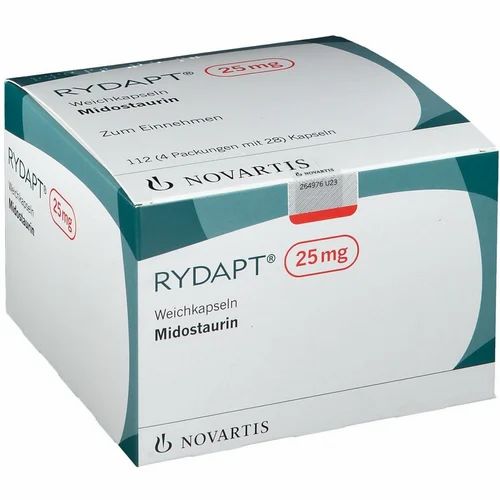
In clinical application, midostaurin is usually used in combination with standard chemotherapy, such as the "7+3" regimen (cytarabine combined with daunorubicin) or for maintenance treatment before and after transplantation. Its combination regimen can further inhibit FLT3 mutated leukemia cells on the basis of chemotherapy, and improve the complete remission rate (CR) and progression-free survival (EFS). clinical trials (e.g.RATIFYStudy) showed that midostaurin combined with chemotherapy significantly prolonged overall survival (OS) compared with chemotherapy alone, verifying the clinical effectiveness of its molecular targeting.
In addition, midostaurin's multi-target properties also enable it to inhibit leukemia cells with other kinase abnormalities, but it also increases the risk of adverse reactions, such as bone marrow suppression, gastrointestinal reactions and QT interval prolongation. Therefore, when using midostaurin, it is necessary to strictly monitor hematological indicators, electrocardiogram and liver function, and adjust the dose according to efficacy and tolerance. This strategy of precise targeting combined with chemotherapy embodies the complete scientific logic of "molecular mechanism - clinical application - efficacy monitoring" in modern AML treatment.
Reference materials:https://www.drugs.com/
[ 免责声明 ] 本页面内容来自公开渠道(如FDA官网、Drugs官网、原研药厂官网等),仅供持有医疗专业资质的人员用于医学药学研究参考,不构成任何治疗建议或药品推荐。所涉药品可能未在中国大陆获批上市,不适用于中国境内销售和使用。如需治疗,请咨询正规医疗机构。本站不提供药品销售或代购服务。


