
.jpeg)
Usage, dosage and precautions of talquetamab-tgvs
Talquetamab is an innovative bispecific antibody drug used to treat patients with relapsed or refractory multiple myeloma. Its mechanism of action is to simultaneously target the GPRC5D receptor on the surface of tumor cells and the CD3 molecule of T cells to achieve precise recognition and killing of tumors by immune cells. In clinical use, reasonable dosage regimens and strict medication management are crucial to ensure efficacy and reduce the risk of adverse events.
The administration method of Talvey is mainly subcutaneous injection. The initial incremental dose regimen needs to be carried out in a medical institution. After the first incremental dose, patients usually need to be hospitalized for 48 hours for observation to monitor the possible occurrence of cytokine release syndrome (CRS) and other immune-related reactions.
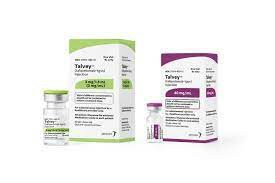
There are two recommended dosing regimens: weekly dosing and biweekly dosing. The weekly dosing regimen usually starts with a low dose (0.01 mg/kg) on u200bu200bday 1, increases to a medium dose (0.06 mg/kg) on u200bu200bday 4, reaches the first therapeutic dose (0.4 mg/kg) on u200bu200bday 7, and then maintains weekly subcutaneous injections of 0.4 mg/kg. The biweekly dosing schedule also starts at 0.01 mg/kg on day 1, increases to 0.06 mg/kg on day 4, reaches 0.4 mg/kg on day 7, and uses a maintenance dose of 0.8 mg/kg for the first time on day 10, followed by injections every two weeks. The purpose of the ascending dose design is to reduce the risk of CRS while allowing the immune system to gradually adapt to drug stimulation and improve tolerance.
Before medication, pretreatment drugs are routinely used in clinical practice to further reduce the risk of CRS CRS. Conditioning regimens include corticosteroids (such as oral or intravenous dexamethasone), antihistamines (such as diphenhydramine), and antipyretics (such as acetaminophen), usually given 1-3 hours before each Talvey injection. This type of drug can effectively alleviate fever, blood pressure fluctuations and skin reactions caused by immune activation. For patients who have repeated dose escalations due to dose delays or the development of CRS, physicians may continue the pretreatment medication with subsequent doses to ensure safety.
In addition to dosing and pretreatment management, patients require daily observation while taking tasitumumab. Common precautions include monitoring body temperature, rash, blood pressure, and respiratory status, as well as regular hematology tests to assess changes in platelets, white blood cells, and liver function. In the event of moderate to severe adverse reactions, doctors can adjust the dose or delay medication according to the specific situation. Overseas clinical practice shows that standardized dose escalation schedules, strict pretreatment measures, and meticulous follow-up monitoring are the keys to ensuring the efficacy and safety of Taquitumab.
In short, the subcutaneous injection regimen of Taquitutumab emphasizes individualized increments, strict pretreatment and continuous observation. Through rational drug use and standardized management, patients with relapsed or refractory multiple myeloma can reap the potential benefits of innovative immunotherapy while reducing the risk of severe immune reactions, providing more possibilities for disease management. In the future, with the accumulation of clinical experience and the development of combination therapy research, the application prospects of Taquinutumab in the treatment of multiple myeloma will be further expanded.
Reference materials:https://www.talveyhcp.com/
[ 免责声明 ] 本页面内容来自公开渠道(如FDA官网、Drugs官网、原研药厂官网等),仅供持有医疗专业资质的人员用于医学药学研究参考,不构成任何治疗建议或药品推荐。所涉药品可能未在中国大陆获批上市,不适用于中国境内销售和使用。如需治疗,请咨询正规医疗机构。本站不提供药品销售或代购服务。


