
.jpeg)
How long to take Trametinib (Megenin) is a complete course of treatment and the design of the course
Trametinib is an oral MEK inhibitor mainly used to treat patients with BRAF V600E or V600K mutation-positive melanoma and certain non-small cell lung cancer (NSCLC). By inhibiting MEK kinase activity in the MAPK signaling pathway, trametinib can block tumor cell proliferation and promote apoptosis, thereby controlling tumor progression. Its oral administration method facilitates long-term management, but the treatment course needs to be designed based on the patient's condition and treatment tolerance.
During trametinib treatment, imaging evaluation, blood routine, and liver and kidney function monitoring should be performed regularly. Common adverse reactions such as rash, diarrhea, peripheral edema or abnormal cardiac function require timely intervention. If moderate or severe side effects occur, they can be managed by short-term discontinuation or dose reduction, and then the original dose can be restored to continue treatment. Overall, the complete course of treatment aims to maintain long-term tumor control, and the course of treatment is flexibly adjusted to balance efficacy and safety, providing patients with individualized treatment plans.
Reference: https://www.drugs.com/
Trametinib is usually taken orally once daily at a dose of 2 mg/time, on an empty stomach or with food. For patients with melanoma, it is recommended to continue taking the drug until the disease progresses, intolerable adverse reactions occur, or the patient voluntarily stops taking the drug. In clinical studies, daily continuous medication is generally regarded as a complete course of treatment. The length of the treatment course is based on disease control and adverse reaction management, and there is no fixed number of weeks limit.
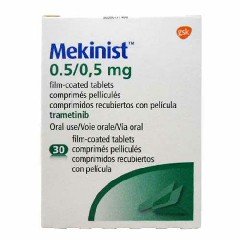
During trametinib treatment, imaging evaluation, blood routine, and liver and kidney function monitoring should be performed regularly. Common adverse reactions such as rash, diarrhea, peripheral edema or abnormal cardiac function require timely intervention. If moderate or severe side effects occur, they can be managed by short-term discontinuation or dose reduction, and then the original dose can be restored to continue treatment. Overall, the complete course of treatment aims to maintain long-term tumor control, and the course of treatment is flexibly adjusted to balance efficacy and safety, providing patients with individualized treatment plans.
Reference: https://www.drugs.com/
[ 免责声明 ] 本页面内容来自公开渠道(如FDA官网、Drugs官网、原研药厂官网等),仅供持有医疗专业资质的人员用于医学药学研究参考,不构成任何治疗建议或药品推荐。所涉药品可能未在中国大陆获批上市,不适用于中国境内销售和使用。如需治疗,请咨询正规医疗机构。本站不提供药品销售或代购服务。


